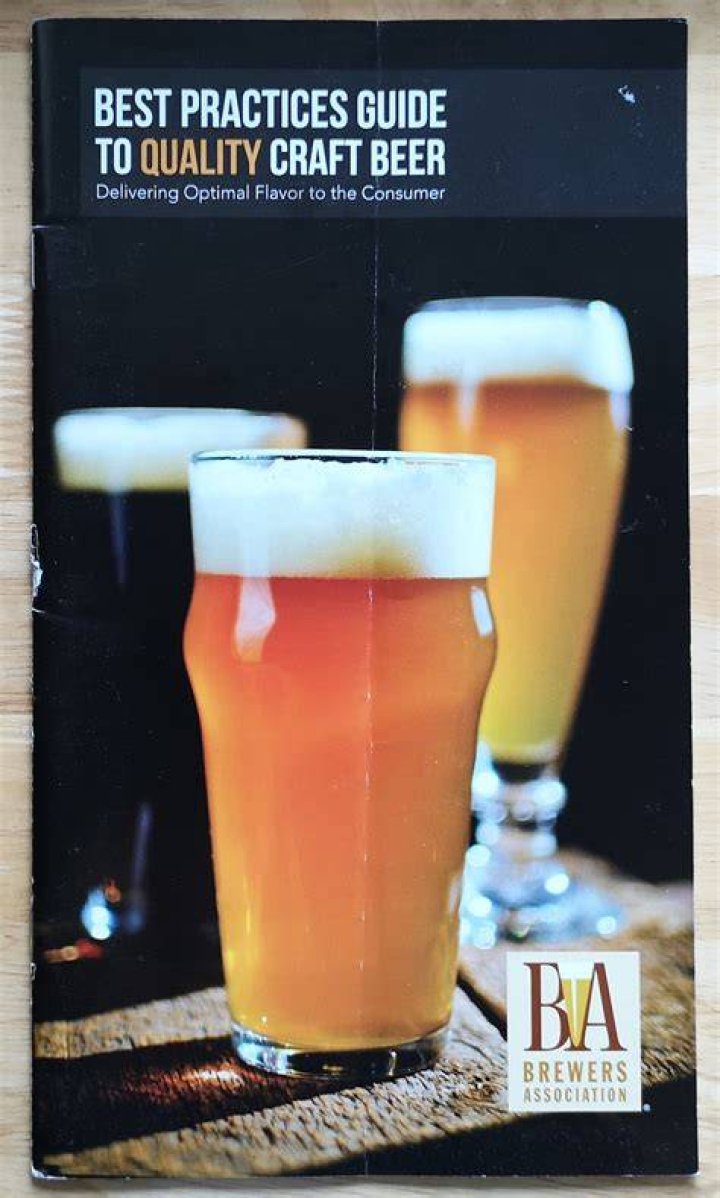
Brewers: From Craft Beer Revolution to Major League Baseball Icons
 Rachel Ross
 The word "brewers" carries two distinct meanings in American culture, each representing a passionate community with deep roots and dedicated followers. On one hand, brewers are the skilled artisans who transform water, grain, hops, and yeast into the beverages that have shaped social traditions for millennia. On the other, the Brewers represent Milwaukee's beloved Major League Baseball franchise, a team whose identity is intrinsically linked to Wisconsin's rich brewing heritage. Both interpretations share common threads of craftsmanship, tradition, and community that make them fascinating subjects worth exploring.
Whether you're interested in the science behind fermentation or the statistics behind batting averages, understanding brewers means diving into worlds where expertise, patience, and passion create something greater than the sum of their parts. This guide examines both domains, offering insights into craft beer production and the baseball organization that bears its name.
The Art and Science of Beer Brewing
Beer brewing represents one of humanity's oldest crafts, with archaeological evidence suggesting production dates back at least 7,000 years. Modern brewers combine ancient techniques with contemporary science to create beverages ranging from light lagers to intensely hoppy IPAs. The process requires technical knowledge, creative experimentation, and meticulous attention to detail at every stage.
Professional brewers typically follow a multi-step process that begins with malting, where barley grains are soaked, germinated, and dried to convert starches into fermentable sugars. The mashing phase then extracts these sugars by steeping crushed grains in hot water, creating a sweet liquid called wort. After separating the liquid from the spent grains, brewers boil the wort with hops, which contribute bitterness, flavor, and aroma while acting as natural preservatives.
Fermentation is where the magic happens. Yeast consumes the sugars in the cooled wort, producing alcohol and carbon dioxide along with hundreds of flavor compounds. This stage can last anywhere from a few days to several weeks, depending on the beer style. Some brewers then condition their beer for additional weeks or months, allowing flavors to mature and meld.
The Craft Beer Movement
The past four decades have witnessed an explosive growth in craft brewing across the United States. In 1980, fewer than 100 breweries operated nationwide. By 2023, that number had soared past 9,000, with craft brewers producing millions of barrels annually and generating billions in economic impact.
This renaissance emerged from a desire for flavor diversity and local authenticity that mass-produced beers couldn't provide. Small-batch brewers began experimenting with ingredients, reviving historical styles, and pushing boundaries with innovative combinations. Homebrewers turned professional, opening taprooms that became community gathering spaces.
Today's craft brewers range from nanobreweries producing just a few barrels per batch to regional operations distributing across multiple states. Many emphasize sustainability, sourcing local ingredients, and maintaining close connections with their customer base. The democratization of brewing knowledge through online resources and education programs has made the craft more accessible than ever.
Essential Brewing Equipment and Ingredients
Professional brewers invest in specialized equipment designed for consistency and scale. A commercial brewery typically includes mash tuns for the mashing process, lauter tuns for separating wort from grain, brew kettles for boiling, fermentation vessels with temperature control, and bright tanks for conditioning and carbonation. Advanced operations may feature automated systems that monitor and adjust variables throughout production.
The four fundamental ingredients remain constant regardless of scale. Malted barley provides fermentable sugars and contributes color and flavor ranging from biscuity to roasted coffee notes. Hops add bitterness to balance sweetness, contribute floral or citrus aromatics, and help preserve the finished product. Yeast determines whether a beer becomes an ale or lager and creates distinctive flavor profiles from fruity esters to spicy phenolics. Water chemistry, often overlooked, significantly impacts the final product, with different mineral compositions enhancing certain beer styles.
Milwaukee Brewers: Baseball's Brewing Legacy
The Milwaukee Brewers baseball team took their name from the city's historic identity as a brewing powerhouse. German immigrants established Milwaukee as America's beer capital in the 19th century, with legendary names like Pabst, Schlitz, Miller, and Blatz building empires that employed thousands and shaped the city's culture.
The current Brewers franchise began as the Seattle Pilots in 1969 before relocating to Milwaukee after just one season. The move brought Major League Baseball back to a city that had lost the Braves to Atlanta in 1965. Milwaukee embraced its new team, and the organization adopted imagery reflecting the city's brewing heritage, including a logo featuring a ball and glove formed from the letters "m" and "b."
Team History and Achievements
The Brewers have experienced cycles of success and rebuilding throughout their history. Their most memorable season came in 1982 when they reached the World Series, ultimately falling to the St. Louis Cardinals in seven games. That team, featuring future Hall of Famers Robin Yount and Rollie Fingers, captured the American League pennant with a roster nicknamed "Harvey's Wallbangers" after manager Harvey Kuenn and their power-hitting lineup.
After switching from the American League to the National League in 1998, the Brewers underwent a lengthy rebuilding period. The organization drafted and developed star players like Ryan Braun and Prince Fielder, returning to playoff contention in the 2000s. Recent years have seen sustained success, with multiple division titles and playoff appearances driven by strong pitching and a balanced offensive approach.
American Family Field, the team's home since 2001, features a retractable roof that has become iconic in Milwaukee's skyline. The stadium's design incorporates numerous references to Wisconsin's brewing traditions, and the team mascot, Bernie Brewer, celebrates home runs by sliding into a giant beer mug.
Career Opportunities in Professional Brewing
The brewing industry offers diverse career paths beyond the brewhouse. Head brewers oversee production, develop recipes, and manage quality control. Assistant brewers handle day-to-day operations, cleaning equipment, monitoring fermentation, and maintaining safety standards. Cellar operators manage fermentation and conditioning processes, requiring technical knowledge and physical stamina.
Business roles include sales representatives who build distributor relationships, marketing professionals who develop brand identity, and quality assurance specialists who conduct sensory analysis and laboratory testing. Taproom managers create customer experiences, organize events, and train service staff. Many successful brewers started as homebrewers or worked entry-level positions while attending brewing programs at institutions like the Siebel Institute, University of California Davis, or various community colleges offering fermentation science degrees.
Skills and Education Requirements
Professional brewers need both technical and creative abilities. Understanding chemistry, microbiology, and engineering principles helps troubleshoot problems and maintain consistency. Sensory skills develop through practice, allowing brewers to identify off-flavors and quality issues. Physical fitness matters, as the job involves lifting heavy bags, cleaning equipment, and standing for extended periods.
Formal education isn't always mandatory, but it provides competitive advantages. Brewing science programs teach fermentation biochemistry, process engineering, and business management. Industry certifications from organizations like the Master Brewers Association of the Americas demonstrate competency and commitment. Many brewers also emphasize the importance of networking, attending industry conferences, and continuously learning about new techniques and ingredients.
Common Brewing Challenges and Solutions
Even experienced brewers encounter problems that require diagnosis and correction. Contamination from wild yeast or bacteria can ruin entire batches, creating off-flavors like sourness, barnyard funk, or diacetyl butter. Preventing contamination requires rigorous sanitation protocols, proper equipment maintenance, and environmental controls.
Inconsistency between batches frustrates both producers and customers. Variables like mash temperature fluctuations, yeast health issues, or ingredient variations can alter flavor profiles. Successful brewers maintain detailed records, standardize procedures, and implement quality control testing at multiple production stages.
Equipment failures can halt production and create financial stress for small operations. Regular maintenance schedules, backup systems for critical components, and relationships with reliable service providers help minimize downtime. Many brewers also keep emergency funds reserved specifically for unexpected equipment repairs.
The Business of Brewing
Opening a brewery requires substantial capital investment and careful planning. Startup costs vary dramatically based on scale, location, and business model, but even small operations typically require several hundred thousand dollars for equipment, permits, initial inventory, and working capital. Securing financing often involves combining personal savings, bank loans, and investors who believe in the concept.
Distribution strategies significantly impact profitability and growth potential. Some brewers focus exclusively on taproom sales, maximizing profit margins and building direct customer relationships. Others pursue distribution through wholesalers, accepting lower margins in exchange for broader market reach. The three-tier system governing alcohol sales in most states creates both opportunities and obstacles for brewers navigating regulatory requirements.
Competition has intensified as the market has become saturated in many regions. Successful breweries differentiate themselves through quality consistency, unique flavors, strong branding, community engagement, and customer service excellence. Many have expanded revenue streams by adding food service, hosting events, selling merchandise, or offering contract brewing services.
Environmental Sustainability in Brewing
Modern brewers increasingly prioritize environmental responsibility. Beer production generates significant waste, including spent grain, wastewater with high biological oxygen demand, and substantial energy consumption for heating and cooling. Progressive breweries have implemented solutions that reduce environmental impact while often cutting operational costs.
Spent grain, the largest waste product by volume, makes excellent animal feed. Many brewers partner with local farmers who collect it for livestock. Some have experimented with composting, converting grain into soil amendments, or even creating human food products like spent grain bread and granola.
Water conservation matters in brewing, which traditionally uses three to seven gallons of water for every gallon of beer produced. Efficient operations have reduced this ratio through process improvements, equipment upgrades, and water recycling systems. Energy efficiency initiatives include heat recovery systems that capture energy from boiling wort to preheat incoming water, reducing natural gas or electricity consumption.
Key Differences Between Brewing Scales
| Aspect | Homebrewing | Craft Brewing | Industrial Brewing |
|---|---|---|---|
| Batch Size | 5-15 gallons | 3-30 barrels | 100+ barrels |
| Equipment Cost | $500-$5,000 | $100,000-$1M+ | $5M-$50M+ |
| Automation Level | Manual | Semi-automated | Highly automated |
| Production Focus | Experimentation | Quality & variety | Consistency & volume |
| Regulatory Burden | Minimal | Moderate | Extensive |
Brewers Baseball: Building a Competitive Roster
The Milwaukee Brewers organization has developed a reputation for smart player development and strategic acquisitions that maximize value despite operating with a mid-market payroll. General Manager Matt Arnold, who took over in 2021, inherited a team-building philosophy emphasizing pitching depth, defensive versatility, and opportunistic offensive production.
The farm system has produced notable talent including Corbin Burnes, Brandon Woodruff, and Freddy Peralta, who formed one of baseball's most formidable starting rotations. Developing pitching talent provides both roster value and trade assets that can be leveraged for other needs. The organization's analytical approach combines traditional scouting with advanced metrics, seeking market inefficiencies and undervalued skills.
Free agent strategy focuses on short-term contracts and reclamation projects rather than massive long-term commitments. This approach provides flexibility while acknowledging the financial constraints of competing in a division with larger-market teams. When the Brewers do make significant investments, they typically target players entering their prime years who provide value across multiple seasons.
Looking Forward: Trends and Predictions
The brewing industry continues evolving rapidly. Hard seltzers and ready-to-drink cocktails have captured market share from traditional beer, forcing brewers to diversify or risk stagnation. Non-alcoholic and low-alcohol options are gaining traction as consumers become more health-conscious. Many craft brewers have responded by developing these alternatives while maintaining their core beer portfolios.
Direct-to-consumer sales through taprooms and online channels grew dramatically during the pandemic and show no signs of reversing. This shift empowers brewers to capture more revenue per unit sold and build stronger customer relationships. Regulatory changes in various states have expanded what brewers can sell and how they can distribute, though the three-tier system remains largely intact.
For the baseball Brewers, sustained competitiveness depends on continuing to develop pitching talent, making smart free agent decisions, and potentially expanding revenue sources to compete financially with division rivals. The team's connection to Milwaukee's brewing heritage remains a marketing asset that distinguishes them from other franchises and reinforces their regional identity.
Final Thoughts on Brewing Excellence
Whether discussing the craftspeople who create beer or the baseball team representing Milwaukee, brewers embody dedication, skill, and community connection. The brewing renaissance has transformed beer from a commodity into a craft product where terroir, technique, and creativity matter. Thousands of small producers have built businesses around quality and authenticity, creating jobs and becoming community anchors.
The Milwaukee Brewers baseball organization carries forward a tradition linking sport with the city's industrial heritage. Their success brings joy to Wisconsin and demonstrates how mid-market teams can compete through smart management and player development. Both interpretations of "brewers" remind us that excellence requires patience, knowledge, and commitment to continuous improvement. The best brewers, whether in the brewhouse or on the baseball diamond, never stop learning, adapting, and striving to perfect their craft.
