How Are Astronauts Breathing in Space? The Science Explained
 Sarah Rowe
Space is a vacuum. No air. No oxygen. No atmospheric pressure. So when astronauts float hundreds of miles above Earth, how exactly are they managing to take each breath? It's a question that strikes at the heart of human space exploration, and the answer involves some of the most sophisticated life support technology ever engineered.
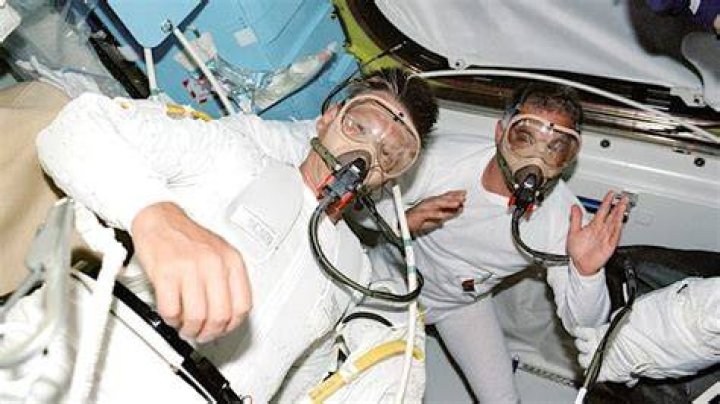
The short answer: they're not breathing space itself. They're breathing carefully controlled artificial atmospheres created inside spacecraft and space suits. But the full story reveals an intricate system of oxygen generation, carbon dioxide removal, and atmospheric regulation that literally means the difference between life and death.
Why Space Doesn't Allow Natural Breathing
Understanding how astronauts breathe starts with understanding why space is so hostile to human life. The vacuum of space contains virtually no molecules. Earth's atmosphere at sea level contains roughly 10^19 molecules per cubic centimeter. Space? Try fewer than one molecule per cubic centimeter in some regions.
Without atmospheric pressure, your lungs couldn't function. The air inside your lungs would expand violently. Your blood wouldn't boil as Hollywood suggests, but dissolved gases would form bubbles in your tissues within seconds. You'd lose consciousness in about 15 seconds from lack of oxygen to the brain. Death would follow in one to two minutes.
That's why every crewed spacecraft and space suit functions as a miniature Earth environment, complete with breathable air at survivable pressure.
How Spacecraft Generate Breathable Air
The International Space Station uses a system called the Environmental Control and Life Support System, or ECLSS. This engineering marvel doesn't just store oxygen in tanks. It creates oxygen from water through electrolysis.
Here's how it works: water molecules (H2O) are split using electricity. This process separates hydrogen and oxygen atoms. The oxygen is pumped into the cabin atmosphere. The hydrogen can be vented into space or combined with exhaled carbon dioxide to create more water and methane, which is then vented.
This closed-loop system is crucial for long-duration missions. Carrying enough oxygen tanks for a six-month stay on the ISS would be impossibly heavy. The station typically houses six crew members, and each person consumes roughly 840 grams of oxygen daily while producing about 1,000 grams of carbon dioxide.
Removing Carbon Dioxide: The Other Half of Breathing
Generating oxygen solves only half the problem. Humans exhale carbon dioxide with every breath, and if CO2 levels rise above 4% in the cabin atmosphere, crew members experience headaches, dizziness, and impaired judgment. Above 10%? You're looking at unconsciousness and death.
The ISS uses a system called the Carbon Dioxide Removal Assembly. Air is passed through zeolite, a porous mineral that absorbs CO2 molecules like a sponge. Once saturated, the zeolite is exposed to the vacuum of space, which pulls the CO2 out. The CO2 is then either vented or processed through the Sabatier reactor to create water.
Earlier spacecraft used lithium hydroxide canisters, which chemically absorbed CO2 but couldn't be regenerated. Apollo 13's famous "square peg in a round hole" crisis involved adapting these canisters between different spacecraft modules when CO2 levels became dangerously high.
Space Suit Breathing Systems
When astronauts venture outside for spacewalks, they carry their atmosphere with them. Modern space suits maintain pressure at about 4.3 pounds per square inch, roughly one-third of Earth's sea level pressure. This lower pressure allows greater mobility while still preventing the vacuum exposure problems.
The Primary Life Support System backpack contains oxygen tanks, CO2 scrubbers, cooling systems, and a battery. Pure oxygen flows continuously at a controlled rate. The suit removes exhaled CO2 using lithium hydroxide canisters similar to those used in earlier spacecraft.
Spacewalks can last up to eight hours. A typical suit carries enough oxygen for that duration plus emergency reserves. The continuous flow system means astronauts breathe fresh oxygen with each breath rather than rebreathing processed air.
Key Facts About Breathing in Space
- Astronauts on the ISS breathe an atmosphere similar to Earth: roughly 21% oxygen and 78% nitrogen at reduced pressure
- The space station processes 730 liters of water annually through its oxygen generation system
- Early spacecraft like Mercury and Gemini used pure oxygen atmospheres at reduced pressure, which contributed to the Apollo 1 fire disaster
- A single astronaut produces about 1 kilogram of CO2 every day that must be removed from the cabin
- The ISS life support systems recycle about 90% of all water-based liquids, including humidity from breathing
- Future Mars missions will need even more efficient closed-loop systems due to the impossibility of resupply from Earth
The Evolution of Space Life Support Technology
Early space programs relied entirely on stored oxygen and expendable CO2 scrubbers. Yuri Gagarin's 108-minute orbital flight in 1961 used compressed oxygen tanks. The one-person Mercury capsules carried enough oxygen for missions lasting up to 34 hours.
As mission durations extended, engineers realized stored consumables wouldn't scale. The Skylab space station in the 1970s tested early regenerative systems. The Space Shuttle introduced more sophisticated environmental controls but still relied on stored oxygen and expendable CO2 removal for its two-week missions.
The ISS represents the culmination of decades of life support evolution. Its systems have operated continuously since 2000, supporting human habitation longer than any previous spacecraft. Reliability has improved through redundant systems and regular maintenance during spacewalks.
Challenges and Future Developments
Current systems aren't perfect. The ISS still requires regular resupply missions bringing water and spare parts. Completely closing the loop—recycling 100% of oxygen and water—remains an engineering challenge.
Mars missions will push these requirements further. A journey to Mars takes six to nine months each way, plus surface time. No resupply missions will be possible. NASA and private companies are developing advanced life support systems that can operate autonomously for years.
Some concepts involve biological components. Algae and plants can consume CO2 and produce oxygen through photosynthesis. These bioregenerative systems could supplement mechanical systems on long-duration missions. But they add complexity—living organisms need maintenance, lighting, nutrients, and temperature control.
What Happens If Life Support Fails
Redundancy is built into every system. The ISS has backup oxygen generators, emergency oxygen tanks, and multiple CO2 scrubbers. Crew members train extensively for life support emergencies.
If the main oxygen generation system fails, crews have several options. Emergency oxygen candles produce oxygen through a chemical reaction when ignited. Backup tanks provide weeks of breathing gas. In extreme scenarios, crews can retreat to docked spacecraft—Soyuz capsules or commercial crew vehicles—which have independent life support.
CO2 removal failures are more immediately dangerous. Crew members monitor cabin CO2 levels constantly. If primary scrubbers fail, backup systems activate automatically. Portable CO2 scrubbers can supplement fixed systems. The station keeps spare lithium hydroxide canisters as a last resort.
Frequently Asked Questions
Can you hold your breath in space?
You should never hold your breath in a space environment. If exposed to vacuum, holding your breath would cause your lungs to rupture as air expands. If transitioning between different pressure environments in a spacecraft, holding your breath could also cause lung damage. Astronauts are trained to exhale continuously if ever exposed to rapid decompression.
Do astronauts breathe pure oxygen?
Not on the ISS or modern spacecraft. The station uses an Earth-like mixture of approximately 21% oxygen and 79% nitrogen. Early spacecraft used pure oxygen at reduced pressure for simplicity, but this created severe fire risks. After the Apollo 1 fire killed three astronauts in 1967, NASA switched to mixed-gas atmospheres for safety.
How long can astronauts survive if life support fails?
It depends on what fails and what backups activate. With no oxygen generation but using stored reserves, the ISS crew could survive several weeks. If CO2 scrubbing fails completely with no backups, dangerous levels would accumulate within hours. Complete life support failure with all backups down would be fatal within hours to days, depending on crew size and remaining resources.
Could humans breathe the atmosphere on other planets?
Mars has an atmosphere that's 95% carbon dioxide with trace oxygen—completely unbreathable. Venus has thick atmosphere but it's mainly carbon dioxide at crushing pressure and extreme temperature. Titan has nitrogen like Earth but no oxygen. No other planet or moon in our solar system has breathable atmosphere. Humans will need life support systems everywhere beyond Earth.
Final Thoughts
Breathing in space represents one of the fundamental engineering challenges of human spaceflight. Astronauts aren't breathing space itself—they're breathing carefully manufactured atmospheres that replicate a tiny piece of Earth wherever they travel. The technology has evolved from simple stored oxygen tanks to sophisticated regenerative systems that extract oxygen from water and scrub carbon dioxide from cabin air. As humanity pushes deeper into space, these systems will become even more critical. Mars missions, lunar bases, and eventual interplanetary travel will all depend on reliable, long-duration life support that can operate for years without resupply. The question isn't really how astronauts breathe in space. It's how engineers have created machines that fool our bodies into thinking we never left Earth's atmosphere at all.
