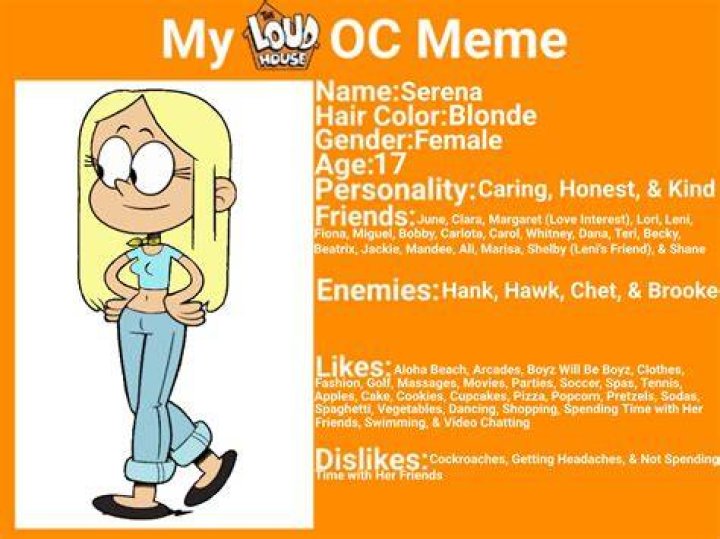
Loud House OC Meme: The Fan-Made Phenomenon Shaping Nickelodeon Culture
 Emma Martin
The Loud House, Nickelodeon's animated series about Lincoln Loud and his ten sisters, sparked an unexpected internet phenomenon that went far beyond the show's original content. Fans began creating their own characters—original creations known as OCs—and these homemade additions to the Loud family universe quickly evolved into a meme culture that defined how younger audiences interact with their favorite shows.
What started as simple fan art on DeviantArt and Tumblr transformed into a full-blown creative movement. These fan-made siblings, friends, and relatives of the Loud family became templates for humor, self-expression, and occasionally absurdist comedy that the internet loves to share and remix.
What Makes a Loud House OC Meme
The typical Loud House OC follows a recognizable pattern. Fans design a character that fits within the show's distinctive art style—simple lines, large heads, and exaggerated features. Most OCs present themselves as additional Loud siblings, despite the family already having eleven children. The character usually comes with a detailed biography: name, age, personality traits, special interests, and their place in the family hierarchy.
These creations became memes when the internet noticed certain patterns. Many OCs shared similar characteristics: unusual hair colors, overly tragic backstories, or abilities that seemed out of place in a slice-of-life cartoon. Some fans created characters that were essentially idealized versions of themselves inserted into the Loud House world.
The meme aspect kicked in when users began parodying these tropes. Satirical OCs emerged with intentionally ridiculous traits—like a Loud sibling who controls time or one whose entire personality revolves around a single obscure hobby. The community started recognizing these patterns and turned them into inside jokes.
Origins and Evolution of the Trend
The Loud House premiered in 2016, and within months, fan communities on platforms like DeviantArt, Amino, and Reddit began sharing original characters. The show's simple art style made it accessible for amateur artists to create convincing-looking characters without professional skills.
By 2017, the trend had reached critical mass. Hundreds of OCs flooded fan sites, each with elaborate wikis, relationship charts, and episode concepts. The sheer volume caught the attention of broader internet culture. Meme pages began screenshotting particularly earnest or over-the-top OCs, not necessarily to mock the creators but to highlight the universal patterns in fan creativity.
YouTube channels dedicated to reviewing and discussing these characters gained thousands of subscribers. Some creators made "OC rating" videos, while others crafted video essays analyzing why this particular show inspired such intense character creation. The discussion itself became part of the meme ecosystem.
The phenomenon mirrors similar trends in other fandoms—Sonic OCs, My Little Pony OCs, and Undertale AUs all followed comparable trajectories. But The Loud House version had unique characteristics tied to the show's family-centered premise and the young age of many fans.
Common Tropes and Why They Became Jokes
Several recurring elements define the Loud House OC meme landscape. Understanding these patterns helps explain why the meme resonated across social media platforms.
- The "lost sibling" who was given up for adoption or raised separately from the family, often with a dark or mysterious backstory
- Characters with unusual powers or abilities that don't match the show's realistic, grounded tone
- OCs designed as romantic interests for existing characters, sometimes ignoring the characters' ages or established personalities
- The "perfect" sibling who excels at everything and has no flaws, often functioning as a Mary Sue archetype
- Characters with overly complicated names or naming schemes that don't match the show's simple pattern (all daughters have names starting with L)
- Siblings placed between existing characters in age, disrupting the established birth order
- Characters whose entire identity centers on a single trait, hobby, or aesthetic
The Psychology Behind Fan-Created Characters
Creating OCs serves important developmental and social functions, especially for younger fans. These characters allow children and teenagers to explore identity, practice creative writing, and participate in communities that share their interests. The Loud House, with its focus on family dynamics and diverse personalities, provides an ideal framework for this exploration.
Dr. Rebecca Black, a researcher studying online youth communities, notes that fan fiction and character creation help young people develop literacy skills and cultural competencies. They learn to construct narratives, receive feedback, and revise their work—all valuable skills that transfer to academic and professional contexts.
The meme response doesn't necessarily diminish this value. Internet culture often treats earnest creativity with gentle mockery, but this rarely stops creators from continuing their work. Many artists who started with Loud House OCs have developed their skills and moved on to original projects or professional illustration work.
How the Meme Spread Across Platforms
Different social media platforms hosted different aspects of the Loud House OC meme culture. DeviantArt remained the primary hub for serious OC creation and sharing. Artists posted detailed character sheets, wrote fanfiction, and commissioned artwork of their characters interacting with canon characters.
Tumblr became a space for both earnest fandom and critical discussion. Users analyzed OC trends, created guides for making "better" OCs, and occasionally sparked discourse about creativity and gatekeeping in fan spaces.
Reddit and Twitter took more satirical approaches. Subreddits like r/TheReddestLoud and various Twitter accounts shared screenshots of particularly ambitious or unusual OCs, often with humorous commentary. These posts rarely named or directly harassed creators, instead treating the phenomenon as a broader cultural curiosity.
YouTube bridged these worlds. Some channels offered constructive criticism and tutorials, while others leaned into comedy and exaggeration. The variety of approaches meant different audience segments could engage with the meme according to their interests.
TikTok's rise introduced a new generation to the concept. Short videos showing "my Loud House OC in different scenarios" or "rating your Loud House OCs" brought the meme to users who might never have watched the show.
Impact on The Loud House Fandom
The OC meme had complex effects on the show's fan community. Some creators felt discouraged by the mockery, while others embraced the humor and created intentionally over-the-top characters as jokes. A subset of fans became defensive of OC creators, arguing that mocking children's creative efforts was mean-spirited.
The controversy sparked conversations about fandom etiquette, creative freedom, and the line between playful teasing and harmful bullying. Many communities developed guidelines about how to discuss OCs respectfully while still allowing critical analysis and humor.
Interestingly, some of the most skilled artists in the fandom started as OC creators. They refined their abilities through practice, accepted feedback, and eventually gained recognition for their talents. The OC trend, meme status notwithstanding, functioned as a training ground for emerging artists.
Official Loud House content remained distant from the OC phenomenon. The show's creators never directly acknowledged fan characters, maintaining the separation between canon and fanon that most media properties enforce. This distance allowed the fan community to develop independently without corporate influence.
Comparing to Other Cartoon OC Cultures
The Loud House OC meme exists within a broader tradition of cartoon fan characters. The Sonic the Hedgehog fandom pioneered the "recolor OC" concept in the early 2000s, creating countless variations on the blue blur's design. My Little Pony friendship is Magic spawned thousands of pony OCs with detailed cutie marks and backstories.
Each fandom's OC culture reflects something about the source material. Sonic OCs often emphasized speed and attitude. Pony OCs focused on special talents and friendship dynamics. Loud House OCs centered on family position and personality archetypes, mirroring the show's structure.
The Loud House version stands out for its accessibility. The show's art style requires less technical skill to replicate than more detailed animation styles. This lower barrier to entry meant more fans could participate, which amplified both the creative output and the meme potential.
The Creative and Critical Balance
Not all engagement with Loud House OCs came from a mocking place. Many fan communities developed sophisticated discussions about character design, narrative construction, and world-building. Some fans created comprehensive guides for designing OCs that fit naturally into the show's universe.
These guides addressed common critiques: keep powers grounded in reality, respect the established family dynamics, develop flaws alongside strengths, and avoid making the OC the center of every story. Fans who followed these principles often received positive feedback and genuine engagement from their communities.
The existence of both parody and sincere creation created an ecosystem where different types of fans could coexist. Someone could laugh at an absurd OC meme while also genuinely enjoying well-crafted fan characters. This duality kept the conversation dynamic rather than purely negative or positive.
Frequently Asked Questions
Why did The Loud House inspire so many original characters?
The show's simple art style makes it easy for fans to create characters that look like they belong in the universe. The large family structure also provides a natural framework for adding new members, and the show's focus on distinct personalities gives fans a template for character development. Young audiences particularly connected with the family dynamics, making them want to imagine themselves or their own characters within that world.
Are Loud House OC memes making fun of young creators?
The situation is nuanced. Some meme content gently pokes fun at common tropes without targeting specific creators, while other instances cross into mean-spirited territory. Many participants in meme communities argue they're critiquing patterns rather than individuals, but the impact on young creators can still feel personal. The conversation has sparked important discussions about how fandoms balance humor with respect for emerging artists.
Has the Loud House OC trend declined?
While the peak occurred between 2017 and 2019, OC creation continues at a steady pace. The meme aspect has become more self-aware, with creators often acknowledging common tropes while still making characters they enjoy. Newer platforms like TikTok have introduced the concept to fresh audiences, ensuring the phenomenon persists in evolved forms. The trend may never reach its original intensity, but it remains a recognizable part of the show's fandom culture.
Legacy and Current State
Today, the Loud House OC meme exists as internet folklore. New fans discovering the show often learn about the OC tradition and either participate earnestly or create parody characters. The meme has been documented in various "internet culture" wikis and video essays about fandom behavior.
Some original OC creators have moved beyond The Loud House entirely, using skills developed in the fandom to pursue animation careers, webcomic projects, or other creative endeavors. The experience of sharing work, receiving feedback, and engaging with a community provided valuable lessons that transcended the specific fandom.
The phenomenon also influenced how subsequent animated shows' fandoms approached character creation. Communities became more aware of common pitfalls and developed more sophisticated approaches to fan content. The Loud House OC era, for better or worse, educated a generation of young creators about character design and storytelling.
Final Thoughts
The Loud House OC meme represents a fascinating intersection of creativity, community, and internet culture. What began as children and teenagers expressing their love for a cartoon became a widely recognized phenomenon that sparked discussions about artistic development, fandom etiquette, and the nature of online creativity. The meme status doesn't invalidate the genuine creative expression that spawned it, nor does the sincere artistry erase the humorous patterns that emerged. Both aspects coexist, creating a rich cultural artifact that tells us as much about internet communities as it does about The Loud House itself. Years after the trend's peak, these fan-made characters remain a testament to how audiences transform passive consumption into active participation, regardless of whether the results become memes or masterpieces.
