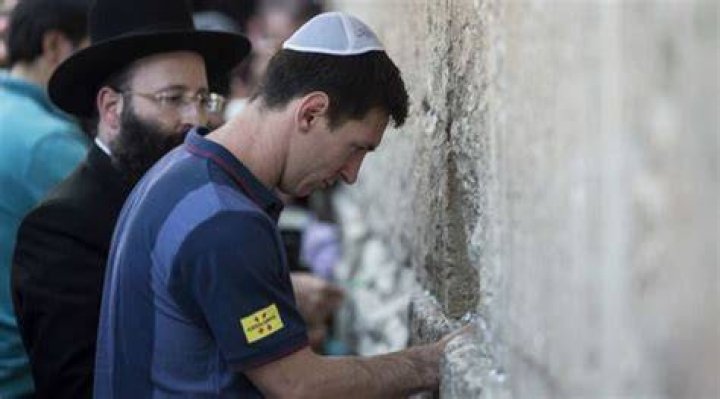
Messi at the Western Wall: When Football Met Sacred Ground
 Jessica Hardy
When Lionel Messi approached the Western Wall in Jerusalem's Old City, the world's most recognizable footballer became just another pilgrim at one of humanity's most sacred sites. The Argentine superstar's visit to the Mur des Lamentations—as it's known in French—created a fascinating intersection between modern sports celebrity and ancient religious tradition that captured global attention.
The Western Wall, or Kotel in Hebrew, stands as Judaism's holiest prayer site. For centuries, people from every corner of the globe have pressed written prayers into its ancient stones. When Messi joined this timeless ritual, cameras captured a rare moment of vulnerability from an athlete typically seen dominating football pitches.
The Visit That Captured Headlines
Messi's appearance at the Western Wall didn't happen in isolation. The football legend visited Jerusalem as part of Argentina's national team activities, bringing him face-to-face with a site that predates modern football by millennia. Dressed casually and accompanied by security, he followed Jewish custom by placing his hand on the weathered limestone blocks.
Photos circulated rapidly across social media platforms. Some showed Messi wearing a kippah, the traditional Jewish head covering required for men at the holy site. Others captured him appearing contemplative, perhaps placing a prayer note between the wall's crevices—a practice observed by millions annually.
The timing coincided with Argentina's international fixtures, bringing the national squad to Israel for matches that would become secondary news to Messi's cultural engagement. His visit wasn't just a tourist stop. It represented respect for local customs and an acknowledgment of the wall's profound significance to Jewish people worldwide.
Understanding the Western Wall's Significance
Built during the Second Temple period around 19 BCE under King Herod's expansion project, the Western Wall is all that remains of the ancient temple complex destroyed by Romans in 70 CE. Its stones have witnessed empires rise and fall, survived earthquakes, and absorbed the tears and prayers of countless generations.
The site operates under strict protocols. Men and women pray in separate sections divided by a partition. Visitors dress modestly out of respect. The tradition of inserting written prayers into gaps between stones has created a unique ritual where people entrust their deepest hopes to ancient rock.
Approximately ten million visitors arrive each year. Religious Jews pray here three times daily. Tourists photograph it from the adjacent plaza. Bar mitzvah celebrations unfold against its backdrop. Soldiers take their oaths here. For Jerusalem, the Western Wall functions as both spiritual anchor and national symbol.
Why Messi's Visit Resonated Globally
Celebrity visits to religious sites aren't uncommon, but Messi's appearance struck a different chord. Here was arguably football's greatest player—a man who'd conquered every sporting peak—engaging with something beyond trophies and records.
The imagery provided contrast. Messi, accustomed to stadium roars from 80,000 fans, stood quietly at a wall where whispered prayers matter more than decibels. The athlete who'd perfected ball control demonstrated a different kind of discipline: cultural sensitivity in an unfamiliar religious context.
For Argentine fans, many of whom share Jewish heritage, the visit held special meaning. Argentina hosts Latin America's largest Jewish community, creating natural connections between the footballer and the site. Some saw his visit as bridging his homeland's diverse cultural threads.
Media coverage spanned sports sections and cultural pages. Jewish publications highlighted the respect he showed. Football outlets analyzed what the visit revealed about Messi beyond match statistics. Social media users debated whether athletes should engage with religious sites during official team duties or keep such visits private.
The Broader Context of Athletes and Sacred Sites
Sports stars frequently visit significant cultural and religious landmarks during international competitions. These moments humanize athletes who otherwise seem superhuman on playing fields. They also spark conversations about celebrity influence, cultural exchange, and respect for traditions outside one's own background.
Some athletes approach such visits as educational opportunities. Others seek spiritual connection or simply fulfill diplomatic expectations accompanying national team travel. The Western Wall, given its geopolitical and religious weight, adds layers of meaning absent from typical tourist stops.
Football teams visiting Israel face unique circumstances. Matches in the region carry political undertones. Players' off-field activities receive scrutiny that wouldn't exist elsewhere. Messi's choice to visit the Western Wall—rather than avoiding potentially sensitive situations—suggested intentional cultural engagement.
Cultural Exchange Through Sports
International football creates unusual opportunities for cross-cultural moments. Players from Catholic-majority Argentina praying at Judaism's holiest site. Muslim athletes competing in Jerusalem. These intersections happen constantly in global sports but rarely receive attention unless involving someone of Messi's stature.
The visit demonstrated how sports can facilitate cultural understanding. Fans who'd never heard of the Western Wall learned about its significance through their football hero's actions. Jewish communities appreciated the gesture from someone admired by millions. The moment transcended sports reportage to become a brief cultural education for global audiences.
Questions emerged about what Messi might have written if he left a prayer note. Did he request continued success on the pitch? Pray for family? Perhaps something entirely unrelated to football? The privacy surrounding prayer notes means we'll never know—and that mystery adds to the moment's appeal.
Impact on Tourism and Public Perception
Celebrity visits to the Western Wall historically boost tourism interest. When Madonna visited in 2004 to study Kabbalah, inquiries about the site spiked globally. Messi's appearance likely had similar effects, with football fans adding Jerusalem to their travel lists.
The Argentine Football Association's decision to schedule the visit reflects calculated thinking about soft diplomacy. Sports teams act as unofficial ambassadors. Their interactions with local culture can improve bilateral relations or, if mishandled, create diplomatic incidents. Messi's respectful approach succeeded on both fronts.
Local reactions in Jerusalem were reportedly positive. Seeing one of football's icons treat their sacred space with reverence validated the site's universal appeal. It also provided rare positive headlines for a region more often associated with conflict than celebrity tourism.
Frequently Asked Questions
Why is the Western Wall called the Wailing Wall?
The term "Wailing Wall" comes from historical observations of Jewish people mourning the temple's destruction at this site. Many Jews prefer "Western Wall" or "Kotel" as these names emphasize the structure itself rather than sorrow. The French term "Mur des Lamentations" directly translates to "Wall of Lamentations," carrying similar connotations to the English "Wailing Wall."
Do visitors need to follow specific rules at the Western Wall?
Yes. Modest dress is required—covered shoulders and knees for both genders. Men must cover their heads, typically with provided paper kippahs. The plaza is divided into men's and women's sections. Photography is permitted except on Shabbat and Jewish holidays. Visitors are expected to maintain respectful silence and behavior appropriate for a house of worship.
Have other famous athletes visited the Western Wall?
Numerous athletes have visited over the years, though few generate Messi's level of attention. Basketball teams playing in Israel often include Western Wall visits in their itineraries. Olympic athletes competing in regional events sometimes stop by. The site's proximity to other Jerusalem landmarks makes it a natural inclusion in guided tours for visiting sports delegations.
Final Thoughts
Messi's visit to the Mur des Lamentations ultimately represents more than a photo opportunity or tourist checkbox. It showed a global icon engaging respectfully with traditions outside his own cultural framework. In an era when athletes' every move faces scrutiny, his quiet moment at the Western Wall offered something refreshing: genuine cultural curiosity meeting ancient spiritual practice.
The images of him at the wall will outlast whatever football matches brought him to Jerusalem. They serve as reminders that even the greatest athletes remain seekers, curious about the world beyond their professional domains. Whether he prayed for victory, family, or something entirely different, Messi demonstrated that some experiences transcend language, sport, and fame.
