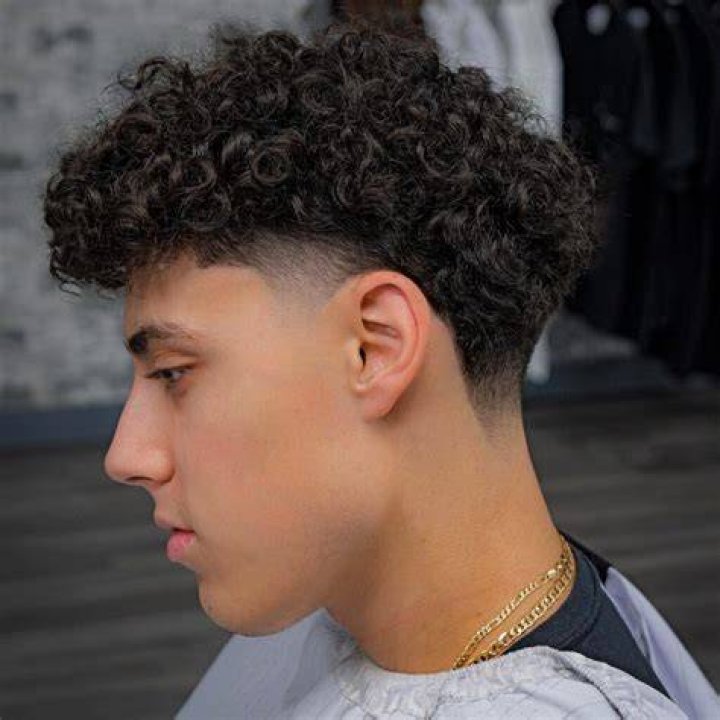
Mid Taper with Curly Hair: The Ultimate Guide for 2026
 Noah Mitchell
The mid taper has become one of the most requested haircuts for men with curly hair, and there's a good reason why. This style works with your natural texture rather than fighting against it, creating a clean silhouette that highlights your curls on top while gradually fading the sides. Unlike harsh, blunt cuts that can make curly hair appear boxy, the mid taper offers a smooth transition that flatters nearly every face shape and curl type.
Curly-haired individuals have spent years being told their texture was difficult to manage or style. Those days are over. Modern barbering techniques now celebrate natural curl patterns, with the mid taper standing out as a particularly effective option. This cut sits between a low fade and a high fade—starting roughly at the temple or ear level—giving you enough length to showcase your curls while keeping the overall look polished and professional.
Understanding the Mid Taper for Curly Hair
A mid taper specifically refers to where the fade begins on your head. The barber starts the gradual shortening process around the midpoint of your head's sides, typically aligned with your temples. For curly hair, this positioning is strategic. It maintains enough volume on top to let your curls express themselves naturally while creating structure around the edges.
The beauty of this cut lies in its adaptability. Whether you have tight coils, loose waves, or anything in between, a skilled barber can adjust the taper's gradient to complement your specific curl pattern. Some clients prefer a sharp, defined line where the taper begins. Others want a softer, more gradual blend. Both approaches work perfectly with curly textures.
The length you keep on top matters tremendously. Most people with curly hair opt for two to four inches of length at the crown, though this varies based on curl tightness and personal preference. Tighter curls can often handle more length without appearing overgrown, while looser curls might need strategic layering to prevent a triangular shape.
Why This Cut Works So Well for Curly Hair
Curly hair grows outward, not just downward. Without proper shaping, it can create an unbalanced silhouette that adds unwanted width to your head. The mid taper solves this by removing bulk from the sides and back while preserving the volume where it looks best—on top.
Traditional clipper cuts often leave curly hair looking disconnected or choppy. The gradual blending of a taper creates visual flow. Your eye moves smoothly from the skin or very short hair at the bottom up to the textured curls at the crown. This transition appears intentional and styled rather than accidentally overgrown.
Maintenance becomes simpler too. As your hair grows out, the taper softens gradually rather than creating harsh lines that scream "I need a haircut." You can typically go three to five weeks between barber visits, depending on how fast your hair grows and how defined you want the taper to remain.
Different Variations to Consider
The standard mid taper provides a fantastic foundation, but several variations can personalize the look:
- Mid taper fade with curly top: The most popular version, featuring a skin fade that starts mid-head and leaves substantial length on top for maximum curl definition
- Textured mid taper: Incorporates point cutting or slide cutting techniques on top to enhance curl separation and reduce bulk
- Mid taper with hard part: Adds a shaved line on one side for extra definition and structure
- Drop mid taper: The fade curves downward behind the ears, creating a wraparound effect that works beautifully with rounder face shapes
- Mid burst fade: The taper radiates outward from behind the ear, leaving more length at the back of the neck
Styling Your Mid Taper with Curly Hair
Proper styling makes the difference between a good haircut and a great one. Start with damp hair—not soaking wet, but not dry either. This is when curly hair is most receptive to product and styling.
Apply a curl-enhancing cream or lightweight gel, working it through with your fingers or a wide-tooth comb. Avoid brushes, which can disrupt your curl pattern and create frizz. Scrunch your curls upward to encourage definition and volume at the roots.
Air drying works perfectly for most curl types with this cut. The shorter sides dry quickly, and the length on top benefits from natural drying, which tends to produce more defined curls than heat styling. If you're in a hurry, use a diffuser attachment on your blow dryer with low heat and medium airflow. Cup sections of your curls in the diffuser bowl and hold for 10-15 seconds before moving to the next section.
Many people with curly hair benefit from second-day styling techniques. Refresh your curls in the morning by lightly misting them with water mixed with a small amount of leave-in conditioner. Scrunch gently and let air dry for 5-10 minutes. The taper stays fresh even when you're refreshing the top, which makes morning routines faster.
Maintenance and Hair Care Essentials
Curly hair thrives on moisture. Use a sulfate-free shampoo no more than twice weekly. Co-washing—cleansing with conditioner only—works well on the in-between days to refresh without stripping natural oils.
Deep condition weekly. The curls on top of your mid taper need extra nourishment to maintain their spring and shine. Look for products with ingredients like shea butter, coconut oil, or argan oil. Apply generously, leave on for 15-20 minutes, then rinse with cool water to seal the hair cuticle.
Protect your curls while sleeping. A satin or silk pillowcase reduces friction that causes frizz and breakage. Some people prefer a loose satin bonnet or buff that gathers the curls on top of the head without flattening them.
Visit your barber regularly to maintain the taper's shape. Every three to four weeks is ideal for keeping the fade crisp. Between appointments, you might need minor edge work around the hairline, which many barbers will do quickly as a touch-up service.
Choosing the Right Barber
Not every barber has extensive experience cutting curly hair. Look for professionals who showcase curly haircuts in their portfolio, either on social media or in their shop. During your consultation, discuss your curl pattern, daily styling routine, and how much time you want to spend on maintenance.
A skilled barber will cut your hair while it's dry or only slightly damp. Cutting curly hair while wet can lead to surprises when it dries and shrinks. They should also cut curl by curl, respecting the natural pattern rather than using uniform clipper lengths that ignore texture differences.
Don't hesitate to bring reference photos showing multiple angles of the style you want. Pictures communicate more clearly than verbal descriptions, especially regarding taper height and top length. Your barber can then explain how to adapt that style to your specific hair characteristics.
Common Mistakes to Avoid
The biggest error is cutting the sides too short too quickly. A mid taper should transition gradually. If your barber removes too much length at once, you'll end up with a high fade instead, which might not complement your curl volume on top.
Over-washing strips your hair of protective oils, making curls dry and frizzy. That fresh mid taper deserves healthy, hydrated curls on top. Stick to your cleansing schedule and resist the urge to shampoo daily, even if you're used to that routine from when you had shorter hair.
Using the wrong products creates unnecessary challenges. Heavy pomades and waxes weigh down curls and make them stringy. Light mousses might not provide enough hold for denser curl patterns. Experiment with curl-specific products—creams for moisture, gels for definition, and mousses for volume—to find what works for your texture.
Skipping regular trims is tempting, but the taper loses its shape as hair grows. What looked sharp and intentional at week two becomes fuzzy and undefined by week six. Book your next appointment before you leave the barbershop to ensure consistency.
Face Shapes and the Mid Taper
This versatile cut complements most face shapes with minor adjustments. Oval faces have the most flexibility—nearly any taper variation works well. Keep the top length moderate to avoid elongating your face unnecessarily.
Round faces benefit from added height on top, which creates the illusion of length. Ask your barber to leave more volume at the crown and consider a slightly higher taper placement to slim the sides visually.
Square and rectangular faces pair beautifully with mid tapers that maintain width on top. The taper shouldn't start too high, as this can make angular features appear even sharper. A drop taper works particularly well, softening the overall appearance.
Heart-shaped faces, characterized by wider foreheads and narrower chins, look balanced with mid tapers that keep volume distributed throughout the top rather than concentrated at the crown. This creates proportion between the upper and lower portions of the face.
Frequently Asked Questions
How often should I get a mid taper with curly hair trimmed?
Plan on visiting your barber every three to four weeks to maintain the taper's definition. The curls on top can often go longer between cuts—six to eight weeks—but the sides and back need regular attention to preserve that clean, graduated look. If you prefer a softer, more grown-out appearance, you can stretch appointments to five or six weeks.
Will a mid taper work with very tight curls or coils?
Absolutely. The mid taper actually works exceptionally well with tight curl patterns and coily textures. The key is leaving enough length on top—typically three to four inches minimum before shrinkage—so your curls have room to form and showcase their texture. Your barber should use techniques like twist cutting or coil-by-coil trimming to preserve your natural pattern while shaping the style.
Can I style my mid taper differently for professional versus casual settings?
Yes, that's one of the style's greatest strengths. For professional environments, use a curl cream with medium hold to create defined, controlled curls that lay closer to your head. For casual settings, apply a lighter product or even just leave-in conditioner, then scrunch for more volume and a relaxed texture. The taper itself remains polished regardless, so the top can adapt to different contexts.
What's the difference between a mid taper and a mid fade with curly hair?
The terms are often used interchangeably, but technically a taper gradually shortens the hair without necessarily going down to skin, while a fade takes the hair down to the skin at the bottom. For practical purposes with curly hair, most "mid tapers" incorporate some level of fading. Discuss with your barber whether you want a true taper that maintains visible hair throughout or a fade that goes to skin.
How do I prevent my curls from getting frizzy on the longer top section?
Frizz happens when the hair cuticle is raised and moisture escapes. Combat this by applying products to damp hair, using microfiber towels or t-shirts instead of regular terry cloth towels, and finishing your styling routine with a small amount of lightweight oil to seal the cuticle. Also, reduce how often you touch your hair throughout the day—hands transfer oils and disrupt the curl pattern.
The Cultural Impact and Growing Popularity
The mid taper with curly hair represents a broader shift in how textured hair is perceived and celebrated. Decades of Eurocentric beauty standards pressured people with curly hair to straighten, relax, or hide their natural texture. Now, styles like the mid taper showcase curls as an asset rather than something to manage or conceal.
Social media has accelerated this change. Platforms like Instagram and TikTok feature countless barbers demonstrating curly hair techniques, making it easier for people to find skilled professionals and see what's possible with their texture. Hashtags related to curly hair and taper fades generate millions of posts, creating communities where people share tips, product recommendations, and barber referrals.
Professional athletes, musicians, and actors sporting mid tapers with natural curls have normalized the style across different contexts. What might have once been considered too casual for certain settings is now seen in boardrooms, on red carpets, and everywhere in between. This visibility matters—it tells younger generations with curly hair that their natural texture is worth celebrating, not hiding.
Final Thoughts
The mid taper with curly hair offers exactly what modern styles should: versatility without compromise. You get structure from the taper and personality from your curls, creating a look that feels current without chasing temporary trends. Whether you're growing out a shorter cut or refining your current style, this approach provides a solid foundation that adapts as your preferences evolve.
Finding the right barber makes all the difference. Once you connect with someone who understands curly hair and can execute a clean taper, you've solved most of the challenge. From there, it's about learning your hair's specific needs—the right products, the ideal washing frequency, and how much length works best for your lifestyle. Give yourself a few weeks to adjust to the new routine if you're coming from a different style.
Your curls deserve a cut that works with them, not against them. The mid taper does exactly that, creating a polished appearance that still feels authentically you. Take the reference photos, book the consultation, and see how this style transforms your daily routine. You might just wonder why you didn't make the change sooner.
