Ship to Shore Intro Instrument: The Bosun's Whistle Explained
 Matthew Cannon
The opening credits of the Australian children's television series "Ship to Shore" remain etched in the memories of viewers who grew up in the 1990s. That distinctive piercing sound—a sharp, attention-grabbing call that immediately transported audiences to a maritime adventure—came from an instrument with centuries of naval tradition behind it. The bosun's whistle, also known as a boatswain's pipe or call, served as the perfect auditory symbol for a show centered around life on an island and the sea.
This small but powerful instrument has been a fixture on naval vessels since at least the 13th century. Its inclusion in the Ship to Shore theme wasn't just a creative flourish. It was a deliberate choice that connected the show's island setting to authentic maritime culture, creating an instant association with seafaring life that words alone couldn't achieve.
What Is a Bosun's Whistle
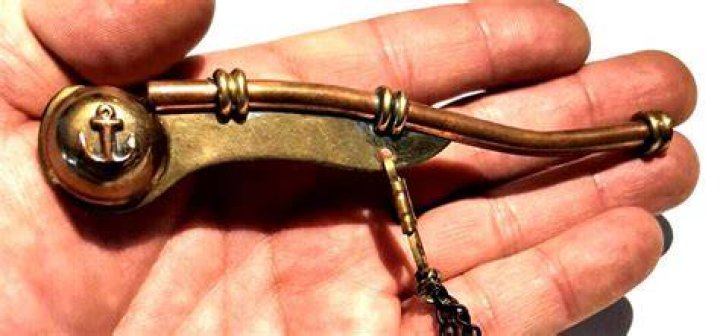
The bosun's whistle is a metal pipe instrument traditionally used for signaling aboard ships. Compact enough to fit in the palm of your hand, it consists of a narrow tube with a ball attached at one end and a flat, curved piece at the other. When air is blown through the instrument and manipulated with the fingers, it produces a range of high-pitched tones that can cut through wind, waves, and the general cacophony of a working ship.
Naval personnel have relied on these whistles for practical communication for hundreds of years. Different sequences of notes conveyed specific commands to crew members—everything from calling all hands on deck to piping officers aboard. The whistle's piercing frequency was specifically designed to be heard over the noise of the ocean and ship operations, making it far more effective than shouting in harsh maritime conditions.
The instrument typically measures between 3 to 5 inches in length and is usually made of brass, silver, or other metals that resist corrosion from salt water. Professional quality whistles can cost anywhere from thirty dollars for basic models to several hundred for ceremonially engraved pieces still used in naval traditions today.
Historical Significance in Naval Tradition
References to piping aboard ships date back to the Crusades, when they were used to signal timing for rowing galleys. By the age of sail, the bosun's whistle had become an indispensable tool for ship operations. The boatswain—the senior crewman responsible for rigging, anchors, cables, and deck crew—would use the pipe to relay the captain's orders across the vessel.
The Royal Navy formalized bosun's calls into a standardized system of commands. Each call had a specific pattern of notes. "All Hands" summoned the entire crew. "Pipe Down" signaled silence or the end of the working day. "Still" demanded immediate attention and silence for an important announcement. These weren't just musical flourishes—they were a sophisticated communication system that could coordinate hundreds of sailors simultaneously.
Naval tradition elevated the whistle beyond mere utility. Piping a captain or admiral aboard became a mark of honor and respect. The practice continues in modern navies worldwide, where the bosun's call remains part of ceremonial protocol despite advances in electronic communication.
Why Ship to Shore Chose This Instrument
When producers of Ship to Shore developed the show's opening sequence in 1993, they needed an audio signature that would immediately establish the maritime setting. The bosun's whistle accomplished this in seconds. That opening blast became one of the most recognizable theme introductions in Australian children's television.
The choice reflected thoughtful production design. Ship to Shore told stories about teenagers living on Circe Island, a fictional location accessible only by boat. The narrative centered on the interaction between island residents and mainland visitors, with the sea serving as both barrier and connector. Using an authentic naval instrument reinforced the show's authenticity and maritime atmosphere.
Television themes live or die by their ability to create instant recognition. The bosun's whistle in Ship to Shore succeeded brilliantly because it was distinctive, appropriate, and memorable. You couldn't confuse it with any other show. That sharp, rising call became synonymous with the series itself.
The Sound That Defined a Generation
For Australian viewers who watched Ship to Shore during its original run from 1993 to 1997, that bosun's whistle call triggers immediate nostalgia. The show aired during after-school timeslots and became appointment viewing for its target demographic. Three seasons and 78 episodes cemented its place in Australian pop culture.
The series tackled substantial themes—environmental conservation, teenage identity, family relationships, cultural differences—all within its island setting. But before any of that unfolded, viewers heard that whistle. It became the audio equivalent of a starting gun, signaling that the next half-hour would transport them away from suburban reality to island adventures.
Online discussions about 1990s Australian television invariably mention Ship to Shore, and comments frequently reference "that whistle sound" or "the opening pipe." The instrument's inclusion proved more than decorative—it became integral to the show's identity.
How to Play a Bosun's Whistle
Playing a bosun's whistle requires technique despite its simple appearance. The musician holds the whistle between thumb and forefinger, with the ball resting in the palm. Air blown through the mouthpiece creates sound, but pitch variation comes from how the fingers cover or expose the hole on top of the pipe.
Covering the hole completely produces the highest pitch. Gradually uncovering it lowers the tone. Different rates of covering and uncovering create the characteristic swooping sounds heard in naval calls. The volume depends on breath pressure—gentle blowing creates soft notes, while forceful breath produces the piercing blast that can carry across a ship's deck.
Traditional naval calls follow specific patterns passed down through generations. Learning these takes practice and often apprenticeship with experienced boatswains. Modern navies still teach proper piping technique to personnel who perform ceremonial duties.
The Whistle in Modern Context
While modern ships rely on electronic communication systems, the bosun's whistle hasn't disappeared. Naval vessels maintain the tradition for ceremonies, particularly when receiving commanding officers, admirals, or official visitors. The practice honors centuries of maritime history and maintains cultural continuity.
Collectors prize antique bosun's whistles, particularly those with documented naval service. Engraved pipes from historic vessels or those belonging to noted officers can fetch significant sums at maritime auctions. Museums with naval collections typically display examples showing the evolution of design and decoration over centuries.
The instrument also appears in film, television, and theater whenever authentic maritime atmosphere is needed. Sound designers recognize its instant association with naval and seafaring contexts. That same quality made it perfect for Ship to Shore's opening.
Cultural Impact Beyond Ship to Shore
The bosun's whistle represents one of those rare instruments that transcends its original purpose to become a cultural symbol. Like the bugle in military contexts or the bell in school settings, the whistle immediately evokes specific associations—in this case, ships, sailors, and the sea.
Literature references the bosun's pipe frequently. From Horatio Hornblower novels to Patrick O'Brian's Aubrey-Maturin series, authors use the whistle to add authenticity to naval fiction. Film productions featuring naval subjects incorporate proper piping to maintain historical accuracy.
Music occasionally features the whistle as an exotic percussion instrument. Its distinctive timbre adds maritime flavor to compositions, though it appears more often in sound effects and production music than mainstream recordings.
Frequently Asked Questions
What instrument makes the sound in the Ship to Shore intro?
The instrument is a bosun's whistle, also called a boatswain's pipe or call. This traditional naval instrument has been used on ships for centuries to issue commands and signal ceremonies. Its sharp, high-pitched sound was chosen for Ship to Shore because it immediately establishes the show's maritime setting and has been instantly recognizable to Australian viewers since the series first aired in 1993.
Can anyone learn to play a bosun's whistle?
Yes, though mastering the traditional naval calls requires practice. The basic technique involves blowing through the pipe while manipulating finger coverage over the sound hole to change pitch. Beginners can produce sound relatively quickly, but executing proper naval calls with the correct timing and tone takes dedicated practice. Modern bosun's whistles are available for purchase online and through maritime supply shops, with prices ranging from affordable basic models to ceremonial-grade instruments.
Are bosun's whistles still used in modern navies?
Modern naval vessels primarily use electronic communication systems for operational commands, but bosun's whistles remain in active use for ceremonial purposes. Naval personnel still pipe commanding officers aboard, honor visiting dignitaries, and maintain traditional calls during formal occasions. Many navies train select crew members in proper piping technique to preserve this centuries-old tradition. The practice connects contemporary sailors to the long history of maritime service.
The Legacy of a Simple Sound
Television history is filled with memorable theme songs and opening sequences, but few audio elements work as efficiently as the bosun's whistle in Ship to Shore. In less than two seconds, it accomplished what exposition might take paragraphs to explain. That opening blast said: this is a story about the sea, about islands, about maritime life and adventure.
The production team's decision to feature an authentic naval instrument rather than synthesized sounds or generic music demonstrated respect for both maritime tradition and audience intelligence. They trusted viewers to respond to the whistle's inherent associations without requiring explanation.
Decades after Ship to Shore concluded, the bosun's whistle continues its double life—serving naval tradition aboard ships worldwide while simultaneously triggering nostalgia in a generation of Australian television viewers. That's a remarkable legacy for a small metal pipe that most people outside maritime circles would struggle to name.
The next time you hear that distinctive rising pitch—whether in a naval ceremony, a film soundtrack, or a YouTube clip of 1990s television—you'll recognize the bosun's whistle. You'll know it's an instrument with genuine history behind it, one that commanded sailors across oceans for centuries before it ever introduced a television show. And if you grew up watching Ship to Shore, you'll probably feel that familiar rush of anticipation that came every time the theme started playing.
