UFC: Inside the World's Premier Mixed Martial Arts Organization
 Isabella Little
 The Ultimate Fighting Championship has transformed from a controversial experiment into a billion-dollar sports empire. What began in 1993 as a no-holds-barred tournament designed to determine which martial art reigned supreme has evolved into a meticulously regulated combat sport with fans spanning every continent. The UFC now stands as the world's largest mixed martial arts promotion, hosting events that draw millions of viewers and generate fighters who've become household names.
Mixed martial arts combines techniques from boxing, wrestling, Brazilian jiu-jitsu, Muay Thai, judo, and countless other disciplines. Fighters must master striking, grappling, submissions, and cage control to compete at the highest level. This blend of combat styles creates unpredictable matchups where a wrestler might face a knockout artist, or a jiu-jitsu specialist could battle a kickboxer. The result? Pure athletic drama that keeps audiences on the edge of their seats.
How the UFC Started and Nearly Disappeared
Art Davie and Rorion Gracie conceived the UFC to showcase Brazilian jiu-jitsu's effectiveness against other martial arts. The first event took place in Denver, Colorado, featuring eight fighters in a single-elimination tournament with minimal rules. Royce Gracie, a relatively small Brazilian jiu-jitsu practitioner, defeated three larger opponents in one night, shocking spectators and proving that technique could overcome size and strength.
Early UFC events were brutal. Fighters could headbutt, strike groin areas, and continue attacking grounded opponents with few restrictions. Senator John McCain famously called it "human cockfighting" and led a campaign that forced the UFC out of cable television and banned it from most states. The promotion nearly collapsed financially. By 2000, the company was hemorrhaging money and struggling to find venues willing to host events.
Everything changed when casino executives Frank and Lorenzo Fertitta purchased the UFC for $2 million in 2001, installing Dana White as president. They implemented weight classes, banned dangerous techniques, adopted unified rules, and secured athletic commission oversight. These changes legitimized the sport. State by state, athletic commissions began sanctioning MMA. In 2005, Spike TV's reality show "The Ultimate Fighter" introduced mainstream audiences to the fighters' personalities and training, igniting explosive growth.
Weight Divisions and Championship Structure
The UFC currently operates twelve weight divisions across men's and women's competitions. Men compete in flyweight (125 pounds), bantamweight (135), featherweight (145), lightweight (155), welterweight (170), middleweight (185), light heavyweight (205), and heavyweight (up to 265 pounds). Women fight at strawweight (115), flyweight (125), bantamweight (135), and featherweight (145). Each division crowns a champion who defends their title against top contenders.
Rankings determine who fights for championships. A panel of media members votes weekly to rank the top fifteen fighters in each division. Champions typically face the highest-ranked available contender, though the UFC occasionally books superfights between champions from different weight classes or grants title shots based on marketability rather than rankings alone.
Rules That Govern Modern MMA
UFC fights follow the Unified Rules of Mixed Martial Arts, which most athletic commissions worldwide have adopted. Rounds last five minutes for championship and main event bouts (typically five rounds total) and three rounds for standard fights. Fighters wear fingerless gloves weighing four ounces, significantly lighter than boxing gloves, which allows grappling while providing minimal hand protection.
Legal techniques include punches, kicks, knees, elbows, takedowns, throws, and submissions. Fighters can strike a grounded opponent's body and legs but cannot knee or kick their head. The rules prohibit eye gouging, fish hooking, biting, hair pulling, groin strikes, and strikes to the back of the head or spine. Small joint manipulation and headbutts are banned. Referees stop fights when a fighter taps out, loses consciousness, or can no longer intelligently defend themselves.
Three judges score non-stopped fights using the ten-point must system borrowed from boxing. The round winner receives ten points while the loser gets nine or fewer, depending on dominance. Judges evaluate effective striking, grappling, aggression, and octagon control. Fights can end by knockout, technical knockout, submission, decision, disqualification, or rarely, a draw.
The Octagon: Why Eight Sides Matter
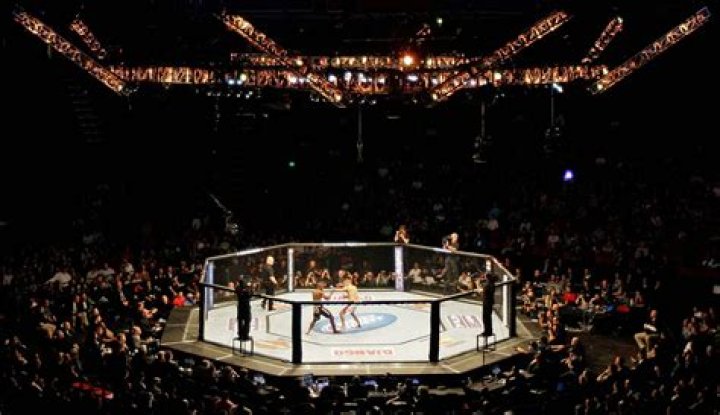
The UFC's signature octagon cage measures 30 feet across (or 25 feet for some venues) with eight angled sides. The design emerged from practical considerations. A circular cage would allow fighters to endlessly circle away from opponents. Square rings with corners let wrestlers trap opponents against turnbuckles. The octagon eliminates corners while providing defined boundaries, creating dynamic positional battles without dead zones.
The fence itself becomes a weapon and tool. Wrestlers press opponents against it to nullify striking advantages and set up takedowns. Strikers use it for balance while defending takedowns or to spring forward with explosive combinations. Fighters can trap opponents against the cage for extended periods, grinding them down with short strikes and shoulder pressure. Learning to fight on the fence separates good fighters from great ones.
Pay Structure and What Fighters Actually Earn
UFC fighter pay remains controversial. Featured champions earn millions per fight through purses, pay-per-view points, and sponsorships. Conor McGregor reportedly made over $180 million during his UFC career. Champions like Israel Adesanya, Francis Ngannou, and Amanda Nunes command six or seven-figure purses. However, preliminary card fighters often earn $12,000 to show and $12,000 to win, totaling $24,000 for a victory before taxes, coaching fees, and training camp expenses.
The UFC also pays performance and fight-of-the-night bonuses, typically $50,000 each, awarded to the most exciting finishes and overall bouts. Fighters receive Promotional Guidelines Compliance pay based on experience, replacing individual sponsorships after the UFC partnered with Venum for uniform deals. This system pays fighters between $4,000 for newcomers and $21,000 for veterans with more than 21 fights.
Critics argue fighters deserve a larger revenue share. Boxing typically allocates 70-80% of event revenue to fighters, while UFC fighters reportedly receive closer to 16-20%. The organization counters that it invests heavily in marketing, production, and developing the sport globally. Unlike boxing, where fighters negotiate individual purses, the UFC signs athletes to multi-fight contracts with predetermined pay structures.
Training Camps and Preparation Science
Elite fighters typically train eight to twelve weeks before fights, though they maintain baseline fitness year-round. Camps involve multiple daily sessions covering striking, wrestling, Brazilian jiu-jitsu, strength and conditioning, and specific preparation for upcoming opponents. Top athletes employ striking coaches, wrestling coaches, jiu-jitsu instructors, nutritionists, sports psychologists, and physical therapists.
Weight cutting remains one of MMA's most dangerous practices. Fighters often compete 15-25 pounds below their walking weight, dehydrating themselves drastically in the final days before weigh-ins. They eliminate water intake, sit in saunas, and use diuretics to shed water weight. After the official weigh-in (typically 24-36 hours before fighting), they rapidly rehydrate and refuel. This practice offers size and strength advantages but carries serious health risks, including kidney damage, decreased cognitive function, and increased vulnerability to head trauma.
Legendary Fighters Who Defined Eras
Royce Gracie pioneered submissions in early UFC events, winning three tournaments despite giving up significant size to opponents. His success forced fighters to learn ground fighting. Chuck Liddell became the sport's first mainstream star, knocking opponents unconscious with devastating strikes while defending takedowns with excellent wrestling. His rivalry with Tito Ortiz captivated audiences and proved MMA could generate boxing-level grudge matches.
Anderson Silva dominated middleweight competition for seven years, defending his title ten consecutive times with matrix-like head movement and precision striking. Georges St-Pierre revolutionized welterweight fighting by combining elite wrestling with improving striking, controlling opponents for five-round decisions. Jon Jones, despite personal troubles, demonstrated unprecedented versatility at light heavyweight, utilizing creative techniques and exceptional fight IQ to defeat every challenger.
Ronda Rousey brought women's MMA into the UFC and mainstream consciousness, finishing opponents with signature armbars in under a minute. Conor McGregor transcended the sport entirely, combining knockout power with unmatched promotional skills that made him the biggest pay-per-view draw in UFC history. Khabib Nurmagomedov retired undefeated at 29-0, smothering opponents with relentless pressure wrestling that no one could solve.
How UFC Events Actually Make Money
The UFC generates revenue through multiple streams. Pay-per-view remains significant, with major events costing $79.99 and drawing anywhere from 200,000 to over 2 million purchases. The promotion runs approximately twelve pay-per-view cards annually. ESPN+ holds exclusive streaming rights in the United States under a $1.5 billion five-year deal, making UFC content available to subscribers.
International broadcasting deals span over 175 countries. The UFC sells arena tickets ranging from a few hundred dollars to several thousand for cageside seats. Sponsorships from companies like Monster Energy, Toyo Tires, and DraftKings provide substantial income. The organization sold for $4 billion in 2016 to talent agency WME-IMG (now Endeavor), reflecting its market dominance. Merchandise sales, video games, and the UFC Performance Institute add revenue streams.
What Makes Someone Ready for the UFC
Most UFC fighters arrive with extensive amateur experience and wins in smaller promotions. The organization scouts talent from regional circuits, international promotions like ONE Championship and Bellator, and its own development leagues. "The Ultimate Fighter" reality show provides another pathway, offering winners UFC contracts. The Dana White's Contender Series showcases prospects fighting for contracts, with White deciding who earns roster spots.
Athletic commissions require fighters to pass medical examinations including bloodwork, MRIs, and eye tests. Once cleared, newcomers typically debut on preliminary cards, earning opportunities to climb rankings through victories. A four-fight win streak usually positions fighters for main card slots and ranked opponents. Spectacular finishes and exciting fighting styles accelerate this progression.
Common Injuries and Career Longevity
MMA ranks among the most physically demanding sports. Fighters routinely suffer concussions, broken bones, torn ligaments, and lacerations. Repeated head trauma raises serious long-term health concerns. Studies show cognitive decline in fighters who absorb significant strikes over long careers. Knee injuries from grappling exchanges frequently require surgery. Hand and foot fractures occur when strikes land awkwardly on hard surfaces like skulls and elbows.
The average UFC career lasts roughly four years, though champions and fan favorites compete much longer. Unlike team sports with guaranteed contracts, injured fighters simply don't get paid unless they fight. Many athletes compete hurt to maintain income and momentum. The UFC provides basic health insurance covering injuries sustained during fights and official training camps, but this coverage ends when contracts expire.
Global Expansion and International Markets
The UFC hosts events across six continents, strategically building fanbases in key markets. Brazil produces exceptional fighters and passionate crowds, making São Paulo and Rio de Janeiro regular destinations. The organization invested heavily in Asia, particularly China, Japan, and South Korea, though pandemic disruptions slowed momentum. European cards in London, Paris, Stockholm, and Prague draw enthusiastic audiences.
Abu Dhabi emerged as a crucial partner, hosting multiple events annually and housing the UFC's Middle East operations. The organization returns to Australia and New Zealand regularly, capitalizing on strong regional interest. This global approach develops local stars while introducing international audiences to established champions, creating must-see events regardless of location.
Behind the Scenes: Production and Broadcast
UFC broadcasts deploy over 30 cameras per event, including robotic systems, crane cams, and specialty angles that capture every moment. Slow-motion replays break down significant strikes and submission attempts frame by frame. Commentators Joe Rogan, Daniel Cormier, Jon Anik, and others provide real-time analysis, explaining technical details for casual fans while satisfying hardcore enthusiasts.
Graphics overlays display fight statistics, tracking significant strikes landed, takedowns completed, and control time. Between rounds, corner audio sometimes airs, revealing coaching strategies and fighter conditions. Embedded documentary series follow main event fighters during fight week, providing intimate looks at weight cuts, training sessions, and pre-fight emotions. This production value rivals major American sports leagues.
Controversies That Shadow the Sport
Performance-enhancing drug use plagued the UFC for years. The organization partnered with the United States Anti-Doping Agency in 2015, implementing year-round random testing and strict penalties. Numerous champions and contenders have tested positive, receiving suspensions from six months to four years. Some fighters argue the testing is too stringent, catching microscopic contamination from supplements rather than deliberate cheating.
Fighter pay disputes continue generating headlines. Fighters cannot unionize under current UFC contracts. Some athletes claim the organization retaliates against those who speak publicly about pay or push for better conditions. Antitrust lawsuits accuse the UFC of monopolistic practices that suppress fighter compensation. Legal battles remain ongoing.
Questionable judging decisions frustrate fighters and fans alike. Without instant replay for judges, controversial verdicts occasionally alter careers. The subjective nature of scoring close rounds where neither fighter dominates leaves room for disagreement. Some advocates push for open scoring between rounds, allowing fighters to know if they're ahead or behind, though the UFC has resisted this change.
Where the UFC Goes From Here
The UFC continues pursuing mainstream acceptance equivalent to traditional sports. Securing major network television deals beyond cable and streaming remains a goal. Expanding into new international markets while deepening roots in established ones will drive growth. The organization may eventually go public, though current ownership has not committed to this path.
Fighter pay pressure will likely force some adjustments, whether through increased base salaries, better revenue sharing, or improved benefits. Talent from other combat sports, particularly boxing and kickboxing, continues trickling into MMA, raising skill levels. Technological improvements in training, recovery, and nutrition extend fighter primes and elevate overall competition quality.
The sport itself keeps evolving. As fighters become more well-rounded, specialists struggle to survive using single disciplines. The gap between champions and contenders narrows as international talent pools deepen. What seemed impossible in the cage ten years ago now appears routine. This constant progression ensures the UFC remains unpredictable, exciting, and impossible to ignore for combat sports enthusiasts worldwide.
