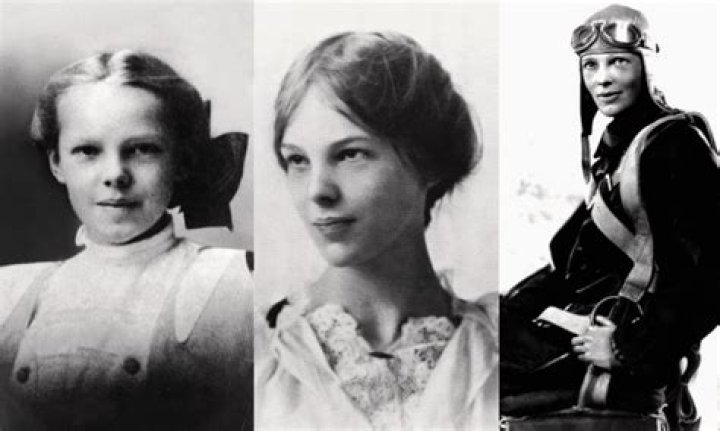
Was Amelia Earhart Gay? Examining Her Life and Relationships
 Lucas Hayes
Amelia Earhart remains one of the most celebrated aviators in history, breaking barriers in a male-dominated field during the 1920s and 1930s. Her mysterious disappearance over the Pacific Ocean in 1937 has captivated generations. Yet beyond her aviation achievements, questions about her personal life continue to intrigue historians and enthusiasts alike. Among these is a persistent question: was Amelia Earhart gay?
The inquiry into Earhart's sexuality reflects broader conversations about how we understand historical figures through modern lenses. Her unconventional lifestyle, masculine fashion choices, and complex personal relationships have fueled speculation for decades. But what does the historical record actually reveal?
Amelia Earhart's Marriage and Relationship with George Putnam
In 1931, Amelia Earhart married George Palmer Putnam, a publisher and publicist who played a significant role in managing her career. Their relationship was anything but conventional for its time. Before agreeing to marry, Earhart wrote Putnam a letter outlining her terms—a document that shocked contemporary society.
She insisted on maintaining her independence. The letter stipulated that both parties could seek divorce if the marriage proved unsatisfactory after one year. She explicitly stated she would not be held to "medieval code of faithfulness" and expected the same freedom she offered him. This wasn't typical 1930s marriage talk.
Their union appeared more professional than romantic to many observers. Putnam managed Earhart's public image, book deals, and endorsements. He helped transform her into America's sweetheart of aviation. But friends and biographers have long noted the relationship seemed to lack deep romantic passion. Some described it as a partnership of mutual benefit rather than a traditional love match.
Her Appearance and Gender Expression
Earhart's style choices raised eyebrows throughout her public life. She favored trousers, leather jackets, and short haircuts at a time when women were expected to wear dresses and maintain traditionally feminine appearances. She designed her own clothing line featuring practical, masculine-inspired pieces for active women.
This gender nonconformity has led some to interpret her presentation through a queer lens. However, context matters enormously here. Many female aviators of the era adopted practical clothing out of necessity—flying in skirts proved genuinely dangerous. Earhart also recognized that her tomboy image differentiated her in the marketplace and appealed to a public fascinated by her boundary-breaking persona.
Fashion historian Michael Cunningham has noted that while Earhart's style was unconventional, it aligned with broader 1920s trends of the "New Woman" who challenged Victorian gender norms. Interpreting historical fashion choices as direct indicators of sexuality requires caution, as clothing meant different things in different eras.
Documented Relationships with Women
Several relationships with women in Earhart's life have attracted particular attention from scholars examining her sexuality. The most discussed involves her college friend and possible romantic partner, whose letters suggested deep emotional intimacy.
During her time at Columbia University, Earhart formed close bonds with several women. Some correspondence contains language that modern readers might interpret as romantic. Phrases expressing deep affection, longing during separations, and emotional dependency appear throughout these letters. Yet historians disagree about whether this reflects romantic love or the intense same-sex friendships common among women in that era.
The concept of "Boston marriages"—domestic partnerships between women that may or may not have included sexual relationships—was recognized during Earhart's time, though rarely discussed openly. Whether any of Earhart's female friendships fit this category remains a subject of historical debate with limited conclusive evidence.
Aviation historian Susan Butler, who wrote a comprehensive Earhart biography, has noted that while Amelia had intense female friendships, no definitive evidence of sexual relationships with women has emerged. She cautions against projecting contemporary categories onto historical figures without solid documentation.
The Challenge of Historical Interpretation
Determining the sexuality of historical figures presents unique challenges. People in earlier eras didn't necessarily understand or describe their identities using modern terminology. The words "gay," "lesbian," "bisexual," and "queer" as identity categories developed over time and meant different things in different periods.
Earhart lived during an era when same-sex attraction was heavily stigmatized and often illegal. Public figures had powerful incentives to conceal non-heterosexual identities. The absence of explicit evidence doesn't prove heterosexuality—it might simply reflect the dangers of disclosure.
Conversely, evidence that seems suggestive to modern eyes may reflect different social norms. Victorian and Edwardian women, for instance, commonly expressed deep emotional and physical affection in friendships that weren't considered sexual. Passionate letters between women were normal. Sleeping in the same bed during visits raised no eyebrows. These behaviors carried different meanings than they might today.
Historians must balance these interpretive challenges. Some argue we should respect the ambiguity and avoid imposing labels Earhart never claimed. Others contend that recovering queer history requires reading between the lines of a heteronormative historical record that erased non-conforming sexualities.
What Biographers and Historians Say
Professional historians who have studied Earhart extensively offer varied perspectives on this question. Their conclusions reflect different methodologies and interpretive frameworks.
- Susan Butler's "East to the Dawn" presents Earhart as primarily heterosexual, though unconventional in her approach to marriage and gender roles
- Doris Rich's biography describes Earhart as someone who defied easy categorization and may have experienced attraction to both men and women
- Mary Lovell suggests Earhart's true passion was aviation itself, with romantic relationships taking a secondary role in her life
- More recent LGBTQ historians have included Earhart in discussions of queer aviation history while acknowledging the speculative nature of such inclusion
The lack of consensus reflects the genuine ambiguity in the historical record. We have her public writings, which reveal little about her intimate life. We have secondhand accounts from friends and family, filtered through their own perspectives and the social conventions of their time. We have suggestive evidence but few definitive answers.
Why This Question Matters Today
The ongoing interest in Earhart's sexuality extends beyond mere curiosity about a famous person's private life. These discussions connect to larger cultural conversations about representation, historical erasure, and identity.
For LGBTQ communities, claiming historical figures as "one of us" provides important visibility and continuity. If Earhart was gay or bisexual, her story becomes part of queer history—proof that LGBTQ people have always existed, achieved remarkable things, and contributed to society despite marginalization. This representation matters, particularly for young people seeking role models.
Yet this impulse can create tension with rigorous historical methodology. Historians rightly resist speculation presented as fact. They point out that appropriating historical figures without solid evidence can distort our understanding of the past. Earhart's achievements stand regardless of her sexuality, and some argue that focusing on her romantic life diminishes her professional legacy.
The debate also reflects changing attitudes about privacy. Some argue that speculating about historical figures' sexualities without their consent violates a boundary that should be respected even after death. Others counter that public figures become part of collective history, open to examination and interpretation.
The Limits of What We Can Know
Here's what we can say with confidence: Earhart challenged gender norms of her era. She married but insisted on unusual independence within that marriage. She formed deep emotional bonds with women. She prioritized her career over conventional domestic life. She presented herself in ways that defied feminine expectations.
What we cannot say with certainty: whether she experienced sexual attraction to women, whether any of her female friendships included physical intimacy, or how she would have identified her sexuality using modern terminology.
The historical record contains gaps—some accidental, some deliberate. Personal papers may have been destroyed. Friends may have protected her privacy by omitting certain details from their accounts. Social stigma may have prevented frank discussion of topics considered taboo. These absences make definitive conclusions impossible.
Perhaps the most honest answer to "was Amelia Earhart gay?" is "we don't know, and we may never know." This uncertainty doesn't make the question invalid. Exploring it reveals much about how we construct historical narratives, what evidence we privilege, and how social contexts shape both lived experience and its documentation.
Frequently Asked Questions
Did Amelia Earhart have any confirmed romantic relationships with women?
No confirmed romantic or sexual relationships with women have been definitively documented. While Earhart had close female friendships and correspondence expressing deep affection, historians debate whether these relationships were romantic or reflected the intense same-sex friendships common among women in that era. The absence of explicit evidence makes certainty impossible.
Was Amelia Earhart's marriage to George Putnam a cover for her sexuality?
There's no evidence the marriage was a deliberate cover. Their relationship was unconventional but appears to have been a genuine partnership, even if it lacked traditional romantic passion. Earhart's famous prenuptial letter demanding independence suggests she approached marriage on her own terms rather than as a concealment strategy. Many historians view it as a practical alliance that served both parties' interests.
How did people in Amelia Earhart's time view her gender nonconformity?
Reactions varied considerably. Some celebrated her as a modern, independent woman who represented progress. Others criticized her masculine appearance and unconventional lifestyle as inappropriate. Her fame provided some protection from harsher judgments, and she successfully branded her image as the adventurous tomboy. The 1920s-30s "New Woman" movement gave her behavior more acceptance than it might have received in earlier decades.
Final Thoughts
The question of whether Amelia Earhart was gay remains unanswered, likely permanently. The historical evidence allows for multiple interpretations, none conclusive. She may have been gay, bisexual, or heterosexual with unconventional attitudes toward marriage and gender. She may have been someone for whom existing categories don't quite fit.
What's undeniable is that Earhart lived outside conventional boundaries. She rejected limiting definitions of what women could do or be. Whether that extended to her sexuality remains her secret, one that disappeared with her over the Pacific Ocean nearly 90 years ago. Her legacy as a pioneering aviator and feminist icon stands regardless of whom she loved. The enduring fascination with her personal life reflects our ongoing struggle to understand how identity, achievement, and private truth intersect in public figures who continue to inspire long after they're gone.
