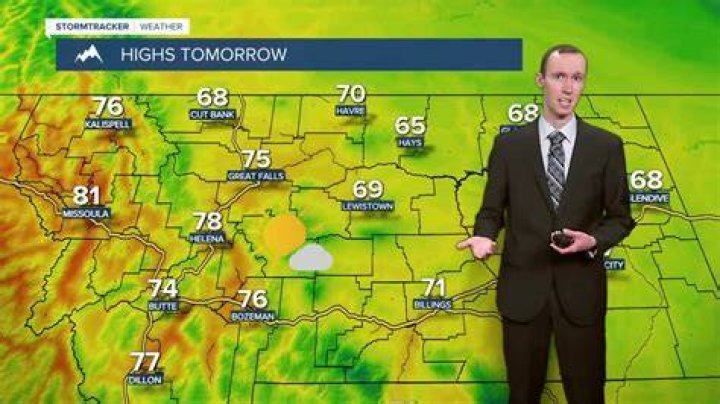
Weather Tomorrow: How to Get Accurate Forecasts and Plan Your Day
 Samuel Coleman
 Checking the weather tomorrow has become second nature for millions of people worldwide. Whether you're planning an outdoor event, deciding what to wear, or scheduling travel, knowing what atmospheric conditions await can make or break your plans. But with countless weather sources available—from smartphone apps to television broadcasts—how do you ensure you're getting the most accurate forecast?
The science of predicting tomorrow's weather has evolved dramatically over the past few decades. Modern meteorology combines satellite imagery, ground-based observations, ocean buoys, and sophisticated computer models to generate forecasts with remarkable precision. Yet not all weather predictions are created equal, and understanding where your forecast comes from matters more than most people realize.
Understanding Tomorrow's Weather Forecast
Weather forecasting for the next day typically achieves accuracy rates between 80% and 95%, depending on the region and atmospheric conditions. This high reliability stems from meteorologists' ability to track current weather systems and apply well-tested models to predict their movement and evolution over short timeframes.
National weather services form the backbone of tomorrow's forecasts. In the United States, the National Weather Service operates a network of 122 forecast offices, each staffed by meteorologists who analyze local conditions around the clock. Similar organizations exist globally—the UK Met Office, Environment Canada, and the Bureau of Meteorology in Australia all provide foundational data that private weather companies then refine and redistribute.
Temperature predictions for tomorrow usually fall within two to three degrees of actual values. Precipitation forecasts prove slightly trickier. When your weather app shows a 40% chance of rain tomorrow, it means that in similar atmospheric setups, rain occurred 40% of the time in the past—or that 40% of the forecast area will see rainfall.
Best Sources for Tomorrow's Weather
The explosion of weather apps and websites over the last decade has created both opportunity and confusion. Some sources prioritize accuracy, while others focus on user interface or additional features.
Government Weather Services
Official meteorological agencies remain the gold standard. Weather.gov in the US provides free, ad-free forecasts directly from NOAA meteorologists. These forecasts include detailed discussions explaining the reasoning behind predictions—invaluable for understanding confidence levels and potential forecast changes.
European users benefit from exceptional forecasts through national services connected to the European Centre for Medium-Range Weather Forecasts, which operates one of the world's most accurate prediction models.
Popular Weather Applications
Most smartphone weather apps pull data from government sources but package it differently. AccuWeather offers minute-by-minute precipitation forecasts. Weather Underground crowdsources observations from personal weather stations, providing hyperlocal data that can refine broader predictions. Dark Sky, now integrated into Apple Weather, pioneered short-term precipitation prediction with impressive accuracy.
The Weather Channel app combines traditional meteorology with IBM's Watson artificial intelligence to generate forecasts. Meanwhile, Windy appeals to weather enthusiasts with stunning visualizations of atmospheric data layers.
Factors That Affect Tomorrow's Weather Accuracy
Not all forecasts face equal challenges. Coastal regions with rapidly changing maritime influences can see forecast accuracy drop compared to inland areas with more stable patterns. Mountain ranges create localized effects that even sophisticated models struggle to capture perfectly.
Convective weather—thunderstorms, in particular—remains meteorology's toughest puzzle. While forecasters can predict conditions favorable for storms with high confidence, pinpointing exactly which areas will see severe weather proves difficult beyond a few hours.
Winter weather forecasting for tomorrow benefits from relatively straightforward physics. Cold air masses, warm fronts, and moisture sources combine in predictable ways. Summer forecasting gets complicated. Will that afternoon cloud development produce rain, or will it fizzle out? Temperature and dewpoint readings just a few degrees off can completely change the answer.
How Meteorologists Predict Tomorrow's Conditions
Creating a weather forecast for tomorrow involves layering multiple information sources. Surface observations from thousands of weather stations provide current conditions. Weather balloons launched twice daily measure temperature, humidity, and wind at various altitudes. Doppler radar tracks precipitation and storm movement in real-time.
Satellites orbiting Earth capture imagery across multiple wavelengths, revealing cloud formations, atmospheric moisture, and surface temperatures. The GOES-16 and GOES-17 satellites covering the Americas scan the full Earth disk every 15 minutes, providing meteorologists with near-real-time atmospheric snapshots.
Computer models digest this data soup and solve complex equations representing atmospheric physics. The Global Forecast System (GFS) and European model (ECMWF) stand as the industry's workhorses, but dozens of models run continuously. Meteorologists compare multiple models, weigh their historical accuracy for current conditions, and blend their insights with local knowledge.
Reading Tomorrow's Forecast Like a Professional
Most people glance at tomorrow's high temperature and precipitation chance, then move on. Digging slightly deeper reveals much more useful information.
Wind forecasts matter more than many realize. A 75°F day with 5 mph winds feels dramatically different from the same temperature with 20 mph gusts. Wind direction also signals weather changes—a shift from south to northwest often precedes cooling and clearing.
Humidity and dewpoint paint the true comfort picture. Two locations might both reach 85°F tomorrow, but one with 40% humidity will feel pleasant while another with 70% humidity becomes oppressive. Dewpoint values above 65°F generally feel uncomfortable, while readings below 55°F feel comfortable for most people.
Cloud cover forecasts help plan outdoor activities. "Partly cloudy" typically means 3/8 to 5/8 sky coverage—enough sunshine for decent shadows. "Mostly cloudy" suggests 6/8 to 7/8 coverage, while "cloudy" or "overcast" means complete or nearly complete cloud cover.
Regional Differences in Tomorrow's Weather Patterns
Geographic location fundamentally shapes what "weather tomorrow" means. Desert regions like Phoenix or Las Vegas experience high forecast consistency—sunny and hot dominates most summer days, with occasional monsoon disruptions. Forecasters confidently predict conditions several days out.
Tropical climates operate on different rhythms. Florida's afternoon thunderstorm pattern repeats reliably during summer, yet predicting which specific neighborhoods get drenched remains challenging. Morning forecasts might simply indicate "60% afternoon storms"—accurate broadly, imprecise locally.
Maritime climates along coasts introduce complexity. San Francisco's fog, Seattle's drizzle, and coastal New England's nor'easters all stem from ocean-atmosphere interactions that can shift unexpectedly. Forecasting tomorrow's weather in these zones requires special attention to marine observations and sea surface temperatures.
Continental interiors experience the most dramatic day-to-day changes. Cities like Chicago, Denver, or Winnipeg can see 30°F temperature swings between days as different air masses collide. Tomorrow's weather there depends heavily on precise timing of frontal passages.
When Tomorrow's Forecast Changes
Weather forecasts aren't static predictions carved in stone. New observations and updated model runs cause forecasts to evolve, sometimes significantly. A forecast made Monday morning for Tuesday afternoon will typically prove more accurate than one made Sunday evening for the same period.
Dramatic forecast changes usually signal uncertainty that meteorologists are working to resolve. Competing weather systems might be racing to reach an area, or models might disagree on storm track or intensity. Responsible weather services communicate this uncertainty through forecast discussions or explicit uncertainty language.
Checking tomorrow's weather multiple times reveals trends. If the high temperature prediction drops from 82°F to 79°F to 76°F with each update, a cooling trend is clearly emerging. If precipitation chances waver between 30% and 70%, confidence remains low.
Planning Around Tomorrow's Weather
Different activities demand different forecast details. Outdoor weddings need precipitation probability, wind speed, and temperature comfort ranges. Hikers should check trail-level forecasts, which can differ significantly from valley predictions. Boaters require marine forecasts with wave heights and small craft advisories.
Severe weather watches and warnings deserve immediate attention. A severe thunderstorm watch means conditions favor dangerous storms developing tomorrow—stay alert. A warning means dangerous weather is occurring or imminent—take action immediately.
Heat and cold advisories help vulnerable populations prepare. An excessive heat warning for tomorrow indicates dangerous conditions requiring special precautions, especially for elderly individuals, young children, and outdoor workers.
The Technology Behind Tomorrow's Predictions
Weather forecasting has undergone a technological revolution. Supercomputers running forecast models now perform quadrillions of calculations per second. NOAA's newest system processes 8 petabytes of observational data monthly—equivalent to 8,000 years of HD video.
Artificial intelligence and machine learning are reshaping prediction methods. These technologies excel at pattern recognition, helping identify subtle signals that precede specific weather events. Google's "nowcasting" AI predicts precipitation within the next two hours more accurately than traditional methods.
Private weather companies invest heavily in proprietary models and data sources. Tomorrow.io operates its own radar satellites to supplement ground-based observations. The Weather Company maintains over 250,000 personal weather stations worldwide, creating unprecedented observational density.
Common Weather Forecast Misconceptions
Many people believe weather forecasts are frequently wrong, but data tells a different story. Next-day temperature forecasts typically hit within three degrees of actual temperatures over 90% of the time. The perception of inaccuracy often stems from misunderstanding probability forecasts or noticing the memorable misses while forgetting countless correct predictions.
"50% chance of rain tomorrow" confuses many people. It doesn't mean rain for half the day, or that forecasters are simply guessing. It represents genuine uncertainty in a chaotic system—half of similar atmospheric setups historically produced measurable rainfall.
Another common misunderstanding involves forecast timing. When severe weather threatens, minutes matter. A forecast made yesterday predicting storms "tomorrow afternoon" lacks the precision of an updated forecast specifying "2-5 PM." Always check the forecast issuance time and favor recent updates.
Improving Your Weather Tomorrow Routine
Building better weather habits starts with choosing reliable sources. Bookmark your national weather service website and check it alongside your preferred app. Government forecasters often include forecast discussion sections explaining their reasoning and confidence levels—information rarely found in commercial apps.
Set location-specific alerts for your most-used areas. Most weather apps allow multiple saved locations with customizable notifications. Configure alerts for severe weather, but consider adding frost warnings if you garden, or wind alerts if you bicycle commute.
Learn to interpret radar imagery. Apps display radar, but understanding what you're seeing adds context. Green typically indicates light rain, yellow shows moderate rain, red signals heavy rain, and purple warns of very heavy rain or hail. Radar's velocity products show wind direction and speed, helping identify rotation in storms.
Compare multiple forecasts when planning critical events. If three different sources predict similar conditions for tomorrow, confidence increases. Significant disagreements signal uncertainty requiring closer monitoring.
The Future of Tomorrow's Weather Forecasts
Weather prediction continues advancing rapidly. Next-generation satellites launching through 2030 will capture atmospheric data with unprecedented detail. The NOAA-21 satellite launched in 2022 provides hyperspectral infrared measurements that improve temperature and moisture profiles.
Computer model resolution keeps improving. Today's models simulate atmospheric behavior in grids approximately 3 kilometers across. Future models will operate at one-kilometer resolution or finer, better capturing local effects like urban heat islands and terrain influences.
Ensemble forecasting—running models with slightly different initial conditions to explore uncertainty—becomes more sophisticated yearly. Instead of a single prediction for tomorrow, ensembles generate dozens of equally plausible scenarios. Forecasters then communicate both the most likely outcome and the range of possibilities.
Making Weather Tomorrow Work for You
Knowing tomorrow's weather shouldn't feel like decoding ancient prophecies. Start with trusted sources, understand basic forecast elements beyond temperature and rain chance, and check updates as the day approaches. Pay attention to wind, humidity, and timing details that transform a generic forecast into actionable information.
Weather shapes our daily lives in countless ways. The forecast determines whether kids play outside, which roads to take, what to pack for trips, and when to schedule outdoor work. Getting tomorrow's weather right means better decisions today.
Modern meteorology delivers remarkably accurate next-day forecasts. The science behind those predictions involves global observation networks, powerful computers, and skilled meteorologists synthesizing complex data streams. By understanding how forecasts are made and what they really mean, you can plan tomorrow with confidence while staying flexible when Mother Nature throws a curveball.
