What Does WTF Mean? Origin, Usage, and Cultural Impact Explained
 Andrew Rivera
If you've spent any time online, scrolling through social media, or texting with friends, you've probably encountered the acronym WTF. It's everywhere. Comment sections, memes, text messages, even professional Slack channels where someone forgot to filter their frustration. But what does WTF actually mean, and why has it become such a dominant fixture in modern communication?
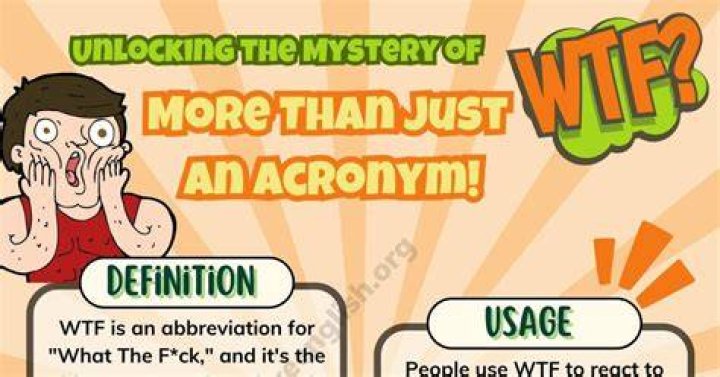
WTF stands for "What The F"—a phrase expressing shock, confusion, anger, or disbelief. While the full phrase contains profanity, the abbreviated form has carved out its own identity in digital spaces. It's evolved from a simple expletive into a versatile communication tool that captures everything from mild surprise to genuine outrage. The acronym's popularity reflects how internet culture has reshaped language, creating shorthand expressions that convey complex emotions in just three letters.
The Definition and Basic Meaning
At its core, WTF is an exclamation. It's what you type when something doesn't make sense, when you're caught off guard, or when reality takes an unexpected turn. The phrase translates directly to "What The F," with the final word being a profanity that most readers can fill in themselves.
The beauty of WTF lies in its flexibility. Depending on context and tone, it can mean vastly different things. Someone might use it when discovering their favorite show got canceled. Another person types it after reading a bizarre news headline. A third uses it when their code breaks for no apparent reason. Same three letters, entirely different emotional registers.
Unlike some internet slang that remains confined to specific communities, WTF has achieved near-universal recognition. Your grandmother might not use it, but she probably knows what it means. That widespread understanding has made it one of the most enduring acronyms to emerge from internet culture.
Historical Origins and Evolution
Pinpointing the exact origin of WTF is difficult. Internet acronyms don't typically have birth certificates. However, linguistic researchers trace its usage back to the early days of internet forums and chat rooms in the 1990s. As online communication grew, users needed faster ways to express themselves. Typing out full phrases was tedious, especially in the rapid-fire environment of IRC (Internet Relay Chat) and early messaging platforms.
The acronym gained significant traction during the early 2000s, spreading through forums like Something Awful and 4chan. These communities specialized in shock content and irreverent humor, creating the perfect breeding ground for expletive-based shorthand. From there, it migrated to mainstream platforms.
By the time social media exploded in the late 2000s, WTF had already established itself. Twitter's character limits made acronyms even more valuable. Facebook comments sections adopted the phrase. Instagram captions featured it. The acronym transcended its crude origins to become a standard part of digital vocabulary.
What's particularly interesting is how WTF has become somewhat sanitized through widespread use. While everyone knows what it stands for, the acronym itself feels less offensive than spelling out the full phrase. This linguistic softening has allowed it to appear in contexts where the original profanity wouldn't be acceptable.
Common Usage Contexts and Variations
WTF appears across countless scenarios, each with slightly different implications. In text messages between friends, it's casual shorthand for surprise. Someone sends you a weird news article? WTF. Your coworker shares an unbelievable story? WTF. The phrase has become a reflexive response to the unexpected.
Social media has spawned numerous variations. You'll see "WTF" as a standalone comment, often accompanied by emojis that clarify the emotional tone. Sometimes it's stretched for emphasis: "WTFFFFF." Other times it's paired with other internet slang: "WTF lol" or "WTF is going on."
Professional environments present interesting complications. While the acronym has become normalized, many workplaces still consider it inappropriate for formal communication. You might see it in casual Slack channels among peers, but probably not in emails to executives or clients. This creates a linguistic tightrope where users must gauge appropriateness based on context.
Gaming communities use WTF constantly, particularly in competitive environments where unexpected plays or glitches warrant immediate reaction. Streaming platforms like Twitch have popularized "WTF moments"—compilations of shocking or confusing gameplay clips.
The acronym has also spawned related expressions. "WTAF" adds "Actual" for emphasis. "WTH" substitutes "Heck" for a cleaner alternative. "WTD" ("What The Devil") serves similar purposes. These variations show how the original formula has been adapted for different comfort levels with profanity.
Cultural Significance in Digital Communication
WTF represents something larger than just three letters. It's a case study in how internet culture creates and spreads language. Before widespread internet access, regional slang took years or decades to travel across geographic boundaries. Now, an acronym can achieve global recognition in months.
The phrase has become embedded in meme culture. Entire formats revolve around WTF moments—images, videos, or stories that provoke bewilderment. The "WTF" meme typically features someone expressing confusion or shock at something absurd. These memes serve as social commentary, highlighting the strange aspects of modern life.
Linguists point to WTF as evidence of how digital communication prioritizes efficiency. When you're typing on a phone keyboard or trying to respond quickly in a fast-moving conversation, every character counts. Acronyms compress complex emotional responses into manageable chunks. They're linguistic efficiency tools.
There's also a democratizing aspect. Internet slang doesn't respect traditional authority structures. A teenager and a middle-aged professional might both use WTF, creating common linguistic ground across generational divides. This shared vocabulary helps build internet culture as a distinct entity with its own norms and expressions.
Appropriate and Inappropriate Usage
Understanding when to use WTF requires social awareness. Among friends who share similar communication styles, it's perfectly acceptable. In text messages, casual emails, and personal social media posts, the acronym functions as standard informal language.
However, certain contexts demand more careful consideration. Professional emails, formal presentations, academic papers, and interactions with people you don't know well typically require more measured language. Even though WTF has become normalized, it still carries the weight of its profane origin.
Age matters too. While many older adults recognize the acronym, some find it disrespectful or crude. Before using it with parents, teachers, or older relatives, consider their communication preferences and comfort with internet slang.
International audiences present another complication. While English-language internet culture has spread globally, not everyone shares the same familiarity with acronyms. Someone learning English might not immediately understand WTF, and the profane nature of the full phrase could create awkward misunderstandings.
The visual context also matters. Typing "WTF" in a serious discussion about a tragic event can seem insensitive. The same acronym in response to a funny video feels appropriate. Emotional intelligence requires matching your language to the situation's gravity.
Impact on Modern Language and Communication
WTF isn't just internet slang—it's influenced how people speak offline. You'll hear people actually say "W-T-F" out loud, pronouncing the letters rather than the full phrase. This represents a fascinating linguistic shift where written shorthand becomes spoken language.
Teenagers and young adults have incorporated the acronym into casual speech patterns. Someone might see something surprising and audibly say "what the eff," blending the written and spoken forms. This cross-pollination between digital and verbal communication shows how thoroughly internet culture has penetrated everyday life.
The acronym has also influenced marketing and brand communication. Companies targeting younger demographics sometimes use internet slang to appear relatable. While this can backfire if it seems forced, some brands successfully incorporate expressions like WTF into their messaging. This corporate adoption signals how mainstream the acronym has become.
Educational institutions face interesting challenges. Teachers must decide how to respond when students use WTF in assignments or classroom discussions. Some see it as inappropriate regardless of context. Others recognize it as legitimate informal language that reflects how students actually communicate. This tension highlights ongoing debates about language evolution and standards.
Related Expressions and Internet Slang
WTF exists within a larger ecosystem of internet acronyms. Understanding these related expressions provides context for how online communication works.
- OMG (Oh My God) - Expresses surprise or excitement, generally less intense than WTF
- SMH (Shaking My Head) - Indicates disappointment or disapproval
- LMAO (Laughing My A Off) - Conveys strong amusement
- FFS (For F's Sake) - Expresses frustration or exasperation
- GTFO (Get The F Out) - Shows disbelief or tells someone to leave
- TBH (To Be Honest) - Prefaces candid statements
- IMO (In My Opinion) - Qualifies subjective statements
- BRB (Be Right Back) - Indicates temporary absence
These acronyms share common characteristics: they're efficient, emotionally expressive, and widely understood within internet culture. Together, they form a linguistic toolkit that enables rapid, nuanced communication in digital spaces.
Frequently Asked Questions
Is it okay to use WTF in professional settings?
It depends entirely on workplace culture. Conservative corporate environments typically frown upon any profanity-derived language, even in acronym form. Tech startups, creative agencies, and casual workplaces might accept it in internal communications among peers. When in doubt, err on the side of caution. Use WTF only in clearly informal contexts with colleagues you know well. Never use it in external communications, formal presentations, or with superiors unless you're absolutely certain it's acceptable in your specific workplace culture.
Can WTF mean anything other than "What The F"?
While "What The F" is the overwhelmingly dominant interpretation, some people use cleaned-up alternatives like "What The Fudge" or "What The Flip" to make the acronym family-friendly. These substitutions are less common and typically used by people who want to avoid profanity while still using the familiar acronym. In extremely rare cases, WTF appears as an acronym for completely unrelated phrases, but these usages are so uncommon that assuming the standard meaning is almost always correct.
When did WTF become mainstream?
WTF transitioned from niche internet slang to mainstream recognition during the mid-to-late 2000s, coinciding with the explosive growth of social media platforms like Twitter and Facebook. By 2010, the acronym had achieved widespread cultural penetration, appearing in news articles, television shows, and everyday conversation. The smartphone revolution accelerated this adoption, as mobile communication made acronyms even more practical. Today, most English speakers under 50 recognize WTF, even if they don't personally use it, marking its successful journey from obscure internet jargon to widely understood expression.
The Future of WTF and Internet Language
Internet slang operates on cycles. Some expressions burn bright and fade quickly. Others achieve staying power. WTF has demonstrated remarkable longevity, remaining relevant for over two decades. This suggests it fills a genuine linguistic need—a quick, powerful way to express bewilderment.
As communication platforms evolve, so does language. Voice messages, video calls, and AI-assisted communication might change how people use acronyms. However, as long as text-based communication exists, efficient expressions like WTF will likely remain useful.
Younger generations continue creating new slang, some of which might eventually replace current acronyms. But WTF has achieved something rare: cross-generational recognition. Millennials who popularized it are now in their thirties and forties, still using the same acronym they adopted as teenagers. Generation Z has inherited and continued using it. This multi-generational adoption suggests staying power.
The acronym's influence on language extends beyond its literal meaning. It represents how digital communication reshapes expression, prioritizing speed and emotional impact over formal correctness. Whether you use it daily or avoid it entirely, WTF has undeniably shaped modern communication patterns in ways that will influence language for years to come.