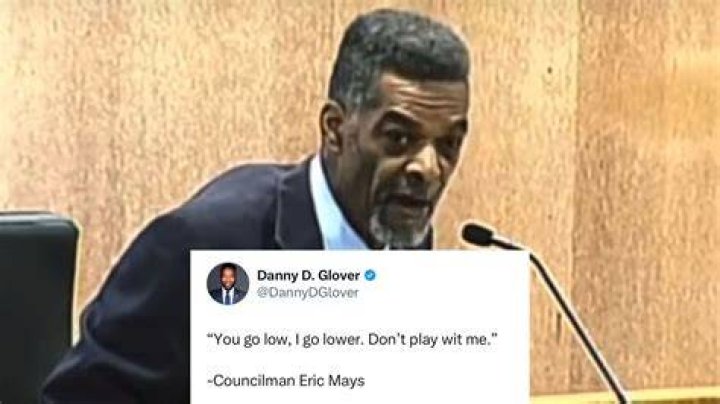
When They Go Low I Go Lower: Origin, Meaning, and Cultural Impact
 Harper Scott
The phrase "when they go low, I go lower" represents a deliberate inversion of one of the most memorable political statements of recent years. It's a tongue-in-cheek rejection of taking the high road, embracing pettiness and retaliation instead of dignified restraint. What started as a flip on Michelle Obama's inspiring call for civility has become a cultural touchstone that captures something raw about how we actually behave when provoked.
This expression didn't emerge in a vacuum. It reflects genuine frustration with constantly being told to be the bigger person, to turn the other cheek, to maintain composure when others play dirty. For many, it's less a sincere philosophy and more a humorous acknowledgment of our less noble impulses. The phrase has found particular resonance on social media, where it functions as both confession and battle cry.
The Origin of the Phrase
To understand "when they go low, I go lower," you need to know where it came from. At the 2016 Democratic National Convention, former First Lady Michelle Obama delivered a speech that would define political discourse for years. Her line "when they go low, we go high" became an instant classic, urging people to respond to attacks and negativity with grace and dignity.
The speech resonated deeply. It articulated a philosophy many wanted to embrace: rising above pettiness, maintaining integrity, refusing to sink to the level of those who attack you. Obama's words were printed on t-shirts, shared millions of times, and quoted by everyone from politicians to parents teaching their children about conflict resolution.
But then something predictable happened. Reality set in. People discovered that going high doesn't always work. Sometimes the person going low wins the argument, gets the promotion, or faces no consequences. The frustration with this dynamic gave birth to the parody version.
The exact origin of "when they go low, I go lower" is difficult to pinpoint, as most internet phrases are. It emerged organically across social media platforms, appearing in memes, tweets, and comment sections. By 2017 and 2018, the phrase had gained significant traction as a humorous counter-narrative to Obama's idealism.
What Does It Really Mean?
"When they go low, I go lower" is typically used in three distinct ways. First, it serves as self-deprecating humor. Someone admits they lack the discipline or restraint to take the high road. They're not proud of it, exactly, but they're honest about it. This usage acknowledges human imperfection with a wink.
Second, it functions as a rallying cry for those tired of being civil with uncivil people. There's a genuine argument here about whether constant restraint in the face of bad-faith attacks is strategy or surrender. Some believe matching energy—even negative energy—is the only effective response to certain behaviors.
Third, the phrase operates as pure comedy. It's the setup to a story about petty revenge, a caption on a meme about being vindictive, or a punchline about someone's worst qualities. The humor comes from the brazen admission that they're not even trying to be the bigger person.
The Psychology Behind Going Lower
Why does this phrase resonate so strongly? Psychologists have long studied our responses to provocation and conflict. The advice to "go high" aligns with what researchers call cognitive reappraisal—reframing a situation to manage emotional responses. It's effective for emotional regulation and long-term wellbeing.
But there's a competing psychological reality. When someone wrongs us, we experience a powerful urge for reciprocity. Studies on social exchange theory show that humans have deep-seated expectations about fairness and proportional response. When someone goes low, our instinct isn't to go high—it's to retaliate proportionally or even escalate.
The satisfaction people feel when they "go lower" relates to what psychologists call retributive justice. There's genuine psychological relief in evening the score. The phrase captures this tension between what we're told we should do and what we actually want to do.
Social media amplifies these dynamics. Online platforms reward snappy comebacks and witty takedowns. Going high often means staying silent, which registers as letting someone "win" in the court of public opinion. Going lower—delivering that perfect cutting response—gets likes, retweets, and validation.
Cultural Significance and Social Commentary
The popularity of "when they go low, I go lower" reveals something about contemporary culture. We're living through an era of intense polarization, where civility feels increasingly like a losing strategy. Political discourse has coarsened. Social media encourages performative conflict. The phrase captures exhaustion with being told to maintain standards that others ignore.
There's also a class dimension worth examining. "Going high" is often framed as the sophisticated, educated response. But this framing can feel condescending to people who see strategic value in fighting fire with fire. The phrase pushes back against what some perceive as naive idealism from those insulated from real consequences.
The expression has found particular resonance in discussions about workplace dynamics, online harassment, and political strategy. People use it when discussing how to handle bullies, trolls, and bad-faith actors. Should you ignore them? Block them? Engage? The phrase acknowledges that sometimes engagement means getting messy.
When Going Lower Actually Works
Despite its humorous tone, there are scenarios where matching or exceeding someone's negativity produces results. Conflict research shows that standing up to aggression—even aggressively—can establish boundaries more effectively than passive responses. A bully who faces no resistance often escalates. One who faces fierce pushback may recalculate.
In negotiation contexts, studies have found that occasionally matching tough tactics can paradoxically lead to better outcomes than consistently accommodating behavior. There's a signaling function: you demonstrate you won't be exploited, which can lead to more balanced interactions.
The phrase also works as a pressure release valve. Sometimes people don't literally go lower—they just enjoy saying they will. The expression provides permission to feel angry, vindictive, or petty without necessarily acting on those feelings. It's cathartic.
The Downsides and Risks
Of course, actually going lower carries significant risks. Escalation cycles are easy to start and difficult to stop. What begins as proportional response can spiral into mutual destruction. Relationships—professional, personal, political—often suffer irreparable damage when both parties race to the bottom.
There's also the reputation factor. While one perfectly executed comeback might feel satisfying, a pattern of going lower damages how others perceive you. People who consistently match or exceed negativity develop reputations as difficult, petty, or untrustworthy. The short-term satisfaction rarely compensates for long-term relationship costs.
Legal and professional consequences present real concerns. What feels like justified retaliation can cross lines into harassment, defamation, or hostile work environment creation. The phrase is funny precisely because it's acknowledging behavior that often has negative consequences.
Internet Culture and Meme Evolution
The phrase has evolved into various meme formats. Twitter users pair it with images of people looking smug, petty, or vengeful. TikTok features dramatic reenactments of "going lower" in mundane situations—someone cuts in line, so you narrate increasingly absurd revenge fantasies.
The meme works because it's relatable. Everyone has wanted to go lower at some point. The humor comes from either admitting you did it or playfully threatening to do it. The phrase has become shorthand for "I know I should be mature about this, but I absolutely will not be."
Variations have emerged. "When they go low, I go to hell" escalates the concept. "When they go low, I dig a tunnel" suggests going so low you're operating on a different plane entirely. These iterations keep the core idea alive while adding creative flourishes.
Frequently Asked Questions
Is "when they go low, I go lower" meant to be taken seriously?
Most uses are humorous or semi-serious rather than advocating genuine malicious behavior. The phrase functions primarily as social commentary and self-aware humor about our less noble impulses. While some people do embrace it as a personal philosophy, it's more commonly used as a cathartic expression of frustration with always being expected to take the high road. Context matters significantly—the phrase means different things in a comedy meme versus a discussion about confronting harassment.
Who originally said "when they go low, we go high"?
Michelle Obama delivered the original line during her speech at the 2016 Democratic National Convention. The speech was widely praised for its eloquence and moral clarity. Her message about maintaining dignity in the face of attacks became one of the most quoted political statements of that election cycle. The phrase "when they go low, I go lower" emerged later as an internet-driven parody and counter-narrative to Obama's call for civility.
Does going lower ever work better than taking the high road?
Research on conflict and negotiation suggests the answer is complicated. In some scenarios, particularly when dealing with persistent aggression or bad-faith actors, firm pushback can be more effective than passive responses. Setting strong boundaries sometimes requires matching intensity. However, studies consistently show that escalation carries significant risks and that strategic, measured responses typically produce better long-term outcomes than reactive retaliation. The most effective approach often depends on specific circumstances, relationships, and what you're trying to achieve.
Finding Balance in Conflict
The tension between going high and going lower isn't really about choosing one philosophy forever. Most people exist somewhere in between, calibrating their responses based on circumstances. You might go high with a colleague you need to work with long-term but go lower with an anonymous internet troll.
What the phrase really highlights is the exhaustion many feel with one-size-fits-all civility advice. Sometimes dignity means restraint. Other times it means fierce defense of boundaries. The phrase gives voice to those tired of being told there's only one right way to respond to provocation.
Smart navigation of conflict requires flexibility. You need the wisdom to know when rising above serves you and when standing your ground—or even hitting back—is the better choice. The phrase isn't really advocating for perpetual pettiness. It's acknowledging that perpetual restraint isn't realistic either.
Final Thoughts
When they go low, I go lower" endures because it speaks truth about human nature. We're not always capable of being our best selves, especially when provoked. The phrase gives us permission to acknowledge that gap between aspiration and reality without pretending we're monsters for having vindictive thoughts.
Whether you embrace it as philosophy or enjoy it as humor, the phrase has earned its place in contemporary discourse. It captures something real about the messiness of conflict, the limits of civility, and our complicated relationship with revenge. Sometimes we go high. Sometimes we go lower. And sometimes we just laugh about the whole thing and try to do better tomorrow.
