Starbucks: The Global Coffee Giant That Transformed How We Drink
 David Richardson
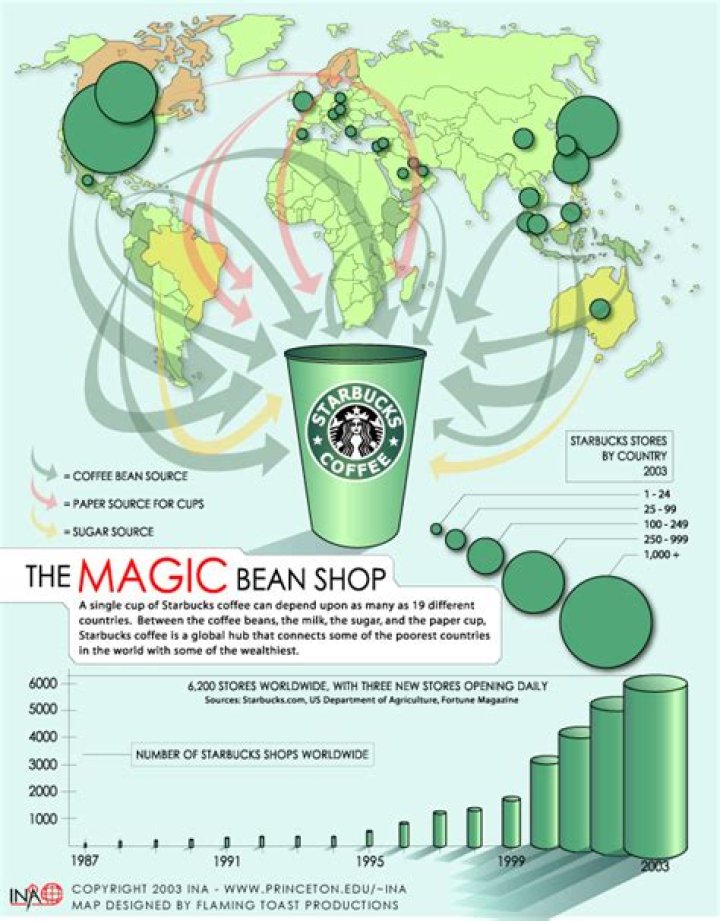
 Walk into almost any city center worldwide, and you'll spot the familiar green mermaid logo. Starbucks has become more than just a coffee shop—it's a cultural phenomenon that redefined how people consume caffeine, work remotely, and socialize. From its humble beginnings in Seattle's Pike Place Market to over 38,000 locations across 80 countries, this company transformed the entire coffee industry.
But what makes Starbucks different from countless other coffee chains? Why do customers willingly pay premium prices for drinks they could make at home? The answers reveal a fascinating business story about branding, experience, and strategic expansion that business schools still study today.
From Coffee Beans to Coffee Empire
The Starbucks story began in 1971 when three friends—Jerry Baldwin, Zev Siegl, and Gordon Bowker—opened a small store selling high-quality coffee beans and equipment. They weren't serving lattes or frappuccinos. They were simply roasting and selling beans to Seattle residents who wanted better coffee at home.
Everything changed in 1982 when Howard Schultz joined as director of marketing. After visiting Italy and experiencing the vibrant espresso bar culture, Schultz envisioned something radically different. He saw cafés not just as transaction points but as community gathering spaces—a "third place" between home and work.
The original founders resisted this vision. They wanted to remain a bean retailer. Schultz eventually left to start his own coffee bar chain called Il Giornale. But in 1987, he acquired Starbucks for $3.8 million and merged the companies. That decision launched the modern Starbucks we know today.
The Business Model That Changed Everything
Starbucks didn't just sell coffee. They sold an experience. The company invested heavily in store atmosphere—comfortable seating, free WiFi, consistent lighting, carefully curated music. Each location followed strict design guidelines to create familiarity while adapting to local neighborhoods.
Their pricing strategy broke conventional wisdom. While competitors competed on low prices, Starbucks positioned itself as premium. A tall latte cost significantly more than diner coffee, but customers paid because they weren't just buying a drink. They were buying a workspace, a meeting place, a lifestyle statement.
The menu complexity became another differentiator. Instead of small, medium, and large, Starbucks introduced tall, grande, and venti. They offered countless customization options—extra shots, alternative milks, flavor combinations. This complexity created a sense of personalization that turned ordering coffee into a form of self-expression.
Expansion Strategy and Global Reach
Starbucks pursued aggressive expansion through company-owned stores rather than franchising. This gave them complete control over quality and customer experience but required massive capital investment. The strategy paid off. By maintaining consistency, every Starbucks felt familiar whether you visited one in New York or Tokyo.
International expansion brought unique challenges. In China, Starbucks adapted menu items to local tastes, offering red bean frappuccinos and mooncakes during festivals. In Italy—the birthplace of espresso culture—the company opened its first store in 2018 with a roastery concept that showed respect for Italian coffee traditions rather than trying to compete directly.
The pace was relentless. During peak expansion years in the 2000s, Starbucks opened an average of two new stores every day. This saturation strategy meant stores sometimes operated within blocks of each other, creating internal competition but maximizing market presence.
The Digital Revolution and Mobile Ordering
Starbucks recognized early that technology would reshape retail. They launched their mobile app in 2009, and it quickly became one of the most successful retail apps globally. Customers could order ahead, pay with their phones, and earn rewards—all seamlessly integrated.
The Starbucks Rewards program transformed customer loyalty. By 2022, the program had over 30 million active members in the United States alone. These members accounted for more than half of company-operated revenue. The program created a flywheel effect: rewards encouraged visits, visits generated data, data enabled personalization, personalization increased loyalty.
Mobile ordering solved a critical pain point—long lines during morning rush hours. But it created new problems. Stores became overwhelmed with mobile orders, frustrating in-store customers who waited while baristas filled app orders. The company had to redesign workflows and staffing models to balance both channels.
Product Innovation Beyond Coffee
While coffee remains core, Starbucks continuously expanded its menu. The Frappuccino, acquired through the purchase of The Coffee Connection in 1994, became a billion-dollar product line. These blended drinks attracted customers who didn't even like coffee, significantly expanding the addressable market.
Food offerings evolved from simple pastries to breakfast sandwiches, lunch items, and protein boxes. The company partnered with suppliers to develop products that could be prepared quickly in small store kitchens without compromising quality. Food now represents a significant portion of sales, reducing dependency on beverages alone.
Seasonal drinks create anticipation and urgency. The Pumpkin Spice Latte, introduced in 2003, became a cultural phenomenon that spawned thousands of social media posts annually and generated hundreds of millions in revenue. Limited-time offerings drive traffic and give customers reasons to visit repeatedly.
Challenges and Controversies
Success brought scrutiny. Starbucks faced criticism for driving independent coffee shops out of business through aggressive real estate strategies. Communities complained about gentrification when Starbucks locations opened in transitioning neighborhoods.
Labor relations became contentious. Starting in 2021, hundreds of stores began unionization efforts, citing concerns about wages, working conditions, and understaffing. The company's response drew criticism from labor advocates who accused management of union-busting tactics. By 2024, over 400 stores had voted to unionize, creating ongoing tension.
A 2018 incident in Philadelphia, where two Black men were arrested for sitting in a store without ordering, sparked national outrage. Starbucks responded by closing 8,000 stores for an afternoon to conduct racial bias training. The incident highlighted how the "third place" concept doesn't always extend equally to everyone.
Sustainability Initiatives and Social Responsibility
Starbucks committed to ambitious environmental goals, including pledging to become "resource positive" by 2030. This means storing more carbon than they emit, eliminating waste, and providing more clean water than they use. Whether these goals prove achievable remains uncertain, but they demonstrate awareness of environmental concerns.
The company invested in ethical sourcing through C.A.F.E. (Coffee and Farmer Equity) Practices, which verify that coffee is grown using sustainable methods. By 2022, over 99% of Starbucks coffee was ethically sourced according to these standards. Critics argue the standards aren't rigorous enough, but the program does establish baseline requirements for suppliers.
Single-use cup waste remains problematic. Despite introducing reusable cups and testing various alternatives, the vast majority of drinks still leave stores in disposable cups. The pandemic temporarily halted reusable cup programs for hygiene reasons, setting back progress on waste reduction.
Financial Performance and Market Position
Starbucks consistently ranks among the most valuable restaurant brands globally. Annual revenue exceeded $32 billion in fiscal year 2022, with steady growth even through economic uncertainty. The company's market capitalization has fluctuated but typically exceeds $100 billion, making it larger than many established restaurant corporations combined.
Same-store sales growth—a key retail metric—demonstrates customer loyalty. Even when not opening new locations, existing stores generally increase revenue year over year through higher traffic or increased transaction sizes. This metric occasionally dips during economic downturns or competitive pressure but has proven resilient long-term.
The company's stock has delivered substantial returns to early investors. Someone who invested $1,000 during the 1992 IPO would have holdings worth over $400,000 today, accounting for stock splits and dividends. This performance made Starbucks a favorite among growth investors seeking exposure to consumer brands.
Competition and Market Dynamics
Starbucks dominates the premium coffee segment but faces pressure from multiple directions. Fast food chains like McDonald's and Dunkin' improved their coffee quality while maintaining lower prices. This captured price-sensitive customers who prioritized convenience over ambiance.
Specialty coffee shops positioned themselves as more authentic alternatives. These independent roasters emphasized direct trade relationships, single-origin beans, and craft preparation methods. They attracted coffee enthusiasts who viewed Starbucks as too commercial or inconsistent.
At-home coffee preparation surged during the pandemic. High-quality espresso machines became more affordable, and subscription services delivered specialty beans to doorsteps. This shift forced Starbucks to enhance its retail coffee offerings and develop premium at-home products to capture this market segment.
The Future of Starbucks
The company continues investing in drive-through and pickup-only formats. These locations require less square footage, lower labor costs, and serve customers who prioritize speed over atmosphere. The shift acknowledges that not every transaction needs the full "third place" experience.
China represents the most significant growth opportunity. Starbucks opens a new store in China approximately every nine hours, targeting 9,000 locations by 2025. The Chinese middle class embraces Western brands as status symbols, and Starbucks benefits from this trend despite growing domestic competition.
Technology integration will deepen. The company experiments with artificial intelligence for demand forecasting, inventory management, and personalized marketing. Voice ordering through smart speakers and enhanced mobile features aim to make purchasing even more frictionless.
What Starbucks Means for Coffee Culture
Starbucks deserves credit for elevating coffee from a utilitarian caffeine delivery system to a daily ritual millions cherish. The company introduced American consumers to espresso-based drinks, created vocabulary around coffee preparation, and made specialty coffee accessible to mainstream audiences.
However, this democratization came with trade-offs. Some argue Starbucks homogenized coffee culture, replacing regional diversity with corporate standardization. The same menu appears in vastly different communities, potentially erasing local coffee traditions.
The "Starbucks effect" describes how property values increase near new locations. Real estate agents track openings as indicators of neighborhood development. This correlation demonstrates Starbucks' role not just as a retailer but as an economic signal that influences investment and migration patterns.
Love it or critique it, Starbucks fundamentally altered how society consumes coffee. The company proved that customers would pay premium prices for consistent quality and pleasant environments. This insight spawned countless imitators and elevated expectations across the entire food service industry. Whether you're a loyal rewards member or prefer local alternatives, Starbucks' influence on your morning routine is undeniable.