Mi Momento Ha Llegado Meme: Origins, Meaning and Why It Went Viral
 Matthew Harrington
The internet has a peculiar way of transforming obscure movie moments into cultural phenomena. "Mi momento ha llegado" — Spanish for "my moment has arrived" — stands as one of those rare instances where a dubbed animation line transcended its original context to become a widely recognized expression of anticipation, confidence, and readiness. This meme, rooted in Disney's 2000 film The Emperor's New Groove, captures that electric feeling when someone finally gets their chance to shine.
What makes this particular meme fascinating isn't just its staying power, but how it bridges language barriers. While originating from Spanish-dubbed content, the phrase resonated across linguistic boundaries, becoming shorthand for anyone preparing to seize an opportunity they've been waiting for. The meme has found its home everywhere from Twitter threads to Instagram stories, used by millions who may not even speak Spanish but understand the universal emotion it conveys.
The Origins: Kronk's Defining Character Moment
The phrase comes from Kronk, the lovable henchman voiced by Patrick Warburton in the English version of The Emperor's New Groove. In the Spanish dub, Kronk's character maintains his endearing combination of physical strength and childlike enthusiasm. The specific scene occurs when Kronk finally gets to do something he's been eagerly anticipating — pulling a lever that sends Emperor Kuzco plummeting through a trapdoor.
Kronk's delivery in the Spanish version carries an unmistakable enthusiasm. His eyes light up, he raises his finger triumphantly, and declares "¡Oh, sí! ¡Es todo! ¡Mi momento ha llegado!" (Oh yes! This is it! My moment has arrived!). That combination of visual comedy and perfectly-timed dialogue created meme gold, though it would take years for internet culture to fully embrace it.
The Emperor's New Groove itself was an unconventional Disney film. Released at the turn of the millennium, it broke from traditional Disney formulas with its buddy-comedy structure and rapid-fire humor. Kronk emerged as an unexpected fan favorite despite being a secondary character, largely due to his innocent nature and the way he approached villainy with the enthusiasm of someone completing everyday tasks.
Why This Meme Resonates Across Cultures
Memes spread for many reasons, but longevity requires something deeper than momentary humor. "Mi momento ha llegado" taps into a universally relatable experience — that mixture of nervous excitement when you're finally about to do something you've prepared for, practiced, or simply waited to attempt.
The meme works on multiple levels. It can be used earnestly when someone genuinely faces their big moment: landing a job interview, giving a presentation, or finally getting to showcase a skill. But it also thrives in self-deprecating contexts, where people apply the dramatic phrase to mundane situations like finally using that kitchen gadget they bought months ago or getting to explain their niche interest when someone asks about it.
Spanish-speaking communities particularly embraced the meme because it came from their version of a beloved film. Latin American internet culture has produced countless memes that remain somewhat localized, but "mi momento ha llegado" broke through those boundaries. Non-Spanish speakers began using the phrase, sometimes with accompanying GIFs or images of Kronk, sometimes as standalone text that carried meaning through sheer repetition and context.
How the Meme Evolved Online
The journey from movie quote to meme phenomenon happened gradually. Early adopters in Spanish-speaking online forums and social media platforms began referencing the line around 2015-2016. Twitter became a primary vehicle for its spread, with users pairing the phrase with images, GIFs, or simply using it as a caption for their own experiences.
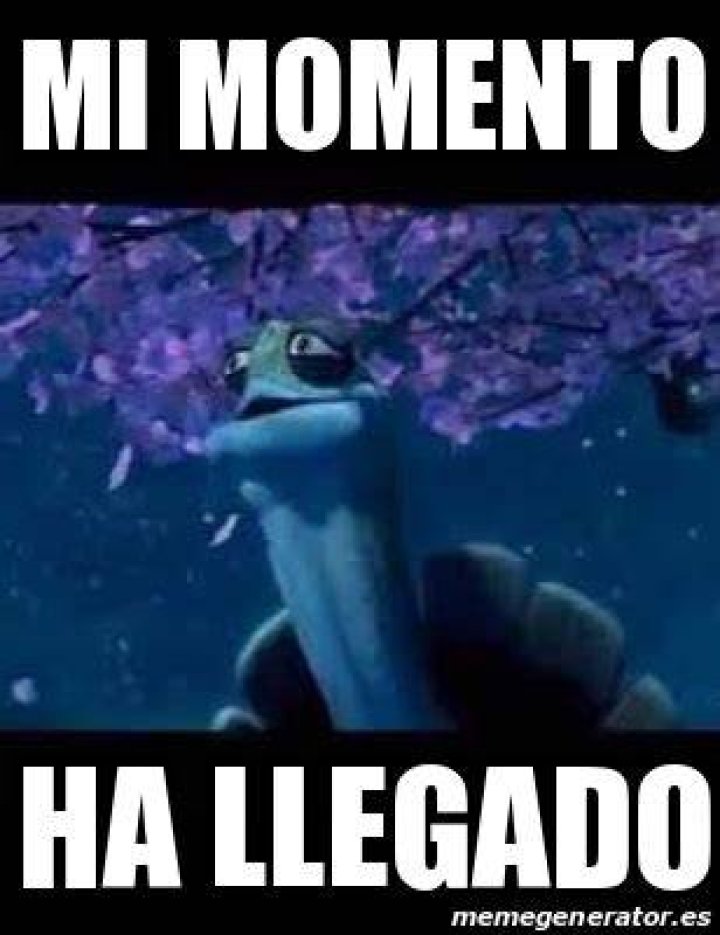
Image macros featuring Kronk's triumphant expression became popular templates. Users would add the text over the image, sometimes in the original Spanish, sometimes translated, sometimes both. The visual element proved crucial — Kronk's expression perfectly captures that mixture of confidence, eagerness, and slight overzealousness that makes the meme work.
YouTube compilations of Kronk's best moments helped fuel the meme's growth. These videos reintroduced The Emperor's New Groove to audiences who may have missed it during its initial theatrical run. Clips specifically highlighting the "mi momento ha llegado" scene racked up millions of views, with comment sections filled with people sharing how they used the phrase in their daily lives.
TikTok gave the meme new life starting around 2020. Creators used the audio clip in videos showing themselves preparing for various challenges or opportunities. The platform's algorithm helped expose the meme to younger audiences and different cultural groups who adapted it for their own purposes. Some videos showed genuine achievements, others leaned into comedy, but all shared that central theme of seizing one's moment.
Cultural Impact and Linguistic Spread
Something interesting happened as the meme crossed linguistic boundaries. People who didn't speak Spanish began using the phrase anyway, understanding its meaning through context and repetition. This phenomenon isn't unique — internet culture has previously adopted phrases from various languages when they capture something perfectly — but the widespread adoption of "mi momento ha llegado" demonstrated how memes can function almost as a universal language.
The phrase also worked its way into everyday conversation beyond digital spaces. Spanish speakers reported hearing it used in classrooms, offices, and social gatherings. It became one of those cultural touchstones that people reference with the assumption that others will understand the reference, creating a sense of shared knowledge and community.
Marketing teams and brands eventually caught on. Some companies used the phrase in Spanish-language advertising campaigns, banking on the recognition and positive associations it carried. Others created content directly referencing the meme, though with varying degrees of success — corporate adoption of memes always risks coming across as forced or out of touch.
Common Ways People Use This Meme
The versatility of "mi momento ha llegado" explains much of its endurance. Here are the contexts where you'll most commonly encounter it:
- Career milestones: Getting promoted, starting a new job, or finally using a specialized skill learned in training
- Academic settings: When a test question covers the one topic you actually studied, or getting called on when you actually know the answer
- Creative pursuits: Musicians finally getting to perform a difficult piece, artists completing a long-term project, writers finishing their manuscript
- Everyday victories: Using that rarely-needed kitchen tool, applying obscure knowledge, fixing something you researched extensively
- Gaming moments: Finally executing a difficult move, reaching a boss you've been preparing for, or getting to use a powerful ability
- Social situations: Getting to tell a prepared story, sharing a relevant fact you've been waiting to mention, or demonstrating a party trick
The Psychology Behind the Meme's Appeal
Psychologically, "mi momento ha llegado" captures a specific emotional state that lacks a concise equivalent in English. "My time has come" or "my moment has arrived" translate the words, but they don't quite carry the same energy. The Spanish phrase has a certain dramatic flair that makes even mundane applications feel momentous.
There's also something inherently relatable about Kronk as a character. He's competent but often overlooked. He's enthusiastic about tasks others might find boring. He takes pride in doing things well, even when those things are small or seemingly insignificant. These traits make him an ideal avatar for people who feel they're finally getting recognition or an opportunity to demonstrate their value.
The meme also plays into the human tendency toward self-deprecating humor. By applying dramatic language to ordinary situations, people acknowledge the gap between how important something feels to them personally versus its actual significance. This self-awareness makes the humor work without coming across as genuinely self-aggrandizing.
Frequently Asked Questions
What does "mi momento ha llegado" literally mean in English?
The phrase translates directly to "my moment has arrived" or "my moment has come." It expresses that someone's long-awaited opportunity to do something is finally here. The phrase carries connotations of readiness, anticipation, and the satisfaction of finally getting to showcase a particular skill or knowledge.
Do you need to know Spanish to use this meme?
Not at all. While the phrase originated in Spanish-language content, it has become widely recognized across different language communities. Many people use it without speaking Spanish fluently, as its meaning has been established through repeated use in meme contexts. That said, understanding the original context from The Emperor's New Groove adds an extra layer of appreciation.
Why did this particular Disney quote become so popular?
Several factors contributed to its success. Kronk was already a beloved character, the Spanish dubbing gave the line memorable delivery, and the emotion it captures is universally relatable. The phrase also has the right length and rhythm for social media posts. Most importantly, it fills a linguistic niche — expressing a specific feeling that English doesn't capture quite as efficiently in a similarly catchy phrase.
The Meme's Place in Internet History
Looking at "mi momento ha llegado" within the broader context of internet meme culture reveals interesting patterns. It represents a wave of memes that originated from Spanish-language content and successfully crossed over to global audiences. Previous generations of memes were predominantly English-language, but increasing diversity in online spaces has meant more multilingual meme creation and sharing.
The meme also demonstrates how older media content can experience revival through internet culture. The Emperor's New Groove is now over two decades old, yet new audiences continue discovering it through memes. This creates an interesting feedback loop where memes drive people to watch the source material, which in turn creates more fans who understand and propagate the memes.
Unlike some memes that peak quickly and disappear, "mi momento ha llegado" has shown remarkable staying power. It continues appearing regularly on social media years after first gaining traction. This longevity suggests it's transcended temporary trend status to become part of the permanent lexicon of internet expression.
Final Thoughts
The "mi momento ha llegado" meme exemplifies how internet culture transforms media into shared language. What began as a single line from a Spanish-dubbed Disney film became a way for millions to express anticipation, pride, and readiness across linguistic and cultural boundaries. Kronk's enthusiasm resonated because it reflects something genuine — that feeling when preparation meets opportunity, when you finally get to use knowledge you've been storing, or when circumstances align for you to demonstrate your capabilities.
Whether used sincerely or ironically, dramatically or casually, the phrase has earned its place in the pantheon of enduring internet expressions. It reminds us that memes aren't just frivolous entertainment, but rather a form of communication that can capture complex emotions more effectively than literal language sometimes allows. Years from now, people will likely still be declaring "mi momento ha llegado" when their moment finally arrives, keeping Kronk's spirit of enthusiastic readiness alive for future generations of internet users.