Powerball Explained: How to Play, Odds, Winners, and Jackpot Strategies
 Sophia Sparks
 Every week, millions of Americans rush to convenience stores and gas stations clutching a few dollars, hoping to transform their lives with a single ticket. Powerball has become more than just a lottery game—it's a cultural phenomenon that creates water cooler conversations, fuels dreams, and occasionally crowns multi-millionaires overnight. When jackpots soar past $500 million, even skeptics find themselves imagining what they'd do with that kind of money.
The lottery game has paid out some of the largest prizes in history. It's drawn twice weekly, and the mechanics are straightforward enough for anyone to understand, yet the odds remain astronomical. Still, someone has to win eventually, right?
What Is Powerball and How Does It Work
Powerball is a multi-state lottery game operated across 45 states, plus Washington D.C., Puerto Rico, and the U.S. Virgin Islands. The Multi-State Lottery Association manages the game, which launched in 1992 as a successor to Lotto America. Players select five numbers from 1 to 69 for the white balls, then choose one number from 1 to 26 for the red Powerball.
Drawings happen every Monday, Wednesday, and Saturday at 10:59 PM Eastern Time. The draw takes place at the Florida Lottery's studio in Tallahassee, broadcast live and streamed online. Two machines handle the draw—one contains the white balls, the other holds the red Powerballs. Each ticket costs $2 for a standard play, though players can add Power Play for an extra dollar to multiply non-jackpot prizes.
The jackpot starts at $20 million and rolls over each time nobody matches all six numbers. There's no cap on how high it can grow, which is why you occasionally see jaw-dropping figures like $1.5 billion making headlines. That rollover mechanism creates the massive prizes that capture public imagination and cause ticket sales to spike dramatically.
Understanding Your Chances of Winning
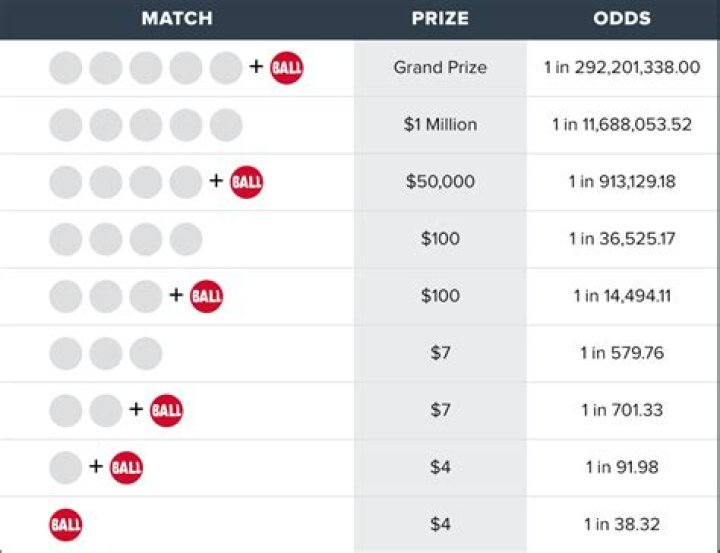
Let's talk about odds, because they're sobering. The chance of matching all five white balls plus the Powerball sits at roughly 1 in 292.2 million. To put that in perspective, you're more likely to be struck by lightning multiple times, become a movie star, or find a four-leaf clover on your first try than win the grand prize.
But Powerball offers nine ways to win, not just the jackpot. Match only the Powerball? That's $4. Get three white balls plus the Powerball, and you're looking at $100. The second-place prize—matching all five white balls without the Powerball—pays $1 million. These smaller prizes have much better odds, ranging from 1 in 38 for the bottom tier up to 1 in 11.6 million for the million-dollar prize.
The Power Play multiplier can boost non-jackpot winnings by 2x, 3x, 4x, 5x, or even 10x when the jackpot is under $150 million. A randomly selected multiplier determines the boost for that drawing. If you match five white balls with Power Play active, you're guaranteed $2 million instead of the standard $1 million, regardless of which multiplier is drawn.
Record-Breaking Jackpots That Made History
November 2022 saw the largest Powerball jackpot ever recorded when a single ticket in California won $2.04 billion. Edwin Castro claimed that prize, choosing the lump sum payment option. The win came after 40 consecutive drawings without a jackpot winner, allowing the prize to swell to unprecedented levels.
Before that, a $1.586 billion jackpot in January 2016 held the record. Three tickets split that prize—one each from California, Florida, and Tennessee. That drawing created overnight millionaires in multiple states and sparked intense media coverage for weeks. The winners chose different paths: some went public, others stayed anonymous where state law allowed.
These massive jackpots do more than create winners. They generate hundreds of millions in ticket sales, with a significant portion funding state programs. Education, infrastructure, and senior services often benefit from lottery revenue. When jackpots climb, that funding grows proportionally.
The Math Behind Lump Sum Versus Annuity
Winners face a critical decision: take a reduced lump sum immediately or receive the full advertised amount spread across 30 annual payments. The annuity option pays out over 29 years, with each payment 5% larger than the previous one to account for inflation. The advertised jackpot reflects this annuity value.
Most winners choose the lump sum despite it being roughly half the advertised jackpot amount. Why? Immediate access to capital allows for investment opportunities that could potentially generate returns exceeding the annuity's growth. Time value of money matters—a dollar today is worth more than a dollar 20 years from now.
Tax implications hit hard regardless of which option you choose. Federal taxes take 24% off the top immediately, and you'll owe more when filing since lottery winnings push you into the highest tax bracket. State taxes vary wildly—some states don't tax lottery winnings at all, while others take close to 10%. A $100 million lump sum could shrink to $60 million or less after the government takes its share.
Smart Strategies and Common Misconceptions
Can you improve your odds? Not really, but you can avoid making common mistakes. Quick Picks—computer-generated random numbers—win just as often as carefully selected numbers. In fact, roughly 70% of winners use Quick Picks. There's no statistical advantage to choosing birthdays, anniversaries, or "lucky" numbers. Every combination has identical odds.
One smart move: avoid commonly picked numbers. Choosing numbers above 31 reduces the chance of splitting a prize since many players select dates (which only go up to 31). If you win with less popular numbers, you're more likely to keep the entire jackpot rather than sharing with multiple winners. Low numbers like 1-31 appear on more tickets because of birthday selections.
Lottery pools offer a practical approach to buying more combinations without spending more individually. Offices, families, and friend groups frequently pool resources to purchase dozens or hundreds of tickets. This multiplies your chances proportionally while keeping individual cost low. Just ensure clear written agreements about how winnings get split to avoid disputes.
What Actually Happens When You Win
Winning triggers a specific process that varies slightly by state. First, sign the back of your ticket immediately—it's a bearer instrument, meaning whoever holds it can claim the prize. Next, make copies and store the original in a secure location like a safe deposit box. Don't rush to claim. Most states give winners between 90 days and a year to come forward.
Before claiming, assemble a team: a financial advisor, a tax attorney, and possibly an estate planner. These professionals help navigate the complexities of sudden wealth. Many winners who fail to seek professional advice end up broke within years. The statistics on lottery winners declaring bankruptcy are grim—financial mismanagement destroys many lives that should have been set for generations.
Some states allow anonymous claims through trusts or limited liability companies. Others require public identification. If your state mandates disclosure, prepare for attention. Your name, city, and prize amount become public record. Charities will reach out. Long-lost relatives may suddenly remember you exist. Scammers will attempt to exploit you. Professional guidance helps manage these challenges.
The Psychology Behind Playing the Lottery
Why do people play when the odds are so poor? Hope sells. Behavioral economists point to several factors. First, humans struggle to comprehend very large or very small numbers. A 1 in 292 million chance feels similar to 1 in 100 million—both seem impossible, so the difference doesn't register emotionally.
The "availability heuristic" plays a role too. Media coverage of winners makes winning seem more common than it actually is. You hear about the California teacher who won $200 million but not about the 292 million people who didn't win. This skews perception.
For many, a $2 ticket buys more than a chance at wealth—it purchases daydreaming time. Psychologists call this "mental consumption." Those few hours between buying a ticket and checking results allow people to fantasize about financial freedom. That entertainment value, however brief, has worth to many players.
How Powerball Funding Benefits Communities
Lottery critics argue it's a regressive tax on the poor. Supporters counter that it's voluntary and funds crucial programs. The truth contains elements of both perspectives. Revenue varies by state, but generally, about 50-60% goes to prizes, 30-40% funds state programs, and 5-10% covers operating costs and retailer commissions.
Education receives the largest share of lottery funding in most states. Billions of dollars annually support scholarships, school construction, and teacher salaries. Senior citizen programs, environmental conservation, and veterans' services also benefit. Without lottery revenue, these programs would need funding from other sources—likely through tax increases or budget cuts elsewhere.
Studies show lower-income individuals spend a disproportionate percentage of their income on lottery tickets. Whether this constitutes exploitation or personal choice remains debated. States walk a fine line between promoting games (to maximize revenue for programs) and encouraging responsible play.
Frequently Asked Questions
Can non-U.S. citizens play Powerball? Yes, you don't need to be a citizen or resident to purchase tickets and claim prizes. However, you must be physically present in a participating jurisdiction to buy tickets—online sales to international customers aren't available through official channels. Tax withholding may differ for non-residents.
What happens if you lose your winning ticket? Without the physical ticket, you cannot claim a prize. Signing it immediately protects you if it's lost or stolen. Some states allow claims without the original ticket under specific circumstances, but it's extremely difficult and requires substantial evidence. The ticket is your only proof.
Do online ticket purchases count? Several states now offer official lottery apps or websites for purchasing tickets. These are legitimate and handle claims automatically for smaller prizes. Jackpots still require in-person claim procedures. Be wary of third-party websites that claim to buy tickets on your behalf—many are scams.
How long do winners have to claim prizes? Deadlines range from 90 days to one year depending on the state where the ticket was purchased. Unclaimed prizes go back to the participating states, typically funding additional programs or future prizes. Millions of dollars in prizes expire annually because winners never come forward.
The Future of America's Favorite Lottery
Powerball continues evolving. Recent years brought format changes, additional drawing days, and innovations in how people play. Digital integration expands access while maintaining security. Jackpots will likely grow even larger as more states join and ticket sales increase.
The game taps into something fundamental about human nature—the desire for transformation, for escape from financial constraints, for the freedom that wealth promises. Whether that's worth $2 per ticket depends on your perspective. For millions of Americans, the answer is yes, and that's unlikely to change. The dream persists, drawing after drawing, creating stories of triumph and disappointment in equal measure.
Responsible play means treating tickets as entertainment, not investment. Budget what you can afford to lose, understand the odds, and never spend money needed for essential expenses. If you're fortunate enough to beat those astronomical odds, professional guidance turns luck into lasting security. Until then, the dream remains alive every Monday, Wednesday, and Saturday night.