Powerball Numbers: How to Check, Understand, and Play the Lottery
 Matthew Elliott
 Every Monday, Wednesday, and Saturday night, millions of Americans check their tickets hoping to match the winning Powerball numbers. This multi-state lottery game has created more millionaires than almost any other form of gambling in the United States, with jackpots regularly climbing into hundreds of millions of dollars. The game requires players to match five white ball numbers and one red Powerball number to win the grand prize, but understanding how these numbers work goes far beyond simply picking your favorites.
The fascination with Powerball numbers extends beyond the drawing itself. Players develop strategies, track hot and cold numbers, join office pools, and dream about what they'd do with life-changing money. Whether you're a regular player or someone who buys tickets only when jackpots hit record highs, knowing how to check results, understand the odds, and play responsibly makes the experience more enjoyable and informed.
What Are Powerball Numbers and How Do They Work?
Powerball uses a dual-drum system that selects six numbers during each drawing. Five white balls are drawn from a drum containing 69 numbered balls, while one red Powerball is drawn from a separate drum with 26 balls. This setup changed in 2015 from the previous format of 59 white balls and 35 red balls, a shift designed to create larger jackpots while offering better odds on smaller prizes.
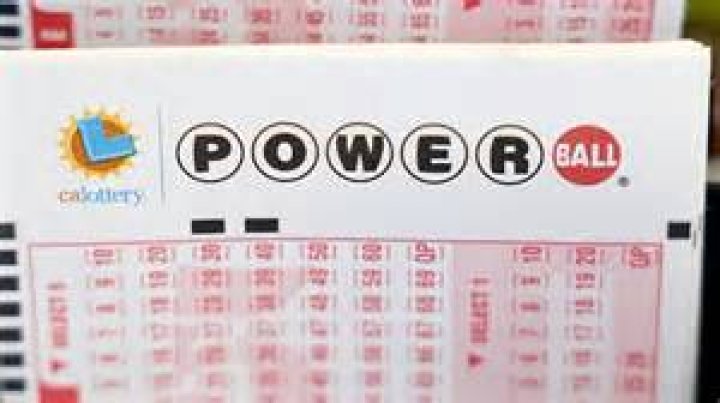
To play, you select five numbers between 1 and 69 for the white balls and one number between 1 and 26 for the Powerball. Quick Pick options let the computer randomly generate numbers for you, which remains the most popular method among players. The order in which the white balls are drawn doesn't matter—only whether your numbers match. The Powerball, however, must match exactly to win certain prize tiers.
How to Check Powerball Numbers After Each Drawing
Results become available within minutes of the 10:59 PM ET drawing time. The official Powerball website posts winning numbers immediately, along with the jackpot amount and whether anyone won. State lottery websites also publish results for their residents, typically with additional information about where winning tickets were sold within the state.
Most lottery retailers have terminals that can scan your ticket and instantly tell you if you've won. Many gas stations, convenience stores, and grocery stores offer this service even if you didn't purchase your ticket there. Mobile apps from state lotteries provide push notifications with results and let you scan tickets using your phone's camera.
News outlets report major jackpot wins, but smaller prizes often go unnoticed in media coverage. If you match even just the Powerball number alone, you win $4. The prize structure includes nine different winning combinations, ranging from that $4 prize up to the jackpot.
Understanding the Prize Structure and Matching Numbers
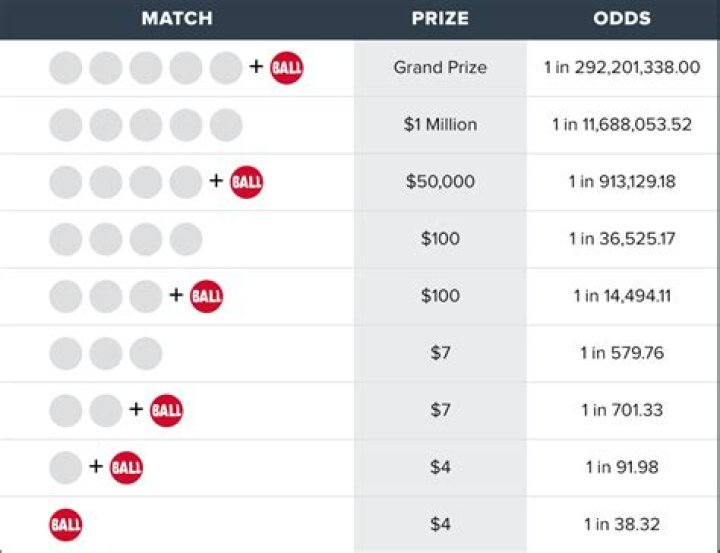
The prize tiers depend on how many numbers you match. Here's what each combination wins:
| Match | Prize | Odds |
|---|---|---|
| 5 white balls + Powerball | Jackpot | 1 in 292,201,338 |
| 5 white balls | $1 million | 1 in 11,688,053 |
| 4 white balls + Powerball | $50,000 | 1 in 913,129 |
| 4 white balls | $100 | 1 in 36,525 |
| 3 white balls + Powerball | $100 | 1 in 14,494 |
| 3 white balls | $7 | 1 in 579 |
| 2 white balls + Powerball | $7 | 1 in 701 |
| 1 white ball + Powerball | $4 | 1 in 91 |
| Powerball only | $4 | 1 in 38 |
The Power Play multiplier option costs an extra dollar per play and can multiply non-jackpot prizes by 2x, 3x, 4x, 5x, or 10x. The 10x multiplier only applies when the jackpot is $150 million or less. This feature has created several million-dollar winners who matched five white balls and had Power Play activated, turning their $1 million prize into $2 million.
Where Powerball Is Played and Who Can Participate
Powerball operates in 45 states plus Washington D.C., Puerto Rico, and the U.S. Virgin Islands. Only Alabama, Alaska, Hawaii, Nevada, and Utah don't participate. Each jurisdiction runs its own lottery system but contributes to the shared Powerball prize pool.
You must be 18 years old to play in most states, though Arizona, Iowa, Louisiana, and Mississippi require players to be 21. Purchase cutoff times vary by state but typically fall between 7:00 PM and 10:00 PM ET on drawing nights. Some states allow online ticket purchases through official lottery apps or websites, while others require in-person purchases at authorized retailers.
Prizes under $600 can usually be claimed at any retailer. Larger amounts require a trip to a lottery office or claim center. Jackpot winners have 180 days to one year to claim their prize, depending on the state. They can choose between an annuity paid over 29 years or a smaller lump sum payment.
The History of Powerball and How Numbers Have Changed
The Multi-State Lottery Association launched Powerball in 1992 as a successor to Lotto America. Initially, players chose five numbers from 45 white balls and one from 45 red balls. The format has changed several times to adjust odds and prize structures.
The biggest change came in October 2015 when the white ball pool expanded from 59 to 69 while the Powerball pool shrank from 35 to 26. This modification made the jackpot harder to win but improved odds for smaller prizes. The change led to more frequent billion-dollar jackpots, including the record $2.04 billion prize won in California in November 2022.
Before 2015, drawings occurred only on Wednesday and Saturday nights. Adding Monday drawings in 2021 gave players another weekly chance to win and helped jackpots grow faster when no one hit all six numbers.
Common Strategies Players Use When Selecting Numbers
Despite Powerball being a game of pure chance, players employ various methods to pick their numbers. Birthdays and anniversaries remain the most popular approach, though this limits selections to numbers 1 through 31, ignoring more than half the white ball pool. This clustering means that if these lower numbers win, multiple people are more likely to share the jackpot.
Some players track "hot" numbers that appear frequently in recent drawings or "cold" numbers that haven't shown up in months. Statistical analysis shows that every number has an equal probability each drawing regardless of past results, but tracking patterns gives players a sense of control in a random game.
Lottery syndicates and office pools let groups buy multiple tickets and share any winnings. This approach increases odds of winning something, though prizes get divided among all participants. Notable syndicate wins include a 20-person group of New Jersey co-workers who split a $429 million jackpot in 2016.
Quick Pick tickets, where computers randomly generate numbers, account for roughly 70-80% of all Powerball sales. Statistically, Quick Pick winners and self-selected winners occur at rates proportional to how tickets are purchased, meaning neither method offers an advantage.
What Happens When Multiple People Match the Same Numbers
When two or more tickets match all six numbers, winners split the jackpot equally. This scenario occurs more often with smaller jackpots and commonly chosen number patterns. The largest split jackpot happened in 2016 when three tickets shared a $1.586 billion prize, with winners in California, Florida, and Tennessee each receiving roughly $528 million before taxes.
Lower-tier prizes have fixed amounts, so matching five white balls always pays $1 million regardless of how many people win at that level. During a single drawing in 2013, 58 tickets matched five numbers, creating 58 new millionaires in one night. This unusual occurrence led to speculation about a common number-picking source, possibly a fortune cookie manufacturer whose numbers appeared in many cookies.
Taxes and Actual Payout Amounts
Lottery winnings count as ordinary income for tax purposes. The federal government withholds 24% immediately from prizes over $5,000. Depending on your total income, you might owe an additional 13% when filing taxes, bringing the top federal rate to 37% for the wealthiest brackets.
State taxes vary dramatically. Some states like California, Florida, Texas, and others don't tax lottery winnings at all. New York takes the largest cut at 8.82%, while other states fall somewhere in between. Winners might also owe local city or county taxes.
The advertised jackpot represents the annuity option paid over 30 installments. Most winners choose the lump sum, which equals roughly 60-70% of the advertised amount before taxes. A $500 million jackpot might have a cash value of $320 million. After federal and state taxes, a winner in a high-tax state could take home around $180-200 million.
Responsible Play and Understanding the Odds
The 1 in 292 million odds of winning the jackpot mean you're far more likely to be struck by lightning, attacked by a shark, or becoming a movie star. Your overall odds of winning any prize stand at about 1 in 25, though most wins return only the $4 ticket cost or a small multiple of it.
State lotteries provide resources for problem gambling, including self-exclusion programs and helpline numbers. Setting a budget for lottery tickets and treating it as entertainment rather than investment keeps the game fun. Financial advisors universally recommend against spending money you can't afford to lose on lottery tickets.
The appeal of Powerball extends beyond rational odds. The chance to dream, the anticipation of the drawing, and the shared cultural moment when jackpots reach record heights all contribute to why millions play despite the astronomical odds. The key is maintaining perspective and playing responsibly.
Record Jackpots and Notable Wins
Edwin Castro won the largest single-ticket Powerball jackpot in history when his ticket matched all six numbers for the $2.04 billion prize in November 2022. He chose the lump sum payment of $997.6 million before taxes. The winning ticket was sold at Joe's Service Center in Altadena, California, earning the retailer a $1 million bonus.
Other massive jackpots include the $1.765 billion prize won in California in October 2023, the $1.586 billion three-way split in January 2016, and the $768.4 million single-ticket win in Wisconsin in March 2019. These enormous prizes capture international attention and temporarily boost ticket sales to unprecedented levels.
Many winners choose to remain anonymous, though laws vary by state. Some states require lottery organizations to release winner names and cities, while others allow winners to claim through trusts or remain completely private. Winners who go public often face requests for money from strangers and increased attention from scammers.
How Powerball Numbers Are Actually Drawn
Drawings take place at the Florida Lottery studio in Tallahassee using mechanical draw machines manufactured by Smartplay International. The machines use gravity pick technology with ping pong balls, not random number generators. This physical process ensures transparency and allows witnesses to verify fairness.
Each numbered ball undergoes regular testing to ensure consistent weight and size. The lottery rotates between four sets of white balls and four sets of Powerballs, and officials randomly select which set to use before each drawing. Independent auditors supervise the entire process from start to finish.
The drawing is live-streamed and broadcast on local television stations in participating jurisdictions. Officials conduct a test drawing before the live event to verify equipment functions properly. This rigorous protocol maintains public trust in the game's integrity.
Frequently Asked Questions About Powerball Numbers
Can I buy Powerball tickets online?
Some states offer online ticket purchases through official lottery websites or apps. Third-party courier services operate in certain states, buying physical tickets on your behalf. Always use official or licensed services, as many online lottery sites are scams. Check your state lottery website for authorized purchasing options.
How long do I have to claim a prize?
Claim periods range from 90 days to one year depending on the state where you bought your ticket. Most states give winners 180 days (six months). Check the back of your ticket or your state lottery website for exact deadlines. Unclaimed prizes typically return to the state for educational programs or other designated uses.
What happens if I lose my winning ticket?
Powerball tickets are bearer instruments, meaning whoever holds the physical ticket owns the prize. Lost or stolen tickets cannot be replaced, and you cannot claim a prize without the original ticket. Sign the back of your ticket immediately after purchase to help establish ownership if questions arise.
Do numbers drawn recently have less chance of appearing again?
No. Each ball has an equal probability every drawing regardless of when it last appeared. The balls have no memory of previous drawings. A number drawn last week has the same odds of appearing in tonight's drawing as a number that hasn't shown up in months.
Are some numbers drawn more often than others over time?
Random variation means some numbers appear slightly more or less frequently over limited time periods. Over thousands of drawings, frequencies tend to even out. Any short-term patterns are statistical noise, not predictive indicators. Every number has equal probability in each individual drawing.
Making Informed Decisions About Playing
Understanding how Powerball numbers work, what the odds really mean, and how the game operates helps players make informed choices. While no strategy can improve your mathematical chances of winning, knowing when drawings occur, how to check results, what prizes pay, and how to claim winnings if you get lucky makes the experience more enjoyable.
The lottery creates genuine winners every drawing, from the $4 Powerball-only matches to the occasional life-changing jackpot. Treating ticket purchases as entertainment with money you've budgeted for fun rather than as an investment strategy keeps the game in proper perspective. For those who play responsibly, checking those Powerball numbers twice a week adds a small thrill to ordinary evenings and a brief escape into possibility.