ChatGBT: Understanding the Common Misspelling of ChatGPT
 Noah Mitchell
 If you've searched for "ChatGBT," you're not alone. Thousands of people make this exact typo every day while trying to access ChatGPT, the groundbreaking AI chatbot developed by OpenAI. The misspelling stems from a simple keyboard mistake—swapping the "P" and "B" keys, which sit right next to each other on standard QWERTY keyboards. This tiny error has become so widespread that it reveals something interesting about how quickly this technology has entered everyday vocabulary, even if people haven't quite nailed down the correct spelling yet.
ChatGPT launched in November 2022 and exploded into public consciousness faster than almost any consumer technology in history. Within five days, it reached one million users. The AI assistant can write essays, debug code, explain complex topics, translate languages, and engage in surprisingly human-like conversations. But with that rapid adoption came equally rapid confusion about its name, leading many to inadvertently search for variations like ChatGBT, ChatGTP, or ChatBPT.
What ChatGPT Actually Stands For
The correct name is ChatGPT, which stands for "Chat Generative Pre-trained Transformer." Each part of this name tells you something specific about how the technology works. "Chat" indicates its conversational interface—you type questions or prompts, and it responds in natural language. "Generative" means it creates new content rather than simply retrieving existing information from a database.
"Pre-trained" refers to the extensive training process the model underwent before release, learning patterns from vast amounts of text data. "Transformer" describes the underlying neural network architecture that enables the system to understand context and generate coherent responses. This architecture, first introduced in a 2017 research paper, revolutionized natural language processing.
OpenAI, the artificial intelligence research laboratory behind ChatGPT, built the system on top of its GPT series of language models. The version that launched publicly used GPT-3.5, while more recent iterations utilize GPT-4, which demonstrates significantly improved reasoning abilities and accuracy.
Why the Misspelling Happens So Frequently
The ChatGBT typo isn't random. Several factors contribute to this particular mistake becoming so common. Physical keyboard layout plays the biggest role—the B and P keys are immediate neighbors, making it easy for fingers to hit the wrong key during rapid typing. Your brain processes the word faster than your fingers can type it accurately.
Muscle memory works against precision here. When typing quickly, people rely on automaticity rather than consciously thinking about each letter. The similar sound of "B" and "P" when spoken aloud also creates confusion, especially for people who heard about the tool through conversation before seeing it written down.
Search engines recognize this pattern. Google and other platforms automatically correct "ChatGBT" to "ChatGPT" in most cases, displaying results for the correct spelling even when you've typed it wrong. This built-in correction helps users find what they need despite the error, though it also means many people never realize they've been misspelling it.
How ChatGPT Actually Works
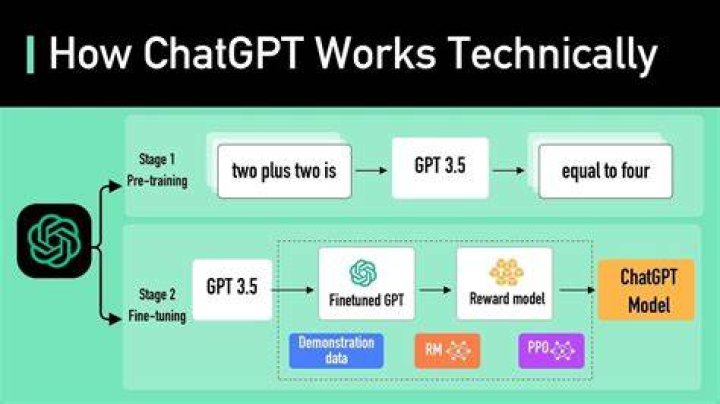
Understanding what makes ChatGPT function helps explain why it's become so influential. The system uses machine learning algorithms trained on hundreds of billions of words from books, websites, articles, and other text sources available up to its knowledge cutoff date. During training, it learned statistical patterns about how language works—which words typically follow others, how sentences are structured, and how ideas connect.
When you submit a prompt, the model doesn't search through a database for answers. Instead, it generates responses word by word, predicting the most likely next word based on everything that came before in the conversation. This process happens remarkably quickly, producing detailed responses in seconds.
The system uses something called attention mechanisms to weigh the importance of different words in your prompt. If you ask "What year did World War II end?", it focuses on the key elements—World War II and the temporal question—rather than treating every word equally. This selective attention allows for more relevant and accurate responses.
Key Capabilities and Limitations
ChatGPT excels at several specific tasks. It can explain complicated subjects in simple terms, making it valuable for learning. Students use it to understand difficult concepts, though educators have raised concerns about academic integrity. The system writes code in multiple programming languages, often helping developers debug problems or learn new frameworks.
Content creation represents another major use case. The AI drafts emails, creates outlines, generates ideas, and writes full articles on specified topics. It translates between languages with reasonable accuracy, though professional translators still outperform it for nuanced or technical content.
But significant limitations exist. The model sometimes produces confident-sounding answers that are completely wrong—a phenomenon researchers call "hallucination." It lacks real-time information unless using special browsing capabilities, meaning its knowledge stops at its training cutoff. The system can't access personal data about you unless you provide it in the conversation.
ChatGPT struggles with mathematical reasoning, especially complex calculations. While it has improved across versions, it still makes arithmetic errors that a calculator would never produce. The AI also can't truly understand context the way humans do—it recognizes patterns without genuine comprehension.
Different Versions and Access Methods
OpenAI offers ChatGPT through multiple tiers. The free version provides access to GPT-3.5, which handles most common tasks adequately. Response times may be slower during peak usage, and access can be limited when servers experience high demand.
ChatGPT Plus, a subscription service costing $20 monthly, grants access to GPT-4, the more advanced model. Subscribers get priority access during busy periods, faster response times, and early access to new features. GPT-4 handles more complex instructions, demonstrates better reasoning, and makes fewer factual errors than its predecessor.
Enterprise and API access options exist for businesses and developers who want to integrate the technology into their own applications. These commercial options offer customization, higher usage limits, and dedicated support.
Common Misconceptions
Many people misunderstand what ChatGPT can and cannot do. It's not connected to the internet in real-time unless specifically using browsing tools, so it can't tell you today's weather or yesterday's news. The system doesn't have opinions or consciousness—it generates text that sounds opinion-like based on patterns in training data.
ChatGPT doesn't remember previous conversations unless they're part of the current session. Once you start a new chat, it has no memory of past interactions. This design choice protects privacy but means you need to provide context each time.
The AI isn't infallible. It makes mistakes regularly, and users should verify important information through other sources. Treating its responses as starting points rather than definitive answers leads to better outcomes.
Privacy and Security Considerations
When using ChatGPT, conversations may be reviewed by human trainers to improve the system. OpenAI states that these reviews focus on ensuring safety and quality rather than surveillance, but users should avoid sharing sensitive personal information, passwords, or confidential business data.
The service collects standard technical data like IP addresses and browser information. Account holders can delete their chat history, though this doesn't necessarily remove data from training datasets if it was already incorporated.
Organizations using ChatGPT for work purposes need clear policies about what information employees can input. Several companies have restricted or banned its use after discovering employees were sharing proprietary code or confidential documents.
Impact on Various Industries
Education faces perhaps the biggest disruption. Teachers struggle to distinguish AI-written assignments from student work. Some institutions have banned the tool, while others are integrating it into curricula and teaching students to use AI responsibly. The technology forces educators to rethink assessment methods and learning objectives.
Customer service departments are deploying ChatGPT-based systems to handle routine inquiries, reducing wait times and operational costs. The technology works well for straightforward questions but still escalates complex issues to human representatives.
Content creators view the tool with mixed feelings. Some embrace it as a productivity enhancer for brainstorming and drafting. Others worry about job displacement and the devaluation of human creativity. Publishing platforms are developing policies about AI-generated content disclosure.
Legal and medical professionals approach ChatGPT cautiously. While it can research case law or explain medical concepts, the stakes are too high to rely on it without extensive verification. Professional liability concerns prevent wholesale adoption in these fields.
Tips for Effective Use
Getting quality results from ChatGPT requires skill. Specific prompts generate better responses than vague ones. Instead of asking "Tell me about dogs," try "Explain the key differences between German Shepherds and Golden Retrievers for potential owners." The more context you provide, the more relevant the output.
Breaking complex tasks into smaller steps works better than requesting everything at once. Ask the AI to create an outline first, then expand individual sections. This iterative approach produces higher-quality results.
Don't accept the first response blindly. Ask follow-up questions, request clarification, or tell the system to revise its answer with specific improvements. The conversational nature allows for refinement.
Verify factual claims, especially for important decisions. Use ChatGPT as a research assistant that points you toward information, not as the final authority. Cross-reference dates, statistics, and technical details against reliable sources.
The Competitive Landscape
ChatGPT isn't the only AI chatbot available. Google launched Bard (later renamed Gemini), which integrates with Google's ecosystem and search capabilities. Microsoft's Copilot incorporates GPT-4 technology with Bing search integration, offering internet connectivity by default.
Anthropic's Claude emphasizes safety and helpfulness, positioning itself as a more reliable alternative. Meta released Llama models as open-source options that developers can customize and deploy independently. Each competitor brings different strengths, whether in factual accuracy, creative writing, coding assistance, or ethical considerations.
The rapid development in this space means new capabilities emerge constantly. What seems cutting-edge today may be standard functionality next month. Users benefit from this competition through improved features, lower costs, and more choices.
Looking Ahead
The technology behind ChatGPT continues evolving rapidly. Future versions will likely reduce hallucinations, improve reasoning abilities, and handle multimedia inputs like images and audio more seamlessly. Integration with other tools and services will expand, making AI assistance more embedded in daily workflows.
Regulatory frameworks are developing worldwide as governments grapple with AI's implications. Privacy protections, transparency requirements, and accountability measures will shape how these systems operate commercially. The European Union's AI Act represents one early attempt at comprehensive regulation.
Societal adaptation will determine the technology's ultimate impact. Education systems must evolve to teach AI literacy alongside traditional skills. Workplaces will need to balance automation with human judgment. Individuals must develop critical thinking to evaluate AI-generated content effectively.
Final Thoughts
Whether you call it ChatGBT by mistake or ChatGPT correctly, this technology represents a significant shift in how humans interact with computers. The ease of searching for misspelled variations and still finding accurate information demonstrates both the tool's popularity and search engines' sophistication.
ChatGPT works best as a collaborative tool rather than a replacement for human intelligence. It augments capabilities, speeds up certain tasks, and makes information more accessible. But it requires oversight, verification, and thoughtful application. Understanding its proper name is just the first step toward using it effectively and responsibly in an increasingly AI-integrated world.