Xfinity Internet, TV, and Home Services: Complete 2026 Guide
 Samuel Coleman
 Xfinity stands as America's largest cable internet provider, serving more than 32 million customers across 40 states. Owned by Comcast Corporation, Xfinity bundles internet, television, mobile phone service, and home security into packages designed for households seeking consolidated entertainment and connectivity solutions. The brand transformed from Comcast's consumer division in 2010, rebranding to distinguish residential services from business offerings.
Choosing a home service provider involves weighing speed requirements against budget constraints, evaluating customer service reputation, and understanding contract terms. This guide examines what Xfinity delivers, how it compares to competitors, and what customers should know before signing up.
Understanding Xfinity's Core Services
Xfinity operates four primary service categories. Internet access forms the foundation, delivered through hybrid fiber-coaxial networks that reach approximately 60% of US households. Television packages range from basic cable to premium streaming bundles. Xfinity Mobile functions as a mobile virtual network operator using Verizon's cellular infrastructure. Home security and automation round out the portfolio through the Xfinity Home platform.
The company distinguishes itself through infrastructure investment. Comcast has spent billions upgrading networks to support multi-gigabit speeds in major metropolitan areas. By mid-2026, their footprint includes 10G capability in select markets, though actual speeds depend heavily on location and plan selection.
Internet Plans and Performance
Xfinity internet tiers typically start around 150 Mbps for entry-level service, scaling to 2,000 Mbps or higher in upgraded markets. Download speeds receive more emphasis than upload speeds—a characteristic of cable internet architecture. A customer purchasing a 1,200 Mbps plan might experience upload speeds of only 35 Mbps, which matters significantly for video conferencing, content creation, or cloud backups.
Data caps represent a critical consideration. Most Xfinity internet plans include a 1.2 terabyte monthly data allowance. Exceeding this threshold triggers overage charges of $10 per additional 50 gigabytes, capped at $100 monthly. Customers can purchase unlimited data for an extra $25 to $30 per month, or bundle it with certain equipment rentals. Households streaming 4K content on multiple devices simultaneously should calculate expected usage carefully.
Network reliability varies by infrastructure age and local maintenance practices. Cable internet shares bandwidth among neighborhood users, meaning performance can degrade during peak evening hours in densely populated areas. Fiber-to-the-home connections, which Comcast is gradually expanding, eliminate this issue but remain unavailable in most Xfinity service territories.
Television Service Options
Xfinity TV operates in two formats: traditional cable boxes and the streaming-focused Xumo platform. Traditional service requires set-top box rentals, typically $8 to $10 monthly per device. Channel lineups start with basic packages around 10+ channels, expanding to 185+ channels in mid-tier plans, and 260+ channels for premium subscribers who add sports and movie networks.
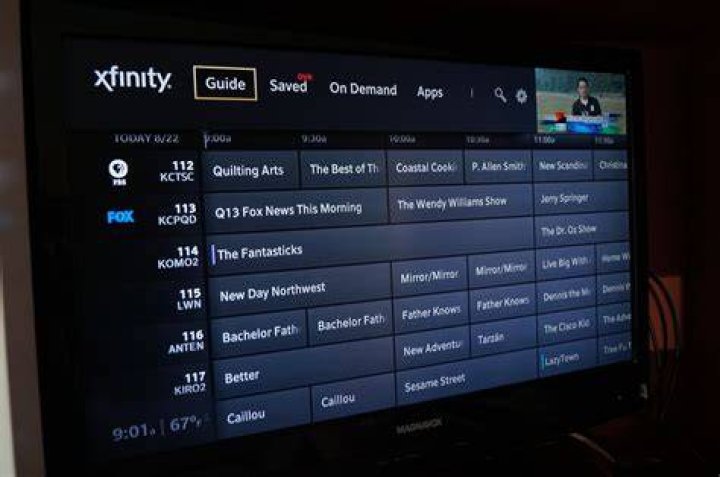
The X1 platform, Xfinity's flagship TV interface, integrates voice control, streaming app access, and cloud DVR storage. Recording capacity reaches 150 hours for standard DVR service, or 300 hours with enhanced cloud DVR. The voice remote responds to natural language commands for channel changes, content searches, and smart home controls if integrated.
Xumo Stream Box represents Xfinity's answer to cord-cutting trends. This device costs $5 monthly and doesn't require bundling with internet service, though having Xfinity internet unlocks additional features. It aggregates streaming services into a unified interface while offering live TV options through Xumo TV—a free, ad-supported streaming service with 250+ channels.
Mobile Service Through Xfinity Mobile
Xfinity Mobile launched in 2017 exclusively for existing Xfinity internet customers. This requirement creates both a barrier and an incentive—households already paying for Xfinity internet can add mobile lines at competitive rates, but those without Xfinity broadband cannot access the service at all.
Two pricing structures exist. Unlimited data plans cost approximately $45 per line for one line, decreasing to $30 per line when four lines share an account. By-the-gig pricing charges $15 per gigabyte, appealing to light data users who stay connected to WiFi most of the time. Xfinity's millions of public hotspots across the country automatically connect customer phones, reducing cellular data consumption.
Coverage piggybacks on Verizon's network through an MVNO agreement. Call quality and data speeds typically match Verizon's performance, though during network congestion, MVNO traffic may receive lower priority than direct Verizon customers. International roaming, 5G access, and device financing options mirror mainstream carriers, making Xfinity Mobile a legitimate alternative rather than a budget compromise.
Home Security and Automation
Xfinity Home competes with ADT, Ring, and SimpliSafe in the home security market. The system includes door and window sensors, motion detectors, security cameras, and smart locks controllable through a mobile app. Professional monitoring costs roughly $40 to $50 monthly depending on service level, while self-monitoring options exist at lower price points.
Integration with the Xfinity ecosystem creates convenience for multi-service customers. The same app managing internet settings and TV recordings also controls thermostats, views camera feeds, and arms security systems. Voice control through the X1 remote or third-party assistants like Alexa extends functionality further.
Equipment installation follows either professional or DIY paths. Professional installation includes technician configuration and placement recommendations, typically costing $100 to $200 upfront. Self-installation kits ship with detailed instructions for technically comfortable homeowners who want to avoid service charges.
Pricing Structure and Contracts
Xfinity employs promotional pricing that creates confusion for customers comparing long-term costs. Advertised rates often apply only for the first 12 or 24 months, after which prices increase substantially. A $40 monthly internet plan might jump to $70 or $80 after the promotional period expires. Reading the fine print prevents bill shock when renewal occurs.
Contract terms differ by service. Internet and TV typically don't require long-term commitments, though accepting one can lower monthly rates. Early termination fees disappeared for most Xfinity services in recent years, improving flexibility for customers who relocate or switch providers. However, equipment non-return fees still apply—failing to return rented modems, cable boxes, or other gear within 30 days of cancellation triggers charges of $100 to $300.
Bundle discounts incentivize combining services. Pairing internet with TV, or adding mobile lines to an existing package, unlocks per-service discounts that can total $20 to $50 monthly compared to purchasing services separately. Whether bundling makes financial sense depends on whether you'd genuinely use all included services or if you're paying for features you don't need.
Equipment and Installation
Xfinity provides equipment through rental or customer-owned models. The xFi Gateway, combining modem and router functionality, rents for approximately $15 monthly. Over two years, that totals $360—significantly more than purchasing a compatible modem and router outright. Comcast maintains a list of certified devices that work with their network, allowing customers to avoid rental fees by buying equipment.
WiFi extenders address coverage gaps in larger homes. Xfinity offers xFi Pods, small devices that create mesh networks by plugging into wall outlets. Rental plans include varying numbers of pods, or customers can purchase them outright. Third-party mesh systems also work with Xfinity service, though some advanced features like network management through the Xfinity app may not function fully.
Installation appointments can be scheduled for professional setup or customers can self-install using mailed kits. Professional installation costs roughly $100 unless waived through promotional offers. Self-installation works well for straightforward setups but may frustrate customers encountering signal issues or activation problems without technical support on-site.
Customer Service Experience
Xfinity's customer service reputation sits below industry averages according to J.D. Power studies and American Customer Satisfaction Index ratings. Common complaints center on billing disputes, unexpected price increases, and difficulty reaching knowledgeable support representatives. Wait times for phone support can stretch beyond 20 minutes during peak periods.
The Xfinity app and website offer self-service tools that help customers avoid phone calls. Account management, bill payment, appointment scheduling, and basic troubleshooting operate through digital channels. Chat support provides faster response times than phone calls, though complex technical issues still require phone escalation or technician visits.
Retail stores exist in many markets, allowing face-to-face equipment exchanges, bill payment, and service questions. Store associates generally handle routine matters effectively but may lack authority to resolve billing disputes or technical problems requiring backend system access.
Comparing Xfinity to Competitors
| Provider | Technology | Typical Speed Range | Data Caps | Availability |
|---|---|---|---|---|
| Xfinity | Cable/Hybrid Fiber | 150-2000 Mbps | 1.2 TB (can add unlimited) | 40 states, major metros |
| AT&T Fiber | Fiber-to-home | 300-5000 Mbps | None | Limited markets |
| Verizon Fios | Fiber-to-home | 300-2000 Mbps | None | Northeast corridor primarily |
| Spectrum | Cable | 300-1000 Mbps | None | 41 states |
| T-Mobile Home Internet | 5G/4G LTE | 50-300 Mbps | None | Expanding nationwide |
Fiber providers like AT&T and Verizon offer superior upload speeds and no data caps, but their availability remains limited to select cities. Cable competitors like Spectrum charge slightly lower prices in some markets but offer similar technology with comparable trade-offs. Fixed wireless options from T-Mobile and Verizon provide alternatives in areas with limited wired infrastructure, though speeds fluctuate based on signal strength.
Performance During Outages
Cable internet infrastructure proves vulnerable to weather events and physical damage. Power outages knock out service unless you maintain battery backup for modems and routers. Severe storms can damage aerial lines, causing extended downtime in affected neighborhoods. Xfinity's network redundancy varies by location—major urban areas typically restore service faster than rural communities where technician response times lag.
The company provides outage maps and status updates through their app and website. Estimated restoration times frequently change as damage assessment continues, frustrating customers planning around connectivity needs. Service credits for extended outages require customer requests rather than automatic application, necessitating documentation of downtime duration.
Geographic Coverage Limitations
Despite serving 40 states, Xfinity's coverage appears patchy when examined closely. The provider dominates in regions like the Northeast corridor, Chicago metropolitan area, California's major cities, and parts of the Southeast. Vast rural areas remain unserved, and even within covered states, suburban and exurban neighborhoods often lack access.
Address-level availability checking proves essential before assuming Xfinity serves your location. The company's website includes a service availability tool requiring street address input. Apartment buildings sometimes sign exclusive contracts with specific providers, limiting tenant choice regardless of what's available to surrounding single-family homes.
Recent Changes and Future Direction
Comcast continues investing in network upgrades and service expansion. The push toward 10G technology aims to deliver symmetrical multi-gigabit speeds eventually, though deployment timelines extend across several years. Fiber-to-the-home construction accelerated recently as competition from municipal broadband and fiber-focused competitors intensified.
Streaming integration reflects industry trends. Xfinity now includes Peacock Premium at no extra charge for most internet customers, leveraging NBCUniversal's streaming platform (another Comcast property). Partnerships with Netflix, Apple TV+, and other services create bundled entertainment packages that simplify subscriptions while locking customers into the Xfinity ecosystem.
The shift toward contract-free service represents a positive development. Removing early termination fees and offering more flexible plans acknowledges customer preference for freedom to switch providers. However, promotional pricing tactics remain, requiring vigilance about post-promotion rate increases.
Who Benefits Most from Xfinity
Households seeking bundled services from a single provider find Xfinity appealing. Combining internet, TV, mobile, and home security simplifies billing and support while unlocking bundle discounts. Families already invested in traditional cable TV who aren't ready to transition fully to streaming appreciate the comprehensive channel lineups and familiar interface.
Areas lacking fiber competition often make Xfinity the fastest available option by default. When the alternative is DSL at 25 Mbps or satellite internet with high latency, Xfinity's cable speeds become the practical choice despite higher costs or data caps.
Light internet users who stay below data caps and accept promotional pricing rotations can access affordable connectivity. Pairing basic internet with Xfinity Mobile creates a low-cost combination for budget-conscious subscribers willing to manage data consumption actively.
Who Should Consider Alternatives
Content creators, remote workers doing video production, and households running home servers need symmetrical upload speeds that cable internet doesn't provide well. Fiber providers deliver far better upload performance, making them superior choices when available.
Customers frustrated by data caps should explore providers offering unlimited data as standard. Spectrum and most fiber companies don't impose usage limits, eliminating overage anxiety for heavy streaming households.
Those prioritizing customer service may prefer smaller regional providers or fiber-focused companies that consistently score higher in satisfaction surveys. While no provider achieves universal acclaim, some maintain notably better support reputations than Xfinity.
Practical Tips for Xfinity Customers
Negotiate retention offers when promotional pricing expires. Calling customer retention (not general support) and mentioning competitor offers frequently unlocks discounts that aren't advertised publicly. Patience during these calls pays off—representatives have authorization to extend promotions or create custom packages for customers threatening to cancel.
Purchase your own equipment to avoid long-term rental fees. A quality modem and router cost $150 to $250 upfront but eliminate $180 in annual rental charges. Ensure purchased equipment appears on Comcast's compatibility list to avoid activation issues.
Monitor data usage through the Xfinity app if you don't have unlimited data. Setting up usage alerts prevents surprise overage charges. Households consistently approaching the 1.2 TB cap should calculate whether unlimited data ($25-30/month) costs less than overages.
Schedule installation appointments for early morning time slots. Technicians running behind schedule affect later appointments disproportionately. First appointments of the day typically occur on time.
Key Considerations Before Subscribing
Xfinity delivers reliable high-speed internet to millions of American households, particularly in urban and suburban markets where cable infrastructure dominates. The ability to bundle multiple services creates convenience, though whether that convenience justifies the cost depends on individual usage patterns and local alternatives.
Promotional pricing requires attention. First-year rates look attractive, but long-term costs tell the complete financial story. Calculating total cost over two or three years, including equipment fees and post-promotion rates, provides clearer comparison points when evaluating providers.
Data caps affect households differently. Casual users may never approach limits, while cord-cutters streaming everything will bump against restrictions regularly. Understanding your consumption habits before committing prevents frustration later.
Customer service challenges exist but aren't universally experienced. Some customers navigate issues smoothly while others encounter persistent problems. Reading recent local reviews provides insight into service quality in your specific area, since experiences vary significantly by region.
Competition in the broadband market continues intensifying. Municipal fiber projects, 5G home internet expansion, and traditional telecom fiber buildouts all create alternatives that didn't exist five years ago. Checking what's actually available at your address before defaulting to Xfinity ensures you're making an informed choice rather than assuming limited options.