ChatGPT Explained: What It Is, How It Works, and Why It Matters
 Christopher Harper
 ChatGPT arrived in late 2022 and changed how millions of people interact with technology. Developed by OpenAI, this conversational artificial intelligence responds to text prompts with human-like answers. It writes essays, debugs code, explains complex topics, and handles countless other tasks through simple conversation.
What started as an experiment quickly became one of the fastest-growing applications in history. Within two months of launch, ChatGPT reached 100 million users. By 2026, it has woven itself into daily workflows for students, professionals, researchers, and casual users worldwide. But what exactly is this tool, and why has it sparked both excitement and concern?
What ChatGPT Actually Is
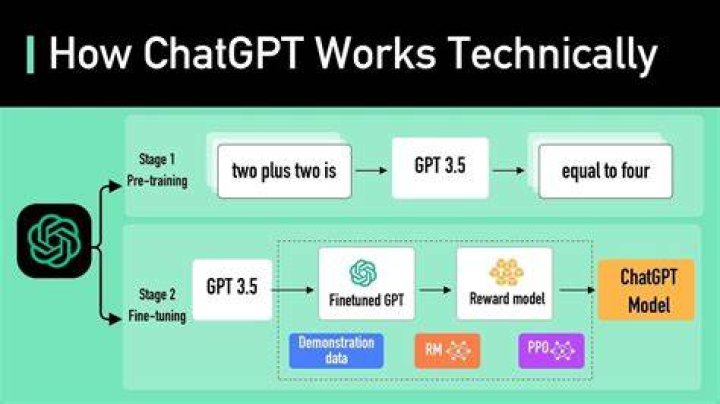
ChatGPT stands for Chat Generative Pre-trained Transformer. Behind that technical name sits a large language model trained on vast amounts of text from books, websites, and other sources. The system learned patterns in language—how words relate to each other, how sentences form meaning, and how conversations flow.
Unlike traditional chatbots that follow scripted responses, ChatGPT generates original text based on probability. When you type a question, the model predicts the most likely sequence of words that would form a relevant answer. It doesn't search the internet in real time or store a database of facts. Instead, it creates responses from patterns absorbed during training.
The technology builds on transformer architecture, a breakthrough in machine learning introduced by Google researchers in 2017. Transformers excel at understanding context across long passages of text. They can track relationships between words separated by dozens of sentences, which is why ChatGPT maintains coherent conversations across multiple exchanges.
How the System Processes Your Questions
When you submit a prompt, several steps happen almost instantly. First, the system breaks your text into tokens—chunks of characters that it can analyze. These tokens get converted into numerical representations that capture semantic meaning.
Next, the model examines these numbers through billions of parameters—the adjustable values that determine how the system responds. Different parameter combinations activate based on your specific prompt. The model calculates probabilities for what word should come next, then repeats this process for each subsequent word until it completes a response.
Temperature settings influence how predictable or creative the output becomes. Lower temperatures produce more consistent, focused answers. Higher temperatures introduce variety and unexpected word choices. OpenAI tunes these settings to balance helpfulness with creativity.
Major Versions and Their Evolution
The first public release, built on GPT-3.5, impressed users but had notable limitations. It sometimes generated confident-sounding nonsense. It struggled with math. Its knowledge cutoff meant it couldn't discuss recent events.
GPT-4, released in March 2023, brought substantial improvements. It performed better on standardized tests, handled longer conversations, and reduced harmful outputs. The model could process images alongside text, opening new possibilities for visual analysis.
By 2026, newer iterations have expanded capabilities further. The system now integrates web browsing, allowing it to pull current information. It can generate images through DALL-E integration. It supports plugins that connect to third-party services. Voice interaction lets users speak naturally rather than typing.
These upgrades transformed ChatGPT from a clever demo into a practical tool that competes with traditional search engines and productivity software.
Real-World Applications Across Industries
Education represents one of the most contentious use cases. Students employ ChatGPT to explain difficult concepts, generate study guides, and even complete assignments. This has forced schools to rethink assessment methods. Some educators ban it outright. Others teach responsible use, treating it like a calculator—helpful for certain tasks, inappropriate for others.
In business settings, professionals use ChatGPT for drafting emails, summarizing documents, and brainstorming ideas. Customer service teams deploy it to handle routine inquiries. Marketing departments generate content outlines and social media posts. The efficiency gains are real, but so are questions about originality and accuracy.
Programmers turn to ChatGPT for code suggestions, debugging assistance, and explanations of unfamiliar syntax. It accelerates development but doesn't replace understanding. The model sometimes suggests outdated approaches or introduces subtle bugs that experienced developers catch easily but novices might miss.
Healthcare professionals explore it cautiously. While it can summarize research papers or draft patient education materials, medical advice requires precision that ChatGPT cannot guarantee. The technology assists but cannot replace clinical judgment.
What ChatGPT Does Well
The system excels at certain tasks. It explains concepts in multiple ways until understanding clicks. If a technical explanation confuses you, it can rephrase using simpler language or analogies. This adaptability makes it valuable for learning.
Creative brainstorming benefits from its ability to generate numerous variations quickly. Need ten headlines for an article? Twenty names for a fictional character? It produces options fast, even if you refine them later.
Text transformation tasks play to its strengths. It rewrites formal text as casual conversation. It expands bullet points into full paragraphs. It translates between languages with reasonable accuracy for common language pairs.
Pattern recognition helps with data analysis. Feed it a spreadsheet of sales figures, and it identifies trends. Provide customer feedback, and it categorizes common complaints. These capabilities save hours of manual work.
Known Limitations and Weaknesses
ChatGPT confidently states incorrect information—a problem researchers call "hallucination." It generates facts that sound plausible but are completely wrong. This happens because the model optimizes for coherent-sounding text, not truthfulness. Always verify critical information, especially statistics, dates, and technical details.
Math remains challenging despite improvements. While it handles basic arithmetic, complex calculations often produce errors. The system also struggles with logic puzzles that require multiple steps of reasoning. It might start correctly but lose the thread halfway through.
Bias embedded in training data surfaces in outputs. The model can perpetuate stereotypes or present culturally specific perspectives as universal truths. OpenAI has implemented safeguards, but subtle biases persist because they reflect patterns in the training corpus.
The knowledge cutoff creates blind spots. Without web browsing enabled, the model knows nothing about events after its training data ends. Even with browsing, it may not access paywalled content or private databases that humans routinely consult.
Pricing Tiers and Access Models
ChatGPT launched as a free service, and a basic version remains accessible without payment. Free users get access to GPT-3.5 with some usage limits during peak times. Responses arrive quickly but lack the advanced reasoning of newer models.
ChatGPT Plus, a subscription tier introduced in February 2023, costs $20 monthly. Subscribers get GPT-4 access, faster response times, priority during high-traffic periods, and early access to new features. For professionals who rely on the tool daily, the upgrade often pays for itself in time saved.
Enterprise plans offer team features, administrative controls, and enhanced security. Organizations can manage multiple users, set usage policies, and keep sensitive data from training future models. Pricing varies based on company size and requirements.
An API allows developers to build ChatGPT functionality into their own applications. This pay-per-use model charges based on tokens processed. It powers countless apps and services that integrate conversational AI without building models from scratch.
Privacy Concerns and Data Handling
Every conversation you have with ChatGPT potentially trains future versions of the model. OpenAI uses interactions to improve performance, which raises privacy questions. Users can opt out of data training, but this requires changing settings that many people never touch.
Sensitive information entered into ChatGPT could theoretically appear in responses to other users later. While OpenAI implements filters to prevent this, the risk isn't zero. Legal professionals, healthcare workers, and anyone handling confidential data should exercise caution.
The company states it encrypts data in transit and at rest. It complies with major privacy regulations like GDPR. Still, trusting a third party with your conversations requires weighing convenience against potential exposure. Many organizations ban ChatGPT for precisely this reason.
Competing AI Chatbots and Alternatives
ChatGPT pioneered mainstream AI chat, but competitors have emerged. Google's Bard, now integrated into Gemini, offers similar functionality with direct access to Google's search index. Microsoft's Copilot, built on OpenAI technology, integrates with Office applications.
Anthropic's Claude emphasizes safety and reliability. It tends toward more careful responses and explicitly acknowledges uncertainty more often than ChatGPT. Some users prefer its cautious approach for sensitive topics.
Open-source alternatives like LLaMA and Mistral let technically skilled users run models locally. This provides complete privacy but requires powerful hardware and technical know-how. Performance typically lags behind commercial offerings but improves rapidly.
Specialized tools target specific use cases. Jasper focuses on marketing content. GitHub Copilot specializes in code. Grammarly uses AI for writing improvement. ChatGPT's generalist approach makes it versatile but not always optimal for niche tasks.
Common Mistakes Users Make
Treating ChatGPT as a search engine leads to disappointment. It doesn't cite sources automatically or guarantee current information. When you need verifiable facts, traditional search or specialized databases work better.
Vague prompts produce vague results. "Write about climate change" generates generic text. "Explain how rising ocean temperatures affect coral bleaching in the Caribbean, using examples from the past decade" yields useful content. Specificity matters enormously.
Accepting first drafts without revision wastes the tool's potential. ChatGPT excels at iteration. If a response misses the mark, refine your prompt or ask for modifications. The tenth version often surpasses the first dramatically.
Ignoring context limits causes confusion. The model tracks conversation history, but extremely long threads strain its memory. If responses become incoherent, starting a new conversation often helps. The system performs best with focused discussions rather than sprawling multi-topic sessions.
The Impact on Content Creation and SEO
Content farms immediately recognized ChatGPT's potential for generating articles at scale. Low-quality AI-written content flooded the internet, prompting search engines to refine detection methods. Google confirmed that AI-generated content isn't automatically penalized but must meet quality standards.
Skilled writers use ChatGPT as a collaborator rather than a replacement. It handles research summaries, first drafts, and structural outlines. Humans add expertise, nuance, and fact-checking. This hybrid approach produces better results than either party alone.
SEO strategies evolved to account for AI content. Search engines now emphasize experience, expertise, authoritativeness, and trustworthiness—qualities that pure AI output lacks. The most effective content combines AI efficiency with human judgment and verification.
Regulatory and Ethical Considerations
Governments worldwide are crafting AI regulations. The European Union's AI Act classifies systems by risk level and imposes requirements accordingly. China mandates that AI-generated content be labeled. The United States takes a more fragmented approach, with sector-specific rules emerging.
Academic integrity policies now address AI explicitly. Most universities permit ChatGPT for research and brainstorming but prohibit submitting AI-generated work as original. Enforcement remains challenging since detection tools produce false positives.
Copyright questions surround both training data and outputs. Artists and writers whose work trained the model argue they deserve compensation. Users who generate content with ChatGPT wonder who owns the results. Courts will likely spend years resolving these issues.
What Comes Next for ChatGPT
OpenAI continues developing more capable models. GPT-5 rumors suggest dramatic improvements in reasoning and multimodal understanding. The gap between AI and human performance on complex tasks continues shrinking.
Integration with other technologies expands functionality. Imagine ChatGPT that controls smart home devices, manages your calendar, and coordinates with work software seamlessly. Early versions of this connected ecosystem are already emerging.
Personalization will likely increase. Future versions might remember your preferences across sessions, adapt to your communication style, and learn from your corrections. This raises privacy concerns but could dramatically improve usefulness.
The technology's trajectory seems clear: more capability, deeper integration, and wider adoption. Whether this leads to augmented human intelligence or displaced workers depends largely on how society chooses to deploy these tools.
Practical Tips for Effective Use
Start conversations with context. Tell ChatGPT your background, the project's purpose, and your intended audience. "I'm a high school teacher creating a lesson plan for 10th graders about photosynthesis" produces better results than "Explain photosynthesis."
Use role assignment. "Act as a financial advisor" or "Respond as a experienced Python programmer" helps the model frame responses appropriately. This simple trick dramatically improves relevance.
Request specific formats. Ask for bullet points, numbered steps, tables, or prose paragraphs depending on your needs. The model adapts output structure based on explicit instructions.
Iterate through conversation. If the first response misses key points, ask follow-up questions. "What about the impact on marine ecosystems?" or "Can you expand the section on economic factors?" guides the model toward completeness.
Verify everything that matters. Cross-reference facts with authoritative sources. Test code before deploying it. Review legal or medical information with qualified professionals. ChatGPT should augment your judgment, not replace it.
Frequently Asked Questions
Is ChatGPT free to use?
Yes, OpenAI offers a free version with access to GPT-3.5. The free tier includes some limitations during peak usage times. ChatGPT Plus, which costs $20 monthly, provides GPT-4 access and additional features.
Can ChatGPT access the internet?
Newer versions include web browsing capabilities when enabled. This allows the system to search for current information beyond its training data cutoff. Free users may have limited access to this feature.
Does ChatGPT plagiarize?
ChatGPT generates original text rather than copying existing content. However, it can reproduce common phrases, well-known quotes, or technical language that appears frequently in its training data. Always run important content through plagiarism checkers.
Can teachers detect ChatGPT-written assignments?
Detection tools exist but aren't foolproof. They analyze writing patterns and sometimes flag human writing as AI-generated. Teachers increasingly rely on discussion-based assessment and process evaluation rather than purely detection software.
Will ChatGPT replace programmers?
No. It accelerates coding tasks and helps with routine work, but software development requires problem-solving, architecture decisions, and understanding business requirements—areas where human expertise remains essential. It's a powerful tool, not a replacement.
How does ChatGPT handle multiple languages?
The system understands and generates text in dozens of languages. Performance varies—it excels in English and handles major European and Asian languages reasonably well. Less common languages produce mixed results due to limited training data.
The Bigger Picture
ChatGPT represents more than a clever chatbot. It's an early glimpse of how artificial intelligence will reshape knowledge work. The technology raises fundamental questions about education, creativity, employment, and human identity.
Some view it as democratizing access to expertise. A student in a remote village can now receive tutoring. A small business owner can get marketing advice. A hobbyist can learn programming. The barriers to information and assistance have dropped dramatically.
Others worry about homogenized thinking. If millions of people rely on the same AI for ideas and content, does creativity suffer? When the model reflects biases from its training data, does it perpetuate inequalities? These concerns deserve serious consideration.
The most likely outcome sits between extremes. ChatGPT and similar tools will become infrastructure—ubiquitous and essential, like search engines or email. We'll adapt our workflows, education systems, and creative processes around them. The technology won't replace human intelligence but will change what we consider valuable human skills.
Understanding how ChatGPT works, what it does well, and where it falls short helps you use it effectively and critically. It's a powerful tool with genuine limitations. Treat it as a capable assistant rather than an all-knowing oracle, and you'll extract maximum value while avoiding common pitfalls.